Connect with us
https://tickernews.co/wp-content/uploads/2023/10/AmEx-Thought-Leaders.jpg

Ticker Views

Interrupting coverage of the war | ticker VIEWS

Published

on

… To bring you these under-the-radar political notes from the US

The extraordinarily tragic war in Ukraine has side-lined political news out of Washington and the US. 

Here are a few items worth paying attention to in these very confronting times:

  • Virginia Thomas, wife of US Supreme Court Justice Clarence Thomas, and a forceful conservative political activist in her own right, was in direct touch with Mark Meadows, White house Chief of Staff, throughout President Trump’s campaign to overturn the 2020 presidential election.  
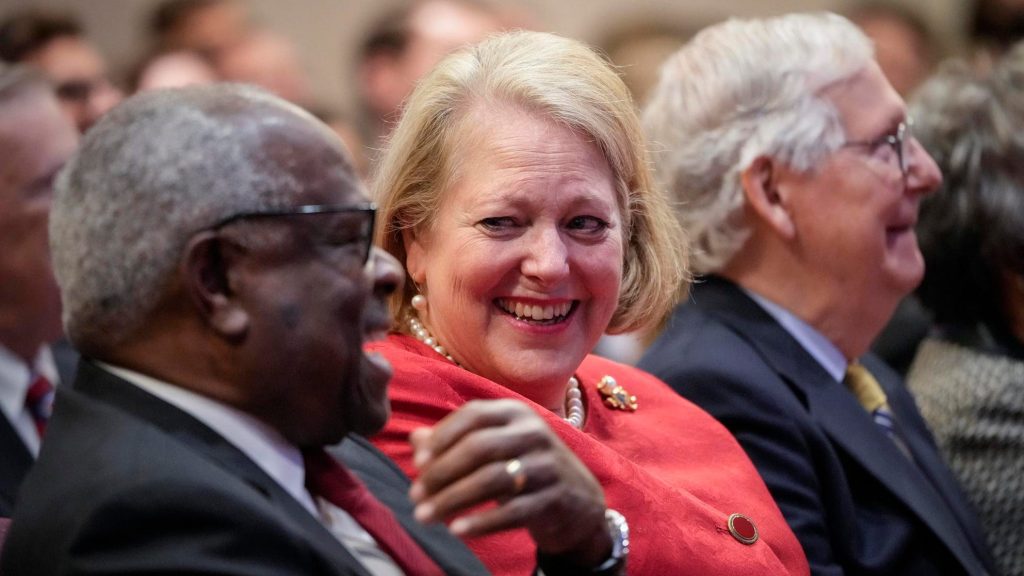
Virginia Thomas

The text messages were included in Meadows’ provision of his phone records to the House Select Committee on the January 6 insurrection. 

Meadows cooperated for a time with the Select Committee, and then ceased providing materials of record.  Bob Woodward and Robert Costa, who co-wrote PERIL on Trump’s last year in office, broke the story for the Washington Post:

“Virginia Thomas, a conservative activist married to Supreme Court Justice Clarence Thomas, repeatedly pressed White House Chief of Staff Mark Meadows to pursue unrelenting efforts to overturn the 2020 presidential election in a series of urgent text exchanges in the critical weeks after the vote, according to copies of the messages obtained by The Washington Post and CBS News.

The messages — 29 in all — reveal an extraordinary pipeline

Between Virginia Thomas, who goes by Ginni, and President Donald Trump’s top aide during a period when Trump and his allies were vowing to go to the Supreme Court in an effort to negate the election results.

On Nov. 10, after news organizations had projected Joe Biden the winner based on state vote totals, Thomas wrote to Meadows: “Help This Great President stand firm, Mark!!!…You are the leader, with him, who is standing for America’s constitutional governance at the precipice. The majority knows Biden and the Left is attempting the greatest Heist of our History.”

Ms Thomas has every right to speak her mind on any issue.  But these texts reveal she was a player in advising Meadows on Trumps strategy to “stop the steal.” 

Those machinations would find their way to the Supreme Court, where her husband would – and did – rule on Trump lawsuits to throw out the election.  Justice Thomas did not recuse himself from those cases.

What to watch for:

Will the House Committee subpoena Ms Thomas to testify on what she did and whether she worked with her husband?  Will Justice Thomas take unilateral steps to recuse himself from any further participation in Trump-related cases before the Supreme Court? Public hearings on all the Select Committee’s work will occur in the next few weeks.  They will be explosive.

  • Trump dumps Brooks.  President Trump has endorsed dozens of Republican candidates for House and Senate races in the upcoming midterm elections.  
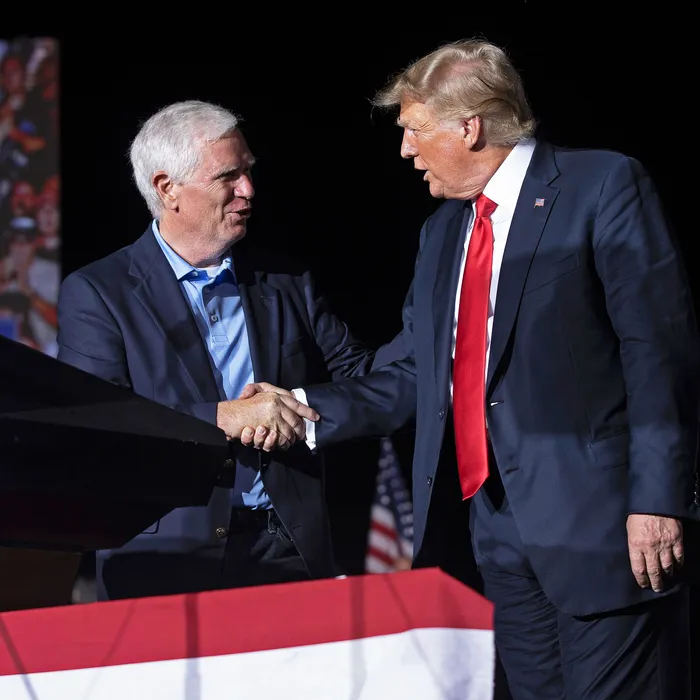
Trump dumps Brooks.

If Trump-backed candidates win, and if Republicans take control of the House or Senate or both, Trump will claim credit for the Republican wave and further boost his prospects for the 2024 Republican presidential nomination.

Rep. Mel Brooks of Alabama was a huge Trump backer.  He appeared onstage at the rally January 6 that helped incite the Trump mob to attack the Capitol. Trump endorsed Brooks for his run at the open Senate seat in Alabama.  But Brooks has been polling badly, and Trump pulled his endorsement last week.  Brooks is angry, and went public on what Trump expected him to do in return for the endorsement:

“President Trump asked me to rescind the 2020 elections, immediately remove Joe Biden from the White House, immediately put President Trump back in the White House, and hold a new special election for the presidency. As a lawyer, I’ve repeatedly advised President Trump that January 6 was the final election contest verdict and neither the U.S. Constitution nor the U.S. Code permit what President Trump asks. Period.”

What to watch for:

This is shocking stuff.  First, the only way Biden can be removed as president is by impeachment, and that will not happen. 

Second, there is no way that Brooks or anyone else can put Trump back into the White House – only the American people can do that.  Third, there are no “special elections” in the United States for the presidency.  What this episode shows is how Trump is increasingly fixated on 2020, more than he is in looking beyond the 2024 election – and this obsession of Trump’s is becoming a bigger issue for many rank-and-file Republicans.

  • Republicans look very strong heading into the midterms.  New polling shows growing Republican support in 77 key swing districts across the country.  They need a net gain of only five seats to take control of the House.

Politico is reporting:

Republicans lead the generic ballot by 4 points. Biden won these battleground seats by an average of 5.5 points.  In these districts, 75% of swing voters say Democrats are “out of touch” or “condescending.” About two-thirds say Democrats are spending too much money in Washington.  Biden’s net approval rating in these districts is -15. About 40% of voters in these seats approve of the job Biden is doing as president, while 55% disapprove. Among independent voters, his net approval is -32 — a 34-point swing since February 2021 from a group that often dictates which party holds the House majority. And among Hispanic voters, his net approval is -10, a drop of 31 points in the same time frame. Economic concerns substantially advantage the GOP. Voters who identified jobs/the economy as their No. 1 concern favor Republicans by 20 points on the generic ballot. Among those who put “cost of living” at the top, Republicans are at a 24-point advantage. 

What to watch for

Continuing Republican pressure on what they believe are the killer issues for them in November:  inflation, gasoline prices, crime in the cities, immigration at the southern border, what woke progressives are teaching children in schools, especially on racial issues, transgender sports, new laws to restrict abortion.  Republicans firmly believe these hot button issues will drive their voters to the polls – and President Biden’s approval remains well under 50%.

  • She’s baaack?!  Don Young, Alaska’s solo member of the House of Representatives and the longest-serving member of the current House (elected 1973), died last week at 88.  His seat will be filled in the November election.

Don Young

It looks like Sarah Palin, the former Alaska governor who was John McCain’s incendiary vice-presidential running mate in 2008, and who famously said she could see Russia from her backyard, is positioning to run.  Here’s what she told Sean Hannity on Fox last week:

“I’m going to throw my hat in the ring because we need people that have cajones. We need people like Donald Trump who has nothing to lose like me. We got nothing to lose and no more of this vanilla milquetoast namby-pamby wussy pussy stuff”
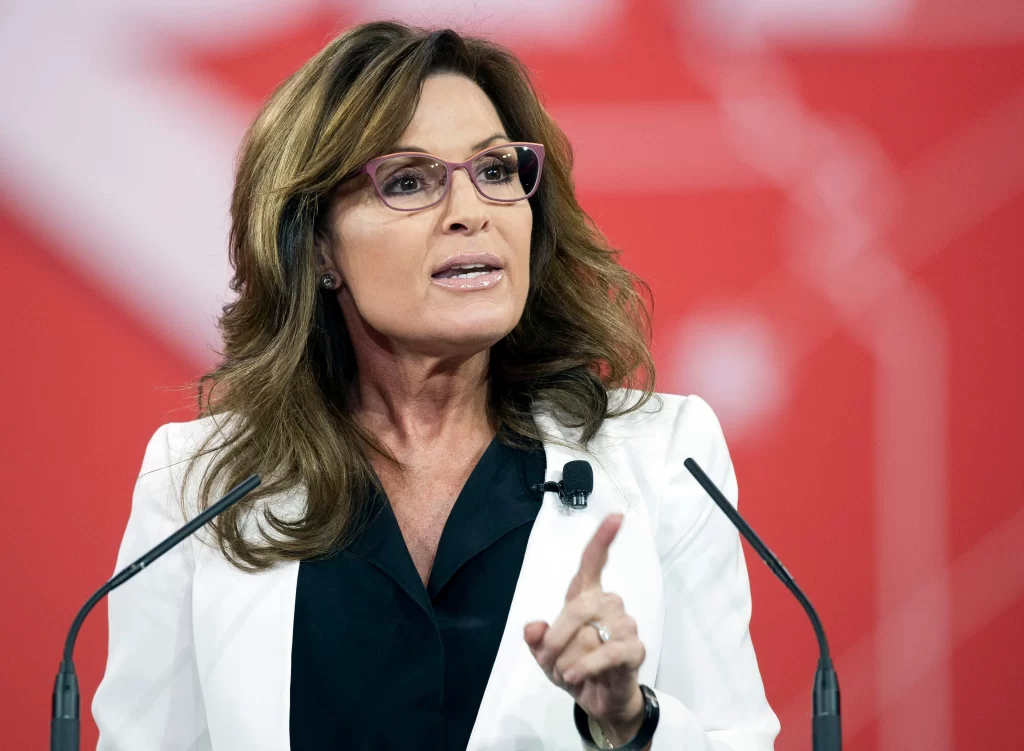
Sarah Palin, the former Alaska governor

What to watch for

Whether her pre-formal-entry stunting is enough to scare off other challengers and whether she still has strong appeal in the state.  The special election is likely to be held well before November.

Which is a good note on which to bring this special edition to a close.

Bruce Wolpe is a Ticker News US political contributor. He’s a Senior Fellow at the US Studies Centre and has worked with Democrats in Congress during President Barack Obama's first term, and on the staff of Prime Minister Julia Gillard. He has also served as the former PM's chief of staff.

Ticker Views

Backlash over AI “Indigenous Host” sparks ethical debate

AI-generated “Indigenous host” sparks controversy, raising ethical concerns about representation and authenticity in social media.

Published

on

AI-generated “Indigenous host” sparks controversy, raising ethical concerns about representation and authenticity in social media.


A viral social media account featuring an AI-generated “Indigenous host” is drawing criticism from advocates and creators alike, raising questions about authenticity, representation, and ethics in the age of artificial intelligence. Critics argue that AI characters can displace real Indigenous voices and mislead audiences.

Dr Karen Sutherland from Uni SC discusses how AI is reshaping identity on social media and why the backlash over this account has ignited a wider conversation about “digital blackface” and the ethics of AI-generated personalities. She explores the fine line between education, entertainment, and exploitation.

The discussion also dives into monetisation, platform responsibility, and the broader risks AI poses to media and cultural representation. As AI becomes increasingly sophisticated, audiences and creators alike must consider what authenticity truly means online.

Subscribe to never miss an episode of Ticker – https://www.youtube.com/@weareticker

#AIControversy #IndigenousVoices #DigitalBlackface #SocialMediaEthics #AIIdentity #OnlineBacklash #MediaEthics #RepresentationMatters


Download the Ticker app

Continue Reading

Ticker Views

Business class battles and ultra long-haul flights with Simon Dean

Aviation expert Simon Dean shares insights on premium travel trends, business class, and the future of ultra-long-haul flights.

Published

on

Aviation expert Simon Dean shares insights on premium travel trends, business class, and the future of ultra-long-haul flights.

From the latest trends in premium travel to the rise of ultra-long-haul flights, aviation reviewer Simon Dean from Flight Formula shares his firsthand insights on the airlines leading the charge.

We dive into what makes a great business class experience, and whether first class is still worth it in 2026. Simon breaks down common passenger misconceptions about premium cabins and explores how airlines are redesigning business class for comfort on the world’s longest flights.

He also gives a sneak peek into what excites—and worries him—about Qantas Project Sunrise, set to redefine ultra long haul travel.

Finally, we discuss the future of premium aviation: will ultra-long-haul flights become the new normal or remain a niche experience?

Subscribe to never miss an episode of Ticker – https://www.youtube.com/@weareticker

#BusinessClass #UltraLongHaul #ProjectSunrise #AviationReview #FirstClass #AirlineTrends #TravelInsights #FlightFormula


Download the Ticker app

Continue Reading

Ticker Views

Trump’s expanding executive power raises alarms over Congress’ role

Published

on

Congress’ power has been diminishing for years, leaving Trump to act with impunity

Samuel Garrett, University of Sydney

A year into US President Donald Trump’s second term, his record use of executive orders, impoundment of government spending, and military interventions in Venezuela and Iran have sparked criticisms from Democrats and even some Republicans. They say he is unconstitutionally sidelining Congress.

As Trump increasingly wields his power unilaterally, some have wondered what the point of Congress is now. Isn’t it supposed to act as a check on the president?

But the power of the modern presidency had already been growing for decades. Successive presidents from both parties have taken advantage of constitutional vagaries to increase the power of the executive branch. It’s a long-running institutional battle that has underwritten US political history.

The years-long erosion of Congress’ influence leaves the president with largely unchecked power. We’re now seeing the consequences.

A fraught relationship

Congress is made up of the House of Representatives and the Senate. Under the US Constitution, it’s the branch of the government tasked with making laws. It’s supposed to act as a check on the president and the courts.

It can pass legislation, raise taxes, control government spending, review and approve presidential nominees, advise and consent on treaties, conduct investigations, declare war, impeach officials, and even choose the president in a disputed election.

But the Constitution leaves open many questions about where the powers of Congress end and the powers of the president begin.

In a 2019 ruling on Trump’s tax returns, the judge commented:

disputes between Congress and the President are a recurring plot in our national story. And that is precisely what the Framers intended.

Relative power between the different branches of the US government has changed since independence as constitutional interpretations shifted. This includes whether the president or Congress takes the lead on making laws.

Although Congress holds legislative power, intense negotiations between Congress and the executive branch (led by the president) are now a common feature of US lawmaking. Modern political parties work closely with the president to design and pass new laws.

Redefining the presidency

By contrast, presidents in the 19th and early 20th centuries generally left Congress to lead policymaking. Party “czars” in Congress dominated the national legislative agenda.

Future president Woodrow Wilson noted in 1885 that Congress:

has entered more and more into the details of administration, until it has virtually taken into its own hands all the substantial powers of government.

Wilson and Franklin Roosevelt after him would later help to redefine the president not only as the head of the executive branch, but as head of their party and of the government.

In the 1970s, in the wake of the Watergate scandal and secret bombing of Cambodia, Congress sought to expand its oversight over what commentators suggested was becoming an “imperial presidency”.

This included the passage of the 1973 War Powers Resolution, designed to wrest back Congressional control of unauthorised military deployments.

Nevertheless, the Clinton, George W. Bush and Obama administrations all argued that Congressional authorisation was not required for operations in Kosovo, Iraq and Libya (though Bush still sought authorisation to secure public support).

In turn, the Trump administration argued its actions in Venezuela were a law-enforcement operation, to which the resolution does not apply.

Why presidents bypass Congress

Historically, presidents have sought to bypass Congress for reasons of personality or politics. Controversial decisions that would struggle to pass through Congress are often made using executive orders.

Obama’s 2011 “We Can’t Wait” initiative used executive orders to enact policy priorities without needing to go through a gridlocked Congress. One such policy was the 2012 creation of the DACA program for undocumented immigrants.

Franklin Roosevelt’s use of executive orders dwarfed that of his predecessors. He issued eight times as many orders in his 12-year tenure than were signed in the first 100 years of the United States’ existence.

The question of what constitutes a genuine threat to the preservation of the nation is especially pertinent now. More than 50 “national emergencies” are currently in effect in the United States.

This was the controversial basis of Trump’s tariff policy under the International Emergency Economic Powers Act. It bypassed Congressional approval and is now being considered by the Supreme Court.

Recent presidents have also increasingly claimed executive privilege to block Congress’ subpoena power.

Institutional wrestling

Institutional wrestling is a feature of Congressional relations with the president, even when the same party controls the White House and both chambers of the legislature, as the Republican party does now.

While Roosevelt dominated Congress, his “court-packing plan” to take control of the US Supreme Court in 1937 proved a bridge too far, even for his own sweeping Democratic majorities. The Democrats controlled three quarters of both the House and Senate and yet refused to back his plan.

More recently, former Democrat Speaker Nancy Pelosi delivered many of Barack Obama’s early legislative achievements, but still clashed with the president in 2010 over congressional oversight.

As House minority leader, she rallied many Democrats against Obama’s US$1.1 trillion (A$1.6 trillion) budget proposal in 2014. Obama was forced to rely on Republican votes in 2015 to secure approval for the Trans-Pacific Partnership, despite his heavy lobbying of congressional Democrats.

Even today’s Congress, which has taken Trump’s direction at almost every turn, demonstrated its influence perhaps most notably by forcing the president into a backflip on the release of the Epstein files after a revolt within Trump’s supporters in the Republican party.

Given the extremely slim Republican majority in Congress, the general unity of the Republican party behind Trump has been a key source of his political strength. That may be lost if public opinion continues to turn against him.

Is Trump breaking the rules?

Trump and his administration have taken an expansive view of presidential power by regularly bypassing Congress.

But he’s not the first president to have pushed the already blurry limits of executive power to redefine what is or is not within the president’s remit. The extent to which presidents are even bound by law at all is a matter of long running academic debate.

Deliberate vagaries in US law and the Constitution mean the Supreme Court is ultimately the arbiter of what is legal.

The court is currently the most conservative in modern history and has taken a sweeping view of presidential power. The 2024 Supreme Court ruling that presidents enjoy extensive immunity suggests the president is, in fact, legally able to do almost anything.

Regardless, public opinion and perceptions of illegality continue to be one of the most important constraints on presidential action. Constituents can take a dim view of presidential behaviour, even if it’s not technically illegal.

Even if Trump can legally act with complete authority, it’s public opinion — not the letter of the law — that may continue to shape when, and if, he does so.The Conversation

Samuel Garrett, Research Associate, United States Studies Centre, University of Sydney

This article is republished from The Conversation under a Creative Commons license. Read the original article.

Continue Reading

Trending Now