News
Biden aces G7 exam with flying colours | TICKER VIEWS

President Joe Biden accomplished what he wanted to do in his first outing as America’s leader on the world stage: to demonstrate that America is back and that the United States is again the principal leader of Western democracies.
Biden was warmly welcomed, and all the heads of government – from G7 host Boris Johnson to Japan’s Prime Minister Suga – were clearly in concert and at ease with Biden’s embrace of a renewed agenda to make the world healthier, safer, more secure and more prosperous.
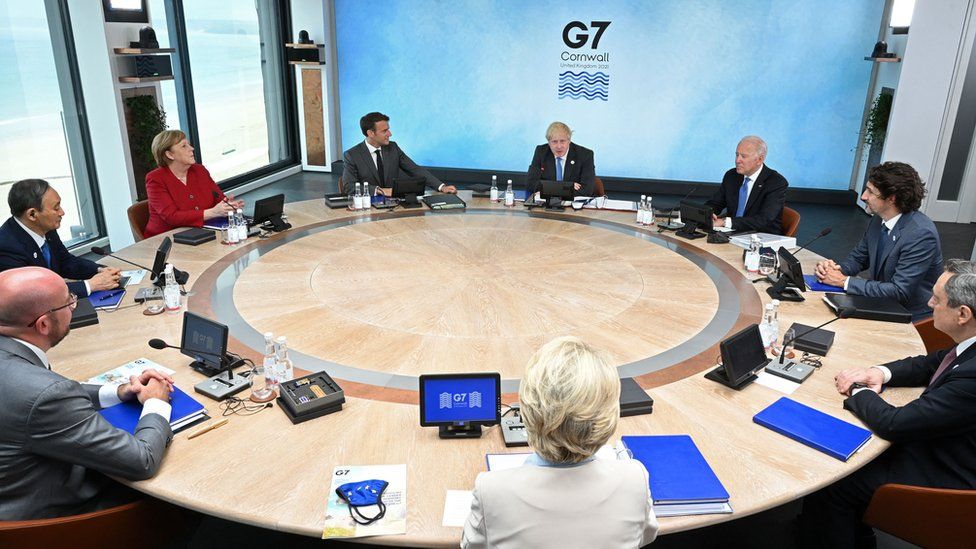
In his press conference at the conclusion of the meeting, Biden said:
“Over the past few weeks, the nations of the G7 have affirmed that democratic values that underpin everything we hope to achieve in our shared future, that we’re committed to put them to work: One, delivering vaccines and ending the pandemic. Two, driving substantial, inclusive economic recovery around the world. Three, in fueling infrastructure development in places that most badly need it. And four, in fighting climate change.”
Biden called out the threats and challenges posed by both Russia and China. In his upcoming meeting with Vladimir Putin, Biden will not be intimidated by Russian provocation. Where the US and Russia can work constructively together, they will.
Where they face divergent interests, those will be contested.
Biden brings in Western allies to have competitive stance towards China
With respect to China, Biden is determined that the Western allies be competitive with China on global infrastructure and meet China’s challenges on and actions on human rights and forced labour – Xinjiang and Hong Kong were explicitly mentioned – and the ongoing tensions in the South China Sea.
Biden believed it was essential to have in place these extensive consultations and the convergence on views that emerged before seeing Putin this week. This process will continue at NATO tomorrow.
However, it has also served as a predicate for a meeting with China’s President Xi, and we can now expect movement towards a Biden-Xi summit later this year.
Biden is intent to have in hand – and to use – the leverage of this alignment for the US with all the Western leaders in his discussions with Russia and China.
Behind the smiles, is America’s democracy under continuous pressure?
Behind the smiles and arm-in-arm walks Biden enjoyed with his colleagues, there remain significant doubts about how enduring America’s renewal as the indispensable Western leader will be.
The G7 and NATO leaders know that the forces of Trump and Trumpism – its isolationism, nativism, and nationalism – remain potent, and that America’s democracy is under continuous pressure.
Biden made the most of the moment, “I noticed there was a lot of coverage of my individual comments made by my colleagues about how we were all getting along together.
But the truth of the matter is: We did.
It wasn’t — I felt it wasn’t about me, but it was about America. I felt a genuine sense of enthusiasm that America was back at the table and fully, fully engaged.”
For the balance if his presidency, this is Biden’s road.
-
 News4 days ago
Ben Roberts-Smith arrested for war crimes allegations
-
Tech4 days ago
Investors pressure tech firms on water usage
-
Shows4 days ago
Melbourne property market analysis: value, challenges, and growth
-
Ticker Views1 day ago
Artemis II crew will endure 3,000°C on re‑entry
-
News2 days ago
North Korea tests cluster warhead on missile
-
Tech3 days ago
Apple shares drop on foldable iPhone delays
-
Leaders2 days ago
Australia raises over $3 million for Middle East crisis
-
News3 days ago
Iranian hackers escalate attacks on U.S. infrastructure