
News
Exclusive – who is responsible for Shireen Abu Akleh’s death?

A Reporter says it appears that the ammunition that killed her belongs to an M16 gun
A Veteran Palestinian Al Jazeera journalist, Shireen Abu Akleh, has been shot dead while covering an Israeli army raid on a refugee camp in the West Bank.
Who shot Abu Akleh?
There have been conflicting reports as to whether the Israeli army or Palestinian gunmen are responsible for the shooting.
Israel’s military’s Chief of Staff says it’s not yet determined which direction she was shot from, and has promised an investigation.
The Palestinian side is currently conducting an investigation to discover who is responsible for the 51-year-old’s death.
According to Middle East Reporter Adi Koplewitz, who has covered news in Israel, the west bank and the wider middle east, the type of ammunition will reveal who will be held accountable for this tragedy.
“It seems that the ammunition belongs to an M16 gun.”
He tells ticker news.
However, that does not provide a lot of information on who is responsible, as this is the most common gun used by both Palestinian militants and the Israeli military in these areas.
“So right now, it’s hard to tell if there ever will be a final concrete answer to who actually shot that bullet,” he says.
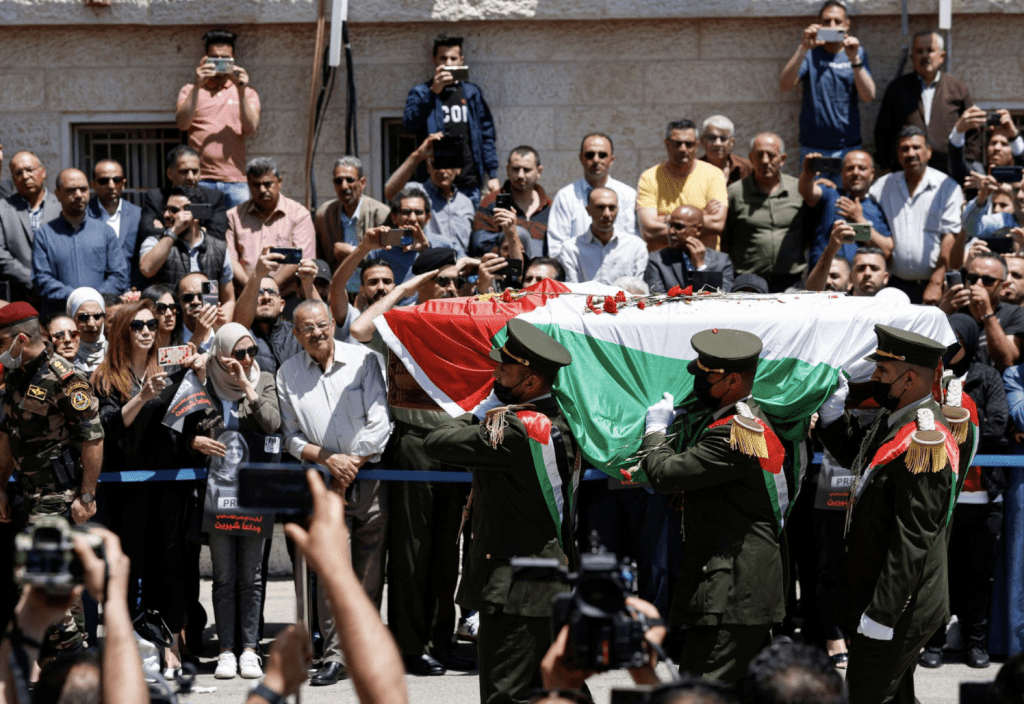
What does this mean for journalists on the ground in these areas?
Koplewitz says this event will deter journalists from arriving at these friction points in the future.
“The realisation of something like that happening to someone so professional, who has worked for so many years in dangerous zones is definitely shaking for journalists,” he says.
“But at the end of the day, this is where we belong and this is where we should be on the ground.”
Since Shireen Adi Koplewitz was wearing her full media vest, is it possible she was a target?
According to Koplewitz, it’s hard to believe that both Palestinians and the Israeli military would target a journalist on purpose.
“Even if it’s just for the cynical perspective of realising how bad the PR would be for both sides,”
he says.
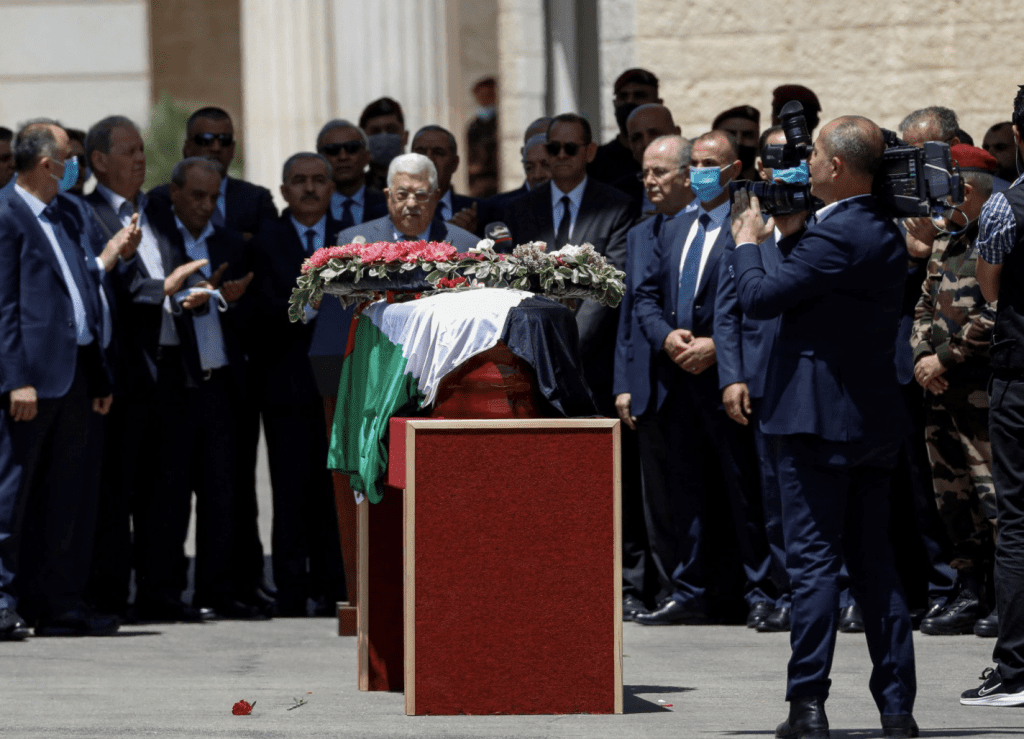
Will Abu Akleh’s death lead to further unrest between Palestinians and Israelis?
Koplewitz says that there’s been a rise in tensions between Israel and the Palestinians in the last few weeks, these are very difficult times and they are seeing more casualties on both sides taking place.
“[The funeral] is going to be a very big event and we know that similar funerals of casualties from the Palestinian side have many times being the beginning of another escalation, as emotions are obviously very high,” he says.
“All that is needed for a complete flare up is one spark and that spark could definitely be taking place tomorrow at the funeral here in Jerusalem.”
Abu Akleh’s field producer was also shot and remains in a stable condition.
Eyewitnesses say the journalists were shot by Israeli troops and that there were no Palestinian militants anywhere near the journalists that would prompt such an attack.
Protestors gathered on the streets to condemn the shooting.
Savannah Pocock contributed to the report.

-
 News3 days ago
Six nations pledge security for Strait of Hormuz
-
News3 days ago
Energy markets face turmoil from Iranian attacks
-
News3 days ago
Apple to earn over $1B in AI app fees
-
Tech3 days ago
Uber to invest $1.25 billion in Rivian robotaxis
-
Tech15 hours ago
Meta to cut 20% workforce for AI focus
-
News6 hours ago
Iran threatens infrastructure if U.S. attacks plants
-
Tech4 days ago
Australian scientists create world’s first quantum battery
-
News1 day ago
OpenAI to introduce ads for free ChatGPT users