In the chilling final scene of Francis Ford Coppola’s 1972 masterpiece, The Godfather, the door to Michael Corleone’s office is closed in the face of his wife, Kay.
It simultaneously signified the opening of many more doors for the career of actor Diane Keaton.
In that film, so heavily dominated by male actors, Keaton more than holds her own. For someone who would become known for her daffy, comic style, it showed us she also had serious dramatic acting chops.
The multi-award-winning actor, producer and director has died at the age of 79. She leaves behind a legacy of memorable roles in films that include classics such as The Godfather and Annie Hall, spanning genres from comedy to drama.
First steps on stage
Keaton started life in Los Angeles as Diane Hall on January 5 1946. The eldest child of Dorothy and Jack Hall, she was the only one of her siblings – brother Randy and sisters Robin and Dorrie – to show interest in the theatre. It came about in an unconventional way.
When she was “eight or nine”, she told NPR’s Fresh Air in 2004, her mother won “Mrs Los Angeles”
I remember sitting down [in the audience] watching her being crowned. It was that she was the perfect homemaker. […] I did not want to be a happy homemaker, that did not appeal to me. But I did want to go on stage. I saw that that was something that did appeal to me. There she was in the theatre, and I saw the curtain open and there was my mother. And I thought, ‘I think I like that for myself’.
Her career began as a teenage Blanche in Santa Ana High School’s production of A Streetcar Named Desire.
In her 2011 memoir, Then Again, she remembers her father coming backstage:
I could tell he was surprised by his awkward daughter – the one who’d flunked algebra and smashed the new Ford station wagon. For one thrilling moment, I was his Seabiscuit, Audrey Hepburn, and Wonder Woman rolled into one.
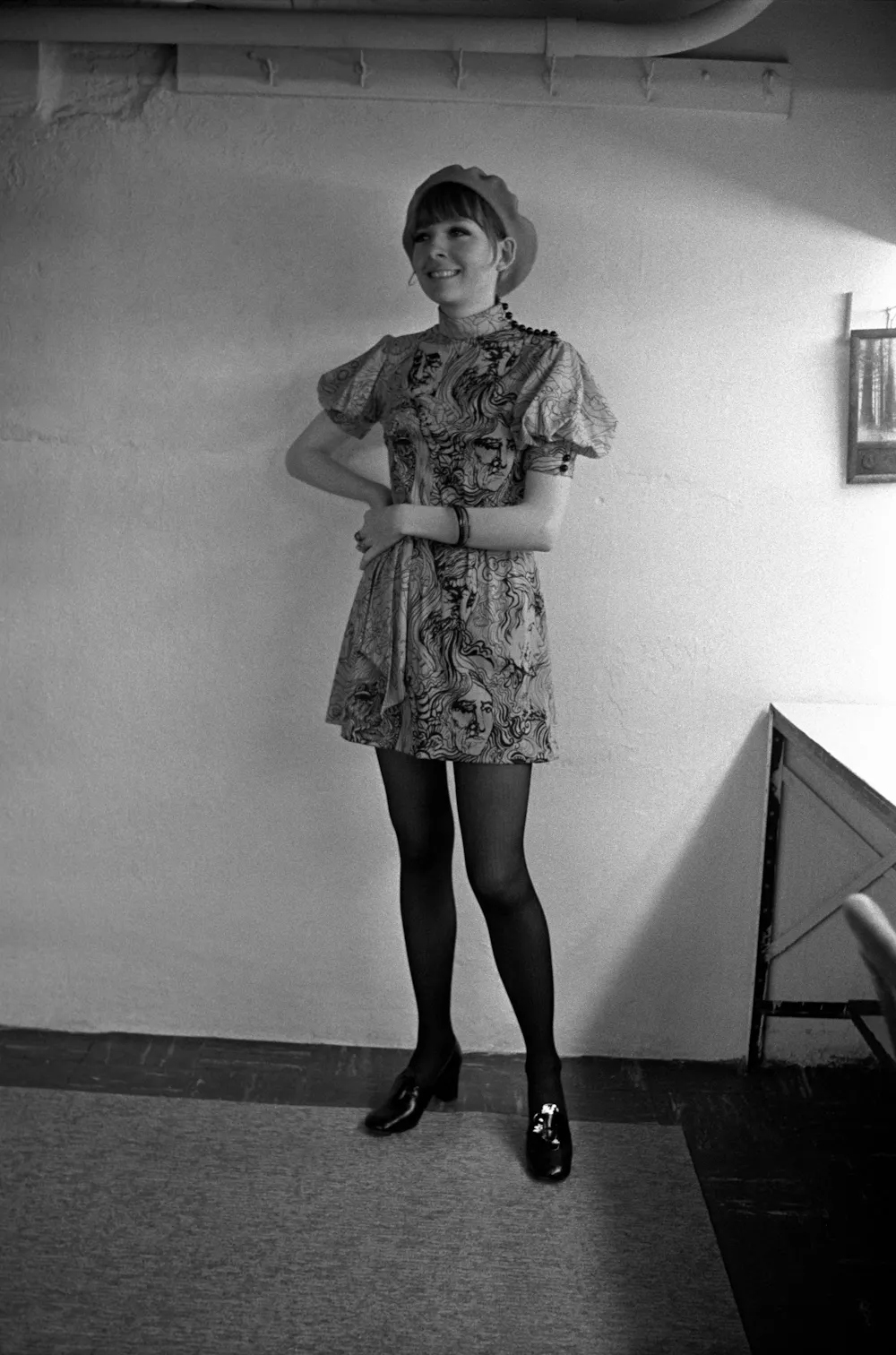
She began drama studies at nearby Santa Ana College but soon dropped out, took her mother’s maiden name – Keaton – and travelled to New York to study at the Neighbourhood Playhouse.
Nick Machalaba/WWD/Penske Media via Getty Images
In 1968, after a stint in summer stock, she was cast as an understudy in Hair on Broadway. She was 19 and famously refused to do the nude scene.
“It wasn’t for any sort of philosophical reason,” she told the New York Times in 1972, “It was just that I was too scared.”
Silver screen breakout
Her heart was set on the big screen which, of course, meant starting out on the small screen in shows like The FBI (“The worst thing I have ever done,” she told the New York Times. “I was unanimously, resoundingly bad!”) and Night Gallery.
Instead, it was theatre that led to her breakout screen roles.
In 2023, Francis Ford Coppola revealed to Hollywood Reporter he had seen Keaton in Hair.
He later told Keaton he cast her in The Godfather because,
although you were to play the more straight/vanilla wife, there was something more about you, deeper, funnier, and very interesting. (I was right).

FilmPublicityArchive/United Archives via Getty Images
Then she auditioned for a new theatrical comedy, Play it Again, Sam, by up-and-coming comedian Woody Allen. That turned out to be what’s known in romantic comedies as a meet cute.
It led not only to their much-publicised relationship, but to a significant collaboration in eight films including the 1977 hit Annie Hall.
For that role, Keaton won the Oscar for best actress. And her costume, designed by Ruth Morley, made her a fashion icon of the 70s. She also gave us the whimsical phrase, “la di dah”.
It’s often thought that Annie Hall was about her relationship with Allen, but as she told the New York Times, “It’s not true, but there are elements of truth in it”.
A force
For the next five decades, Keaton would become a Hollywood force.
She had comic roles in films like The First Wives Club (1996), Something’s Gotta Give (2003) and the Father of the Bride franchise. Alongside these comedies were remarkable dramatic roles in Looking for Mister Goodbar (1977), Reds (1981), The Little Drummer Girl (1984), Crimes of the Heart (1986), Marvin’s Room (1996) and two more Godfather films.
She was also a notable director of films like Unstrung Heroes (1995), Hanging Up (2000), Heaven (1987) and even an episode of Twin Peaks.

Michael Ochs Archives/Getty Images
In addition to Annie Hall’s Oscar, BAFTA and Golden Globe, she received Oscar nominations for Reds, Marvin’s Room and Something’s Gotta Give (for which she won her second Golden Globe). She was also nominated for a Tony, two Emmys and another seven Golden Globes.
Despite much-publicised relationships with Al Pacino, Woody Allen and Warren Beatty, Keaton chose to remain single her whole life. In her 50s, she adopted two children, Dexter and Duke.

Dimitrios Kambouris/Getty Images
A rich creative life
Keaton made comedy look easy but told the New York Times in 1977 that “both comedy and drama are equally difficult”.
She later told Fresh Air,
You’re constantly battling with yourself when you’re acting in a [dramatic] part, at least I am. Because it’s just not that easy for me. I think I’m more inclined to live comfortably in the world of humour.
Either way, we were the richer for her creative life and are the poorer for her loss.
Chris Thompson, Lecturer in Theatre, Australian Catholic University
This article is republished from The Conversation under a Creative Commons license. Read the original article.