Connect with us
https://tickernews.co/wp-content/uploads/2023/10/AmEx-Thought-Leaders.jpg

News

Families of COVID-related death victims in India to receive payout

Published

on

Those who have lost loved ones due to the pandemic could soon see an extra 50,000 rupees in their bank accounts.
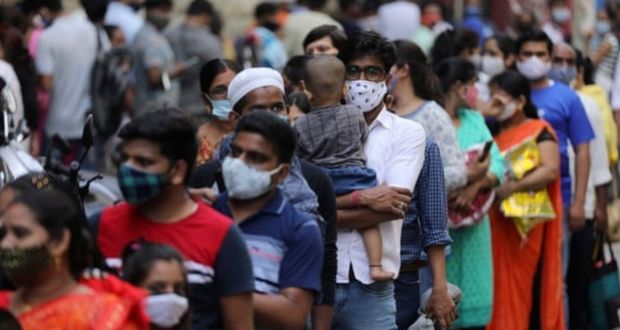
Families in India who have lost a family member to the pandemic, will receive monetary payments.

India’s government will officially begin paying every individual who has had a family member die because of Covid-19 in what is a landmark compensation scheme.

It comes after Justice MR Shah said each impacted next of kith and kin will receive 50,000 rupees, which equates to $674 Australia Dollars, per death.

The payments are expected to total around 300 million US dollars.

The compensation payments will be distributed within 30 days following a family’s submission of the application.

More than 447,000 people in India have died as a result of the pandemic.

Payments mandated under law

India introduced the payments after declaring the pandemic a disaster under their National Disaster Management Act.

The law came into effect in 2005 with its purpose to manage disasters including “preparation of mitigation strategies, capacity-building and compensation for lost lives, injuries and damaged properties,” according to BBC.

The nation’s Ministry of Home Affairs has issued affidavits offering compensation to family members of all Covid victims, including those who took their own life after receiving a positive virus test result.

Under the law, monetary payments of 400,000 rupees is to be paid to the family of victims who have lost their lives to a disaster.

A helping hand for struggling families

Gaurav Kumar Bansal, a petitioner for the law to be applied to the families of COVID-19 victims says all families can benefit from the payment, particularly in such testing times.

“We know the government has spent a lot of money in managing the pandemic,” Bansal tole the BBC.

“But we still think the government should have paid 400,000 rupees compensation to every affected family according to the law.”

The decision has also been upheld by India’s top court with the judges ruling that no state can immediately deny the compensation to those who request it.

Written by Rebecca Borg

News

Ukraine presents US-backed peace proposal to Russia

Ukraine presents US-backed peace proposal to Russia amid ongoing drone strikes and escalating tensions

Published

on

Ukraine presents US-backed peace proposal to Russia amid ongoing drone strikes and escalating tensions

video
play-sharp-fill
In Short:
– Ukrainian President Zelenskyy offered a 20-point peace proposal to Russia to end the four-year war.
– The plan requires Russian troop withdrawal and includes NATO-like security guarantees for Ukraine’s defence.

Ukraine has formally presented a US-backed 20-point peace proposal to Russia, offering a potential framework to end the nearly four-year war. President Volodymyr Zelenskyy unveiled the revised plan on December 23 after weeks of negotiations with American officials and formally delivered it to the Kremlin on December 24. The proposal includes NATO-style security guarantees, demilitarized zones in eastern Ukraine, and other measures designed to secure Ukraine’s sovereignty while reducing the risk of future conflict.

Under the plan, Ukraine would maintain a peacetime force of 800,000 troops and remain a non-nuclear state, with “Article 5-like” guarantees from the United States, NATO, and European partners. Territorial arrangements would require Russian forces to withdraw from parts of Dnipropetrovsk, Mykolaiv, Sumy, and Kharkiv regions. Zelenskyy also floated the creation of demilitarized “free economic zones” in parts of Donetsk Oblast, but only if Russian troops pull back as well. One of the most contentious issues remains the Zaporizhzhia nuclear power plant, with the US proposing joint management by Ukraine, Russia, and the US, while Zelenskyy countered with a Ukraine-US partnership giving Americans oversight of their allocated energy share.

Fragile reality

Even as peace efforts advanced, the conflict raged on. On Christmas night, Russia launched 131 drones across Ukraine, with 106 intercepted by Ukrainian forces but 22 hitting 15 locations. The attacks killed at least two people and caused widespread power outages in several regions. The strikes highlighted the fragile reality of negotiations, showing that the road to peace remains perilous.

Moscow has confirmed that President Vladimir Putin has been briefed on the proposal, though Russian officials have repeatedly rejected key provisions, including NATO-style security guarantees and territorial concessions. The agreement would be overseen by a Peace Council chaired by US President Donald Trump, with violations triggering automatic sanctions. Ratification would require either approval by Ukraine’s parliament or a nationwide referendum within 60 days, with a full ceasefire taking effect immediately once all parties accept the deal.

The plan represents the most comprehensive effort yet to bring Ukraine and Russia to the negotiating table, balancing security guarantees, territorial compromises, and oversight of strategic infrastructure. However, with ongoing attacks and deeply entrenched positions on both sides, analysts warn that achieving lasting peace will require unprecedented diplomacy and international cooperation.


Download the Ticker app

Continue Reading

News

Newly unsealed Epstein emails raise questions about Prince Andrew

Epstein emails implicate Prince Andrew in inappropriate conduct as pressure mounts for his cooperation with U.S. authorities

Published

on

Epstein emails implicate Prince Andrew in inappropriate conduct as pressure mounts for his cooperation with U.S. authorities

video
play-sharp-fill
In Short:
– The U.S. Justice Department released documents showing Ghislaine Maxwell’s emails linking Prince Andrew to Jeffrey Epstein.
– Andrew denies involvement with Epstein, settling a lawsuit without admitting guilt amidst rising scrutiny.

Nearly 30,000 pages of Jeffrey Epstein-related documents were released by the U.S. Justice Department, including emails from 2001 between Ghislaine Maxwell and an individual signing as “A” from Balmoral. One email, signed “The Invisible Man,” asked Maxwell for “new inappropriate friends,” sparking renewed scrutiny of Prince Andrew’s connections.

Subsequent evidence suggests the sender may have been Andrew Mountbatten-Windsor, referencing personal details consistent with his life, including the death of his longtime valet and leaving the Royal Navy. A 2002 email further described “Andrew” as a “very English-sounding gentleman” coordinating a trip to Peru with requests for specific companions.

The documents reveal that U.S. prosecutors sought to interview Mountbatten-Windsor over two criminal investigations, citing evidence he engaged in sexual conduct involving one of Epstein’s victims. Despite mounting pressure and losing his royal titles, he has denied wrongdoing, settling a civil lawsuit without admitting guilt.


Download the Ticker app

Continue Reading

News

Pope Leo XIV addresses Gaza crisis during Christmas Mass

Pope Leo XIV highlights Gaza humanitarian crisis during first Christmas Mass, urging dialogue and addressing severe conditions for displaced Palestinians

Published

on

Pope Leo XIV highlights Gaza humanitarian crisis during the first Christmas Mass, urging dialogue and addressing severe conditions for displaced Palestinians

video
play-sharp-fill
In Short:
– Pope Leo XIV urged awareness of the Gaza crisis and the hardships faced by Palestinians during his Christmas Mass.
– He expressed concern for global homelessness and called for dialogue as essential for achieving peace.

Pope Leo XIV used his first Christmas Mass at St. Peter’s Basilica to deliver a powerful and deeply human message, placing the humanitarian crisis in Gaza at the centre of his inaugural Christmas address. Drawing on the story of Jesus’ birth, the pontiff made a stark comparison to the lives of displaced Palestinians, asking how the world could ignore families living in tents, exposed to weeks of rain, wind and cold. His remarks set an early tone for his papacy — one grounded in compassion, moral urgency and advocacy for those caught in conflict.

Massive shortfall

The Pope’s comments come as conditions in Gaza continue to deteriorate sharply. An estimated 1.3 million Palestinians are in urgent need of shelter this winter, with recent storms destroying approximately 110,000 tents. Humanitarian organisations report deaths due to exposure among vulnerable groups, including children and the elderly. The Norwegian Refugee Council says just 15,600 tents have been delivered so far, leaving a massive shortfall, while restrictions on the entry of shelter materials have compounded the crisis and intensified suffering across the region.

Beyond Gaza, Leo widened his message to condemn the broader toll of war, speaking of the “fragile flesh of defenceless populations” harmed by global conflicts. He criticised those who send young soldiers into battle and stressed that peace can only be achieved through dialogue, not entrenched monologues. “There will be peace when our monologues are interrupted,” he said, urging leaders to recognise the humanity of the other. His upcoming Urbi et Orbi blessing is expected to address multiple global crises, reinforcing his diplomatic approach and his call for peace, solidarity and human dignity.


Download the Ticker app

Continue Reading

Trending Now