

Connect with us
https://tickernews.co/wp-content/uploads/2023/10/AmEx-Thought-Leaders.jpg

Tech

An artistic triumph: Canva’s value soars three-fold

Published

on

From Instagram posts to water bottles, the design network that can turn anyone into an artist is now worth fortunes.
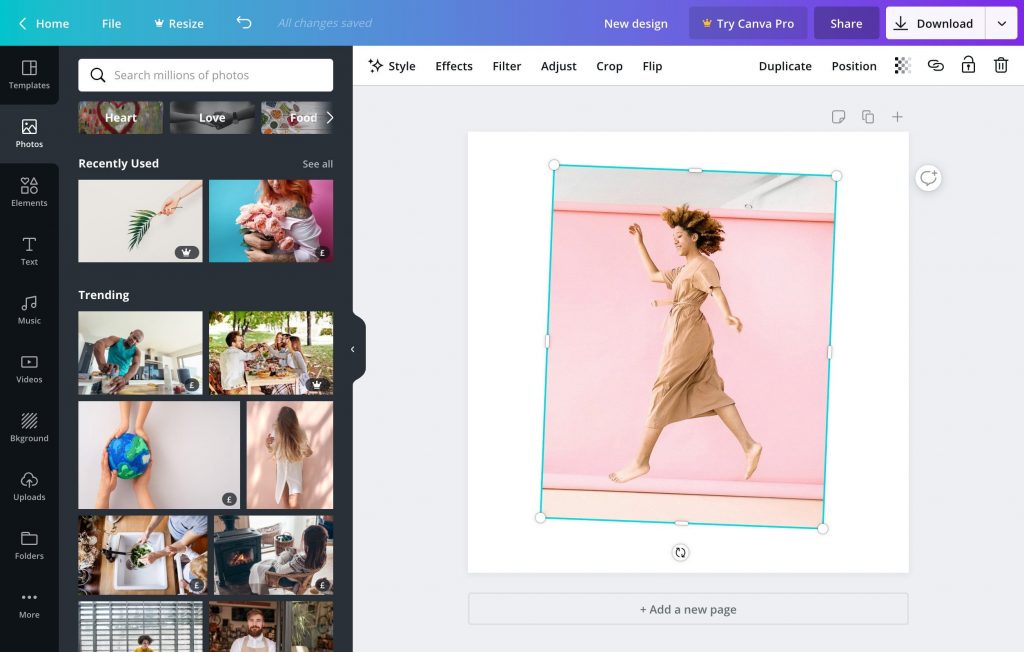
Canva, the online design platform now worth billions

The value of design platform Canva has increased almost three-fold, with the once $15 billion company now worth $40 billion USD.

It comes after a funding round led by T.Rowe Price helped raise 200 million dollars for the company.

AirTree adventures, Blackbird and Dragoneer Investments were among the new and pre-existing investment companies that contributed to the deal.

It’s a win for the Australian tech scene, painting Canva as one of the most valuable software companies online.

The graphic design platform enables anyone to be a star designer, no matter the level of experience.

From videos to t-shirts, Canva offers a range of templates across their easy-to-use platform, providing a convenient and easy experience for the user.

A step into the future of design

Co-founder and CEO Melanie Perkins says the goal of her platform is to replace PDF documents.

“Rather than people sending PDFs backwards and forwards between the designer and the client, designers can just create a template for organisation use,” Perkins says.

“It’s less important for us to absolutely excel at things like vector design because there are amazing programs on the market that may be there.”

“We really want to focus on that collaboration piece.”

How will the funding help?

The extra cash will be splashed on hiring two thousand workers, doubling their existing team where 42 percent of their workforce are women.

The extra funding also means the company is able to fulfill their dreams of further growing their business.

Web design, video editing and offline mode are all other features the platform is hoping to offer their growing user base, which is something the extra money can help them launch.

Perkins says it’s the funding from the investors that helps the platform remain to an extent free.

“We intentionally make our free product extremely generous for a number of reasons,”

“It means that people are able to love the product, share it with their friends and family, and promote it on social media, and then that virality really rapidly fuels our growth.”

Today, Canva has over 60 million users across 190 countries.

A number of big-name companies also use the platform, paying for their premium enterprise service.

Written by Rebecca Borg

Click to comment

Leave a Reply

Your email address will not be published. Required fields are marked *

Tech

Google Cloud and Palo Alto launch $10 billion AI deal

Google Cloud and Palo Alto Networks sign nearly $10 billion AI security deal to enhance protection against cyber threats

Published

on

Google Cloud and Palo Alto Networks sign nearly $10 billion AI security deal to enhance protection against cyber threats

video
play-sharp-fill
In Short:
– Google Cloud and Palo Alto Networks have partnered on a nearly $10 billion security services deal.
– The multiyear contract will integrate Palo Alto’s security platform with Google Cloud’s AI capabilities.

Alphabet’s Google Cloud and Palo Alto Networks have announced a partnership valued at nearly $10 billion. This agreement marks the largest security services deal for Google Cloud as enterprises increase efforts to protect AI infrastructure amid rising cyber threats.The multiyear contract involves Palo Alto moving key internal workloads to Google Cloud and creating new AI-driven security solutions. While executives refrained from commenting on financial specifics, the deal enhances a relationship formed in 2018.

Research from Palo Alto’s December 2025 State of Cloud Report revealed that 99% of surveyed companies faced at least one attack on their AI infrastructure in the past year. The collaboration aims to integrate Palo Alto’s Prisma AIRS security platform with Google Cloud’s AI capabilities, including Vertex AI and Agent Engine, to enhance protection for AI workloads.

AI Security Demand

Matt Renner, Google Cloud’s chief revenue officer, indicated that the surge in AI has created significant security demand. BJ Jenkins, president at Palo Alto, likened the current threat environment to those seen during the early growth of cloud computing.

The investment will see Palo Alto’s products migrated to Google’s platform, while also funding new AI-focused services. The companies have launched 75 joint integrations, achieving $2 billion in sales via the Google Cloud Marketplace.

The agreement also highlights broader cybersecurity strategies from both firms. Google is pursuing a $32 billion acquisition of Wiz, awaiting regulatory approval. Meanwhile, Palo Alto has plans to acquire observability platform Chronosphere for $3.35 billion.

Renner noted that this collaboration positions Google Cloud advantageously as AI continues to reshape the competitive landscape against rivals like Amazon and Microsoft. Furthermore, Palo Alto CEO Nikesh Arora’s previous experience at Google enhances the partnership’s potential.


Download the Ticker app

Continue Reading

Tech

Cheap drones flip the economics of air defense

Ukraine’s drones revolutionise air defence, intercepting threats cheaply while altering warfare economics amid ongoing Russian assaults

Published

on

Ukraine’s drones revolutionise air defence, intercepting threats cheaply while altering warfare economics amid ongoing Russian assaults

video
play-sharp-fill
In Short:
– Ukraine increased drone production to 950 daily, intercepting 1,500 enemy drones recently during ongoing Russian attacks.
– New interceptors, costing $1,000-$5,000, highlight a shift in defence economics, with 68% success rates reported.

Ukraine has significantly increased production of low-cost interceptor drones, reaching almost 950 units daily. This surge comes as Russian attacks persist, targeting Ukrainian cities and infrastructure. The drones, costing around $1,000 each, have successfully downed over 1,500 enemy drones recently, preserving more expensive missiles for higher threats.On December 21-22, Russian forces launched 86 attack drones, and Ukrainian air defenses intercepted 58 of them. This attack pattern has escalated throughout 2025, with Russia deploying about 5,500 Shahed-type drones monthly against Ukraine.

The interceptors evolved from prototypes to mass production within months in 2025, marking a significant shift in modern warfare. Ukraine’s Defense Ministry collaborates with over 10 manufacturers producing drones designed to counter Shahed-type unmanned aerial vehicles.

New Technology

The Sting, developed by the volunteer initiative Wild Hornets, illustrates this advancement. Resembling a flying thermos and built on a 17-inch frame, the quadcopter can reach speeds of 315 kilometers per hour and engage targets from 25 kilometers away. Operators control the drones using virtual reality goggles, impacting enemy aircraft mid-flight.

“Every destroyed target is something that did not hit our homes or power plants,” said a commander with the call sign Loi.

The financial aspects favour defenders, reversing traditional air defence economics. Ukrainian interceptors range from $1,000 to $5,000, while Russian Shahed drones cost around $35,000. President Volodymyr Zelenskyy mentioned that the success rate for interceptor drones is currently 68 percent.

“Cheap interceptor drones have become critical, warranting their status as a cornerstone of modern counter-unmanned aerial systems,” stated defense analyst Federico Borsari. NATO has observed successful Sting demonstrations, while the European Union plans a “drone wall” along its eastern border, expected to be operational by late 2027.


Download the Ticker app

Continue Reading

News

Global race for AI infrastructure amid soaring energy costs

Japan invests ¥1 trillion in AI infrastructure amid global tech race as energy costs and concerns rise

Published

on

Japan invests ¥1 trillion in AI infrastructure amid global tech race as energy costs and concerns rise

video
play-sharp-fill
In Short:
– Japan plans to invest ¥1 trillion in domestic AI to enhance infrastructure and compete globally.
– China is focusing on technological independence as domestic chipmakers prepare for public offerings.

Japan plans to invest ¥1 trillion ($6.34 billion) over five years in a domestic artificial intelligence company. This initiative aims to build infrastructure for AI, despite rising electricity costs raising concerns about the industry’s sustainability.The government will collaborate with SoftBank Group and Preferred Networks to develop the largest foundation model in Japan, employing around 100 engineers to compete globally. This effort reflects worries about the risks of relying on foreign AI technology.

China is also increasing its focus on technological independence. Domestic chipmakers are preparing for public offerings to enhance their capabilities, following successful launches by Moore Threads and MetaX in Shanghai. Companies such as Biren Technology and Baidu’s Kunlunxin are also planning to go public.

SoftBank is pursuing a $22.5 billion funding commitment to OpenAI by year-end, by selling assets and securing loans. CEO Masayoshi Son’s significant investment signifies a strong commitment to AI infrastructure.

AI Infrastructure

The rapid expansion of data centers is putting pressure on energy resources. Projections suggest data centers will consume 945 terawatt-hours by 2030, nearly tripling from 415 TWh in 2024. In the U.S., energy use by data centers could reach 9% to 12% of total supply by 2028.

Concerns have arisen over whether tech companies’ activities are raising residential electricity costs, with investigations launched by three Democratic senators targeting major companies like Alphabet, Microsoft, and Amazon. Utilities face significant expenses to upgrade grids, which may be passed on to consumers.

The energy demand is benefiting companies that supply power infrastructure. Jefferies recently upgraded GE Vernova to Buy, citing expected growth in gas pricing and long-term service demand amid rising energy needs.


Download the Ticker app

Continue Reading

Trending Now