
Connect with us
https://tickernews.co/wp-content/uploads/2023/10/AmEx-Thought-Leaders.jpg

Money

Trump’s deal with Air Force One causing turbulence for Boeing

Published

on

Former US President Donald Trump’s new deal for Air Force One wasn’t good for Boeing

The plane-maker’s chief executive says it was a bad deal and expects a loss of over 1 billion dollars on the two planes for the White House.

Trump renegotiated the Boeing contract, calling the initial deal too expensive.

The new agreement made Boeing, not taxpayers, responsible for changes to costs.

“Air Force One” is a name used for any aircraft carrying the US president.

However the term is mostly used to refer to the two highly customised Boeing 747 jets.

Before Trump was elected, the US government had a 4 billion dollar contract with Boeing to build two or more new planes.
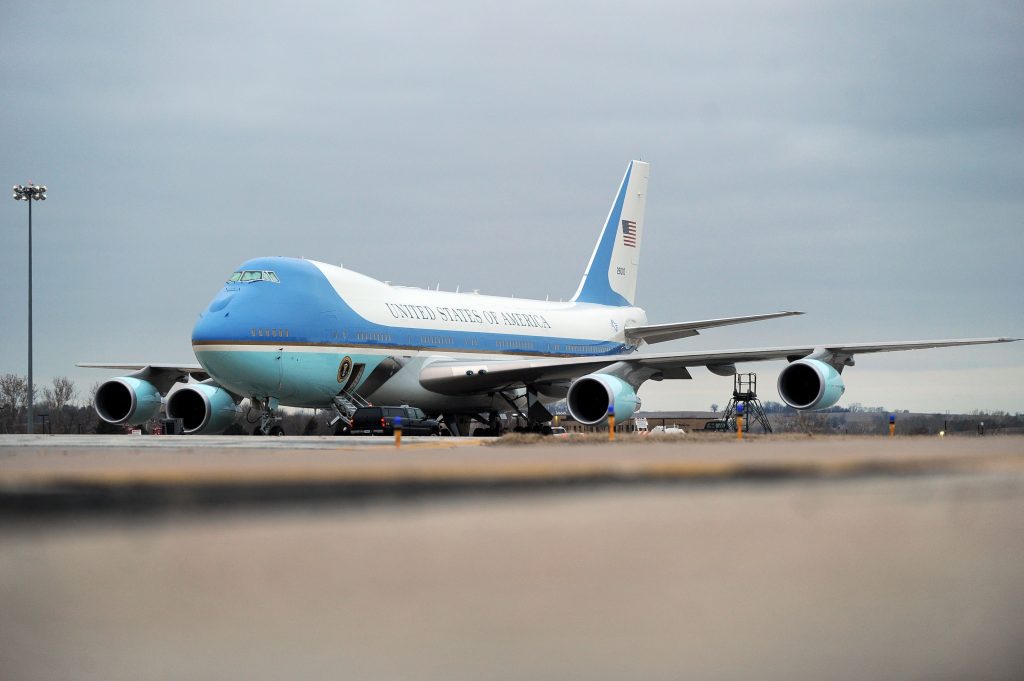
This was cancelled when Trump became President.

Boeing Chief says Covid and inflation is to blame too, but during a conference call with investors the chief said there were a very unique set of risks that Boeing probably shouldn’t have taken” during the Air Force One talks.

Boeing is a major government and defence contractor for the U-S and design planes for the White House that are able to fly in worst-case security scenarios.

The planes were supposed to be delivered by 2024 but are behind schedule, according to reports.
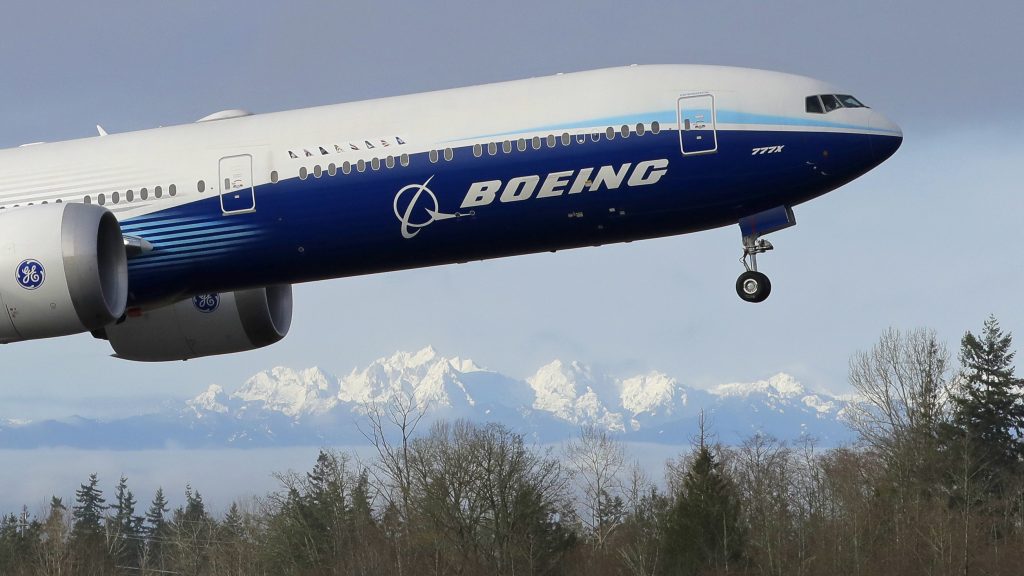
FILE – In this file photo a Boeing 777X airplane takes off on its first flight with the Olympic Mountains in the background at Paine Field in Everett, Wash. Boeing is reporting another huge loss, this one because of a setback to its 777X widebody jetliner. Boeing said Wednesday, Jan. 27, 2021, it lost $8.4 billion in the fourth quarter on weaker demand for planes during the pandemic. (AP Photo/Ted S. Warren, File)

Boeing disclosed it has lost $660 million this quarter on the programme.

Money

US dollar strength hits NZ dollar amid FX market shifts

US dollar rises amid strong US growth; New Zealand faces pressure as traders navigate volatile FX and geopolitical impacts.

Published

on

US dollar rises amid strong US growth; New Zealand faces pressure as traders navigate volatile FX and geopolitical impacts.


The US dollar is surging as strong economic growth in the United States contrasts with softer conditions in New Zealand. Policy divergence and complex global FX factors are putting pressure on the New Zealand dollar, leaving traders navigating choppy waters.

Steve Gopalan from SkandaFX breaks down how US interest rates are influencing key currency pairs like USD/JPY, and explains why hedging flows are crucial in today’s volatile environment.

We also explore the ripple effects of geopolitical tensions on oil and broader markets, while examining the Australian labour market’s role in shaping the Reserve Bank of Australia’s monetary policy.

Subscribe to never miss an episode of Ticker – https://www.youtube.com/@weareticker


Download the Ticker app

Continue Reading

Money

Oil hits seven-month high, and gold surpasses $5,000 amid US-Iran tensions

Oil prices hit seven-month high amid U.S.-Iran tensions; experts analyze impacts on global economy and energy markets.

Published

on

Oil prices hit seven-month high amid U.S.-Iran tensions; experts analyze impacts on global economy and energy markets.


Oil prices have surged to a seven-month high as escalating tensions between the U.S. and Iran spark fears of global supply disruptions. The Strait of Hormuz remains a flashpoint, with analysts closely monitoring potential military actions that could further strain energy markets.

Investors are reacting to geopolitical uncertainty, with oil markets pricing in heightened risk.

Kyle Rodda from Capital.com joins us to discuss what is driving these record-breaking price movements and the potential implications for the global economy.

Subscribe to never miss an episode of Ticker – https://www.youtube.com/@weareticker


Download the Ticker app

Continue Reading

Money

Australia jobs, market trends, and tariff ruling: What investors need to know

Australia’s jobs report shapes rate forecasts, with cyclical assets favored amid market volatility and upcoming Supreme Court rulings on tariffs.

Published

on

Australia’s jobs report shapes rate forecasts, with cyclical assets favored amid market volatility and upcoming Supreme Court rulings on tariffs.


Australia’s latest jobs report is shaping market expectations and interest rate forecasts. Strong employment growth could boost confidence in the economy, while weaker data might prompt a rethink of monetary policy.

Investors are favouring cyclical assets over growth stocks, targeting sectors like industrials, materials, and energy. David Scutt from StoneX notes this reflects both caution amid market volatility and a bet on areas tied to economic cycles.

Meanwhile, the upcoming Supreme Court ruling on Trump’s reciprocal tariffs could significantly impact markets, yet many are overlooking its potential effects on trade, commodity prices, and sector valuations. Investors should prepare for possible volatility and adjust strategies accordingly.

#AustraliaJobs #InterestRates #CyclicalAssets #GrowthStocks #MarketInsights #TrumpTariffs #InvestorTrends #TickerNews


Download the Ticker app

Continue Reading

Trending Now