As Washington prepares to take its summer break, President Biden continues to battle on the policy and program fronts he has led since Inauguration Day
On his agenda?
Ending the pandemic
Restoring the economy
Pursuing voting rights
Social equity
Racial justice
Gun control
Confronting climate change
And restoring America’s leadership in the world
In each area, there is progress – and challenges
With 70% of Americans now vaccinated, the Delta strain is hurting, with infections accelerating to significant levels – but the vaccines work.
This is a pandemic of the unvaccinated
of the 164 million Americans who are inoculated, 99.9% have not tested positive for Covid
Fewer people still are hospitalized or dead.
The renewed push to get as many as possible protected is now being augmented by mandates from governments and businesses that their employees are to get the jabs as a condition of employment. (This may prove ultimately to be the key for the last mile of protection here in Australia.)
What about the economy?
Employment is up, the economy is growing at over 6%, and wages are increasing, with $15 per hour the new norm in many businesses.
Child poverty is being cut in half, but employment is still not back at pre-Covid levels. Millions who are behind in their rent face possible eviction in the coming weeks.
While Biden has campaigned strongly on protecting voting rights, ending police violence, gun control, greater access to education and tackling global warming, no legislation on those fronts has yet been enacted.
On a foreign front – under Biden’s leadership, America is absolutely back with US alliances strong across Europe and Asia
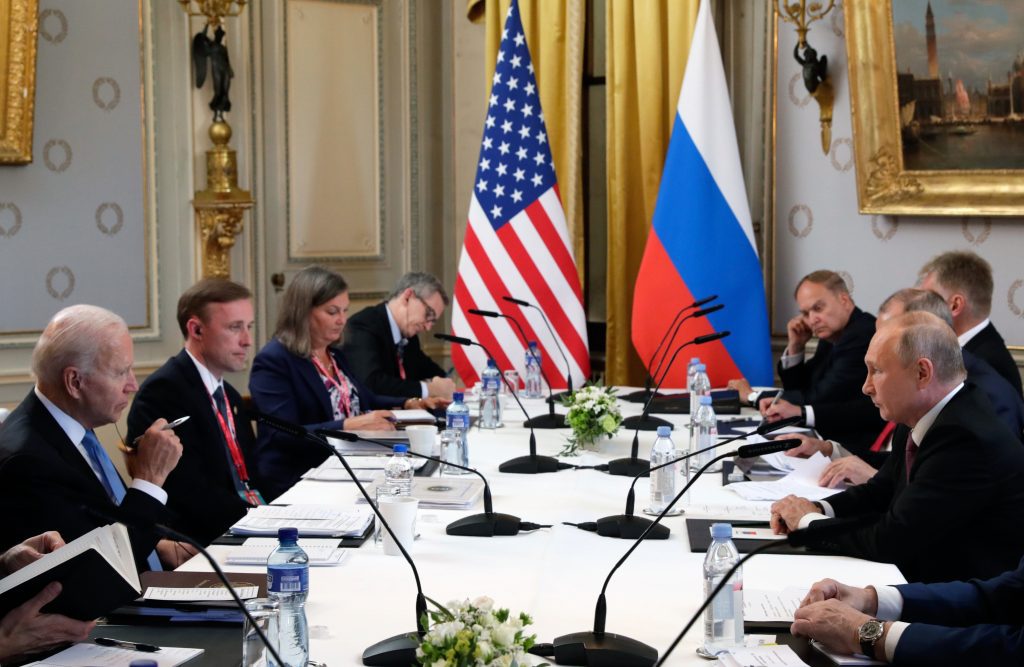
U.S President Joe Biden, left, and Russian President Vladimir Putin, right, talk during their meeting at the ‘Villa la Grange’ in Geneva, Switzerland in Geneva, Switzerland, Wednesday, June 16, 2021. (Mikhail Metzel/Pool Photo via AP)
However, there is turmoil in Afghanistan, prospects have dimmed for a renewed nuclear agreement with Iran, relations with Russia are testy, tensions with China are as intense as ever, and there is no dialogue with North Korea.
In Washington, the toughest tests of Biden’s legislative program are pending right now
He is applying all the lessons learned from his and President Obama’s first term in working his Democrats and those Republicans who are willing to win his policies on infrastructure, education, climate, and health care.
Biden knows that his presidency is in the balance.
As Biden battles on, the man he defeated, Donald Trump, continues to spread turmoil and division.
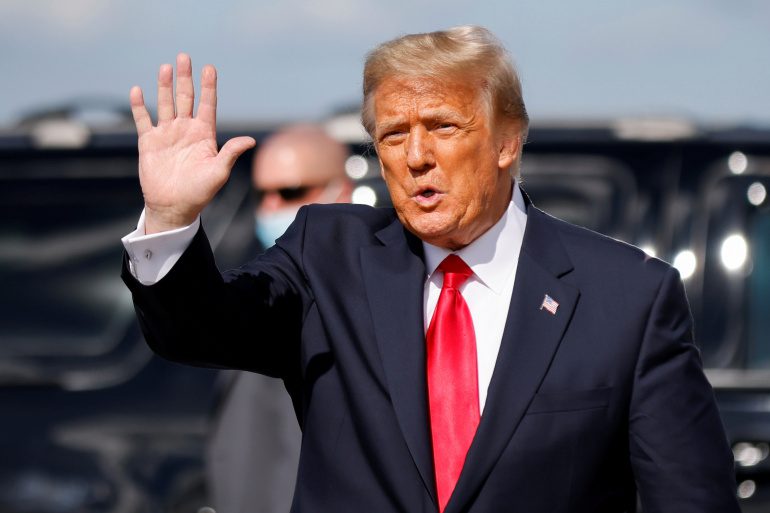
FILE PHOTO: U.S. President Donald Trump waves as he arrives at Palm Beach International Airport in West Palm Beach, Florida, U.S., January 20, 2021. REUTERS/Carlos Barria/File Photo
Trump will not countenance any blame or responsibility for the insurrection at the Capitol on January 6 – an attack intended to stop the certification of Biden’s electoral victory.
Trump’s hold over the Republican Party, and especially the Republican leadership in the House of Representatives, upended the formation of a bipartisan independent commission to examine the threat to democracy posed by Trump.
Trump is determined to remain a potent force in the party, and the decider of its future.
He has raised more money this year than anyone else – over $100 million – and supplicants journey to his homes to pay tribute and seek favour.
Trump is hardly invincible. There are chinks in his cladding. His preferred candidate for a House seat in Texas lost to another Republican Trump declined to endorse.
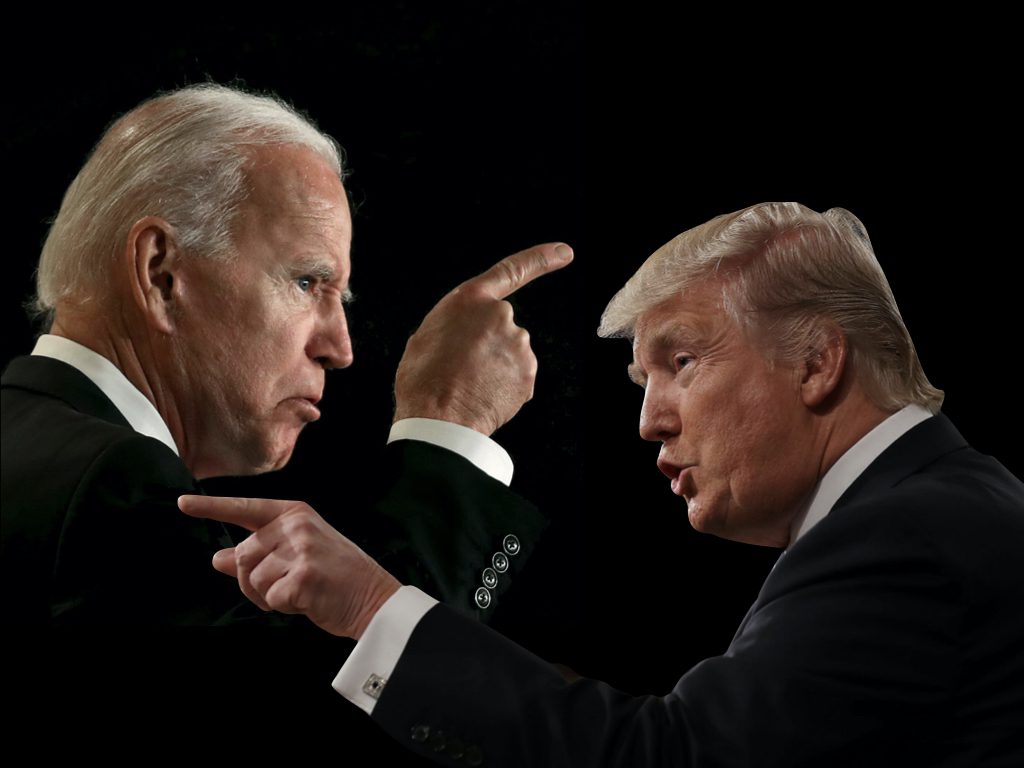
Damning notes from the Justice Department show Trump’s intense pressure on the Acting Attorney General to declare the election corrupt; he refused.
The Biden Justice Department has ruled that Trump’s tax returns have to be turned over to Congress. Trump attacked the Republicans supporting the bipartisan infrastructure deal with Biden – but the agreement is holding.
In this Washington summer, Biden is steady at the helm, but the waters are choppy. And Trump keeps making waves whenever he plunges into the pool.
Bruce Wolpe is a Ticker News US political contributor. He’s a Senior Fellow at the US Studies Centre and has worked with Democrats in Congress during President Barack Obama's first term, and on the staff of Prime Minister Julia Gillard. He has also served as the former PM's chief of staff.
In Short:
– NASA and Lawrence Livermore National Laboratory will launch the Pandora Mission on January 5, 2026, to find signs of life.
– The mission will study 20 exoplanets’ atmospheres for biosignatures, utilising an innovative telescope design.
NASA is gearing up to launch the Pandora Mission on January 5, 2026, aboard a SpaceX Falcon 9 rocket from Vandenberg Space Force Base. The compact satellite, developed with Lawrence Livermore National Laboratory, is designed to probe distant exoplanets for signs of life by analyzing their atmospheric composition. This $20 million mission focuses on detecting water vapor and other biosignatures across 20 known worlds.
At the core of Pandora is CODA, a 45-centimeter all-aluminum telescope offering innovative, cost-effective observations in both visible and near-infrared light. By separating planetary signals from the bright light of host stars, scientists hope to confirm the presence of water—a critical ingredient for life as we know it. Each of the 20 target planets will be observed 10 times during planetary transits, enabling continuous 24-hour monitoring sessions.
Pandora arrives amid growing excitement over exoplanet discoveries, including potential biosignatures found on K2-18b in 2025. Its observations will pave the way for future missions, like NASA’s Habitable Worlds Observatory, while rideshare payloads from Spire Global and Kepler Communications join the launch. The mission operations center at the University of Arizona will process all incoming data.
In Short:
– Trump and Zelenskyy discussed a peace plan at Mar-a-Lago, expressing optimism despite unresolved territorial disputes.
– Zelenskyy indicated a 90% agreement on the peace plan, emphasising security guarantees and significant reconstruction funding for Ukraine.
US President Donald Trump and Ukrainian President Volodymyr Zelenskyy have held high-stakes talks at Mar-a-Lago, claiming a revised peace framework to end Russia’s nearly four-year war in Ukraine is now 90% agreed. The meeting followed weeks of negotiations between US and Ukrainian officials and came just hours after Trump held an unexpected phone call with Russian President Vladimir Putin, a move that reportedly caught Kyiv off guard.
Zelenskyy says security guarantees are the central breakthrough, with the plan allowing Ukraine to maintain an 800,000-strong military while receiving NATO Article 5-style protections from the United States and European allies. The proposal also includes an $800 billion reconstruction fund and an accelerated path toward European Union membership. Trump described the talks as “outstanding,” warning that without a deal, the conflict could drag on with devastating human costs.
However, major obstacles remain — particularly over territorial control in the eastern Donbas region and the future of the Zaporizhzhia nuclear power plant. Russia is demanding Ukraine surrender all of Donbas, while Kyiv wants borders frozen at the current battle lines. Washington has floated demilitarised and free economic zones, while Zelenskyy has signalled he may put the full proposal to a national referendum. The talks come as Russia intensifies missile and drone attacks on Kyiv, even as European leaders join calls to shape the next phase of negotiations.
In Short:
– Ukrainian President Zelenskyy offered a 20-point peace proposal to Russia to end the four-year war.
– The plan requires Russian troop withdrawal and includes NATO-like security guarantees for Ukraine’s defence.
Ukraine has formally presented a US-backed 20-point peace proposal to Russia, offering a potential framework to end the nearly four-year war. President Volodymyr Zelenskyy unveiled the revised plan on December 23 after weeks of negotiations with American officials and formally delivered it to the Kremlin on December 24. The proposal includes NATO-style security guarantees, demilitarized zones in eastern Ukraine, and other measures designed to secure Ukraine’s sovereignty while reducing the risk of future conflict.
Under the plan, Ukraine would maintain a peacetime force of 800,000 troops and remain a non-nuclear state, with “Article 5-like” guarantees from the United States, NATO, and European partners. Territorial arrangements would require Russian forces to withdraw from parts of Dnipropetrovsk, Mykolaiv, Sumy, and Kharkiv regions. Zelenskyy also floated the creation of demilitarized “free economic zones” in parts of Donetsk Oblast, but only if Russian troops pull back as well. One of the most contentious issues remains the Zaporizhzhia nuclear power plant, with the US proposing joint management by Ukraine, Russia, and the US, while Zelenskyy countered with a Ukraine-US partnership giving Americans oversight of their allocated energy share.
Fragile reality
Even as peace efforts advanced, the conflict raged on. On Christmas night, Russia launched 131 drones across Ukraine, with 106 intercepted by Ukrainian forces but 22 hitting 15 locations. The attacks killed at least two people and caused widespread power outages in several regions. The strikes highlighted the fragile reality of negotiations, showing that the road to peace remains perilous.
Moscow has confirmed that President Vladimir Putin has been briefed on the proposal, though Russian officials have repeatedly rejected key provisions, including NATO-style security guarantees and territorial concessions. The agreement would be overseen by a Peace Council chaired by US President Donald Trump, with violations triggering automatic sanctions. Ratification would require either approval by Ukraine’s parliament or a nationwide referendum within 60 days, with a full ceasefire taking effect immediately once all parties accept the deal.
The plan represents the most comprehensive effort yet to bring Ukraine and Russia to the negotiating table, balancing security guarantees, territorial compromises, and oversight of strategic infrastructure. However, with ongoing attacks and deeply entrenched positions on both sides, analysts warn that achieving lasting peace will require unprecedented diplomacy and international cooperation.