
As Washington prepares to take its summer break, President Biden continues to battle on the policy and program fronts he has led since Inauguration Day
On his agenda?
Ending the pandemic
Restoring the economy
Pursuing voting rights
Social equity
Racial justice
Gun control
Confronting climate change
And restoring America’s leadership in the world
In each area, there is progress – and challenges
With 70% of Americans now vaccinated, the Delta strain is hurting, with infections accelerating to significant levels – but the vaccines work.
This is a pandemic of the unvaccinated
of the 164 million Americans who are inoculated, 99.9% have not tested positive for Covid
Fewer people still are hospitalized or dead.
The renewed push to get as many as possible protected is now being augmented by mandates from governments and businesses that their employees are to get the jabs as a condition of employment. (This may prove ultimately to be the key for the last mile of protection here in Australia.)
What about the economy?
Employment is up, the economy is growing at over 6%, and wages are increasing, with $15 per hour the new norm in many businesses.
Child poverty is being cut in half, but employment is still not back at pre-Covid levels. Millions who are behind in their rent face possible eviction in the coming weeks.
While Biden has campaigned strongly on protecting voting rights, ending police violence, gun control, greater access to education and tackling global warming, no legislation on those fronts has yet been enacted.
On a foreign front – under Biden’s leadership, America is absolutely back with US alliances strong across Europe and Asia
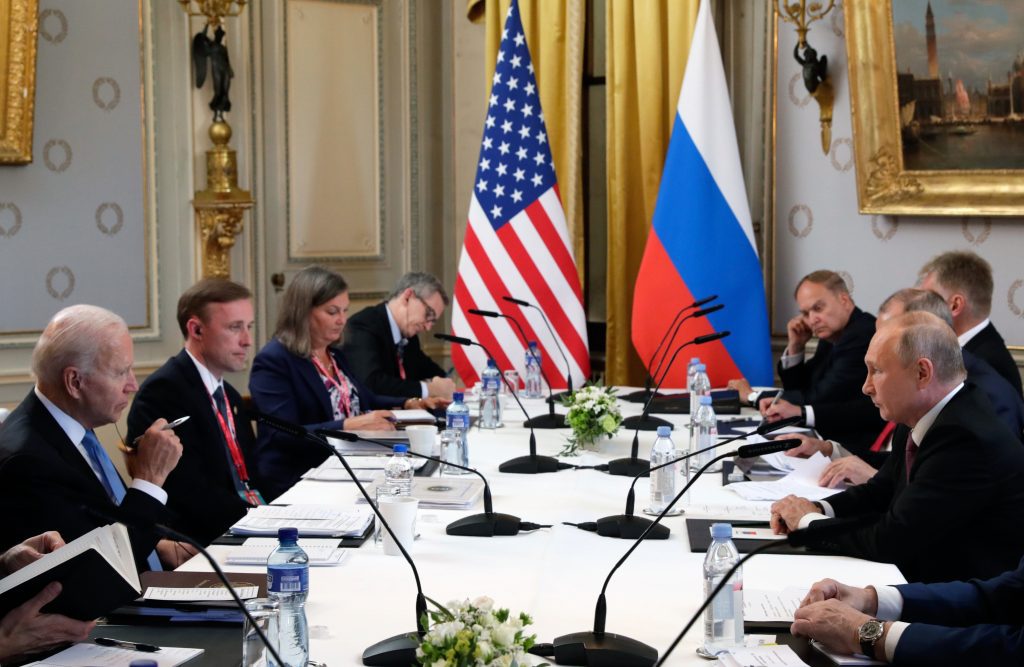
U.S President Joe Biden, left, and Russian President Vladimir Putin, right, talk during their meeting at the ‘Villa la Grange’ in Geneva, Switzerland in Geneva, Switzerland, Wednesday, June 16, 2021. (Mikhail Metzel/Pool Photo via AP)
However, there is turmoil in Afghanistan, prospects have dimmed for a renewed nuclear agreement with Iran, relations with Russia are testy, tensions with China are as intense as ever, and there is no dialogue with North Korea.
In Washington, the toughest tests of Biden’s legislative program are pending right now
He is applying all the lessons learned from his and President Obama’s first term in working his Democrats and those Republicans who are willing to win his policies on infrastructure, education, climate, and health care.
Biden knows that his presidency is in the balance.
As Biden battles on, the man he defeated, Donald Trump, continues to spread turmoil and division.
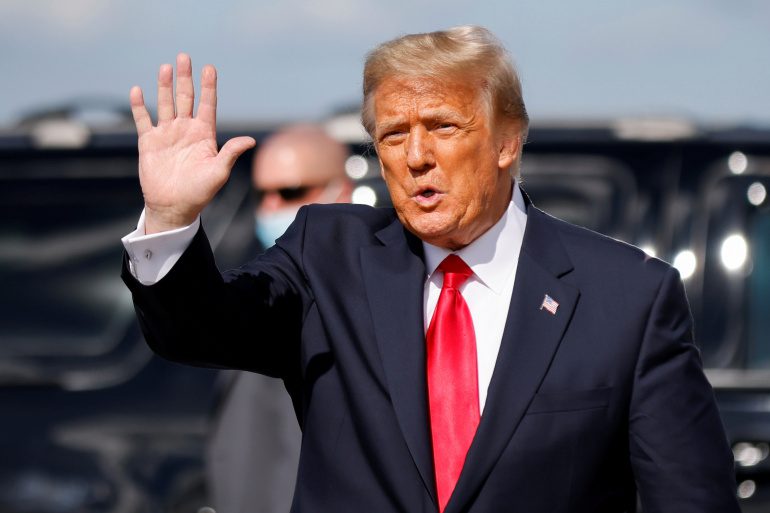
FILE PHOTO: U.S. President Donald Trump waves as he arrives at Palm Beach International Airport in West Palm Beach, Florida, U.S., January 20, 2021. REUTERS/Carlos Barria/File Photo
Trump will not countenance any blame or responsibility for the insurrection at the Capitol on January 6 – an attack intended to stop the certification of Biden’s electoral victory.
Trump’s hold over the Republican Party, and especially the Republican leadership in the House of Representatives, upended the formation of a bipartisan independent commission to examine the threat to democracy posed by Trump.
Trump is determined to remain a potent force in the party, and the decider of its future.
He has raised more money this year than anyone else – over $100 million – and supplicants journey to his homes to pay tribute and seek favour.
Trump is hardly invincible. There are chinks in his cladding. His preferred candidate for a House seat in Texas lost to another Republican Trump declined to endorse.
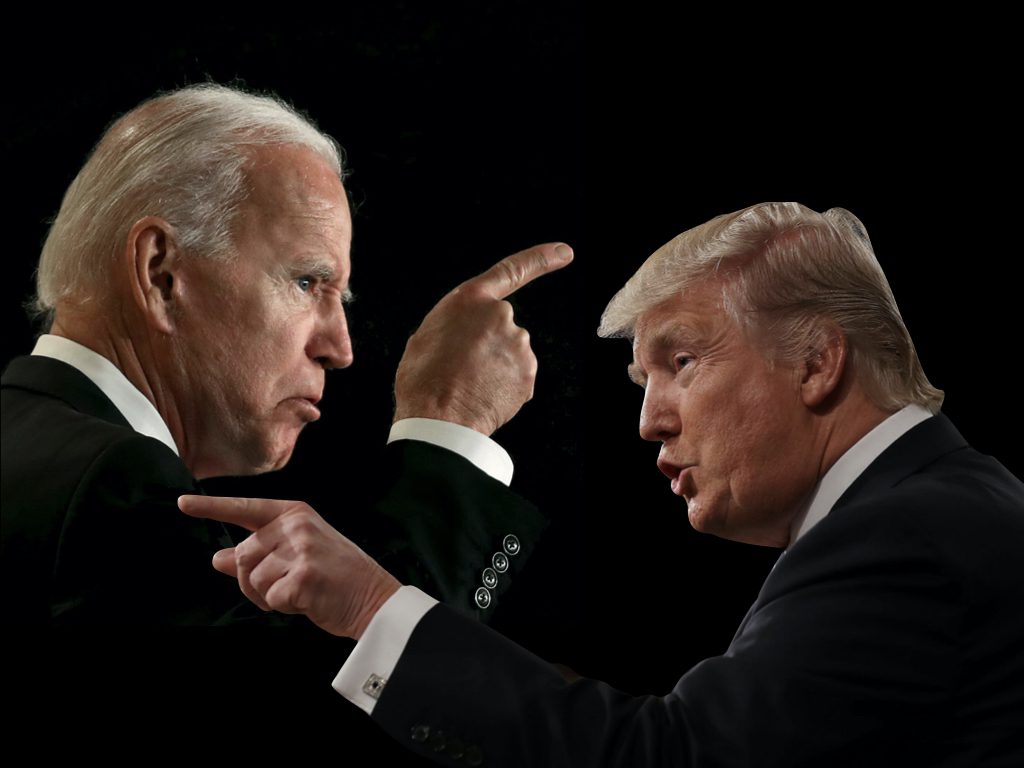
Damning notes from the Justice Department show Trump’s intense pressure on the Acting Attorney General to declare the election corrupt; he refused.
The Biden Justice Department has ruled that Trump’s tax returns have to be turned over to Congress. Trump attacked the Republicans supporting the bipartisan infrastructure deal with Biden – but the agreement is holding.
In this Washington summer, Biden is steady at the helm, but the waters are choppy. And Trump keeps making waves whenever he plunges into the pool.
Bruce Wolpe is a Ticker News US political contributor. He’s a Senior Fellow at the US Studies Centre and has worked with Democrats in Congress during President Barack Obama's first term, and on the staff of Prime Minister Julia Gillard. He has also served as the former PM's chief of staff.
Ukraine’s energy and nuclear safety systems have come under severe strain after a major Russian missile and drone attack struck critical power infrastructure, forcing all nuclear power plants in Kyiv-controlled territory to halt electricity generation and triggering urgent international warnings.
The February 7 assault damaged high-voltage substations supplying nuclear facilities, destabilising the national grid. The International Atomic Energy Agency said the disruption compromised nuclear safety, with one reactor shutting down automatically and others reducing output due to grid instability. IAEA Director General Rafael Grossi called for military restraint, warning of potentially dangerous consequences.
Nuclear terrorism
The attack targeted infrastructure across eight regions as Ukraine faces a deep freeze, with temperatures in Kyiv forecast to fall to minus 19 degrees Celsius. Emergency power outages have been introduced nationwide, while energy companies report extensive damage to thermal power plants.
President Volodymyr Zelensky condemned the strikes as nuclear terrorism and called for a global response. The IAEA also confirmed a recent loss of off-site power at the Chornobyl site, raising concerns that continued attacks on energy infrastructure could increase nuclear risks beyond Ukraine’s borders.
President Donald Trump has moved to reshape US trade policy on two major fronts, signing executive orders that both ease tariffs on India and threaten new levies on countries that continue to trade with Iran.
The rollback of tariffs on India follows New Delhi’s commitment to halt imports of Russian oil, a move welcomed by Washington as it seeks to tighten pressure on Moscow’s energy revenues. The decision signals a thaw in trade tensions between the two nations and underscores the administration’s willingness to reward partners that align with US foreign policy priorities.
At the same time, Trump warned that nations maintaining commercial ties with Iran could face fresh US tariffs, escalating economic pressure on Tehran and its trade partners. The move reinforces a hardline strategy aimed at isolating Iran economically, while using trade measures as leverage in broader geopolitical negotiations.
Together, the twin decisions highlight the Trump administration’s increasingly assertive use of tariffs as a diplomatic tool, targeting both allies and adversaries. From the Indo-Pacific to the Middle East, the approach underscores how trade policy is being deployed not just to protect US industries, but to advance America’s strategic interests on the global stage.
The United States has announced an additional $6 million in humanitarian aid for Cuba, bringing total assistance since Hurricane Melissa struck the island in October to $9 million. The new relief package will focus on Cuba’s eastern provinces, including Holguín, Granma, Santiago de Cuba, and Guantánamo, providing staples like rice, beans, pasta, canned tuna, and solar lamps. U.S. officials said embassy staff will monitor distribution to prevent the government from diverting supplies.
The announcement comes amid worsening energy and fuel shortages. Cuba has faced widespread blackouts, leaving millions without electricity in several provinces, while rising food prices and limited fuel supplies have intensified humanitarian pressures. Officials warn that without sufficient oil imports, hospitals, transport, and essential services could be severely affected. The crisis has escalated following U.S. restrictions on Cuba’s oil shipments and Venezuela’s inability to supply fuel, forcing Cuba to turn to Mexico as its primary energy partner.
Humanitarian situation
Cuba’s President Miguel Díaz‑Canel accused the U.S. of imposing an “energy blockade,” while Mexican officials work to deliver fuel without triggering U.S. tariffs. Díaz‑Canel expressed willingness to engage in dialogue but insisted talks must respect Cuba’s sovereignty. U.N. Secretary-General António Guterres has voiced serious concern, warning that the humanitarian situation could deteriorate further if oil supplies remain restricted.
As Cuba struggles to balance disaster recovery with an ongoing energy crisis, the international community faces a delicate challenge: providing humanitarian support while navigating complex geopolitical tensions.