Connect with us
https://tickernews.co/wp-content/uploads/2023/10/AmEx-Thought-Leaders.jpg

News

China and U.S. to abide by Taiwan agreement

Published

on

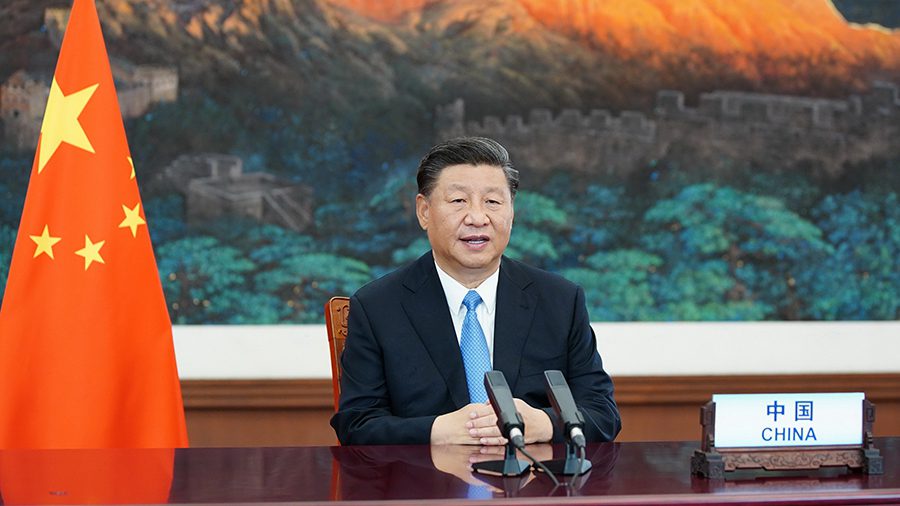
US President Joe Biden has confirmed he and his Chinese counterpart Xi Jinping have agreed to abide by the “Taiwan agreement”

The President of the United States appeared to be referring to America’s longstanding “one China” policy, where it recognises China rather than Taiwan.

But – the agreement further allows the United States to maintain a “robust unofficial” relationship with Tawian.

The announcement follows escalating tensions between Taiwan and Beijing

Beijing has sent “record numbers” of military jets into Taiwan’s air defence zone for four consecutive days.

Reports suggest the military action could be done as a way warning Taiwan’s president ahead of the island’s national day.

Taiwan has its own constitution, military, and democratically elected leaders, and considers itself a sovereign state

Beijing however, views Taiwan as a breakaway province and has not ruled out the possible use of force to achieve unification with the island.

The “One China” policy, which both President Biden and President Xi are believed to have referred to, is a key cornerstone of Sino-US relations.

The policy however is distinct from the One China principle, whereby China insists Taiwan is an inalienable part of one China to be reunified one day.

“I’ve spoken with Xi about Taiwan. We agree we’ll abide by the Taiwan agreement,”

– President Biden.

FILE PHOTO: Soldiers march to position during an anti-invasion drill on the beach during the annual Han Kuang military drill in Tainan, Taiwan, September 14, 2021. REUTERS/Ann Wang

“We made it clear that I don’t think he should be doing anything other than abiding by the agreement.

– President Biden

On Wednesday, Taiwan’s defence minister confirmed that military tensions with China were at its worst in more than 40 years.

The minister stated that the communist nation has the capability of mounting a “full-scale” invasion of Taiwan by 2025.
China to stop building coal energy plants abroad
Tensions are escalating between China and Taiwan.

“By 2025, China will bring the cost and attrition to its lowest. It has the capacity now, but it will not start a war easily, having to take many other things into consideration,”

Taiwan’s defence minister said.

Analysts watching China closely have previously warned that Beijing is becoming increasingly concerned that Taiwan’s government is moving the island towards a formal declaration of independence and wants to deter its President Tsai Ing-wen from taking any steps in that direction.

The latest warning comes even as a Taiwanese parliamentary committee undertakes a review of a special military spending budget of T$240bn ($8.6bn; £6.32bn) over the next few years that will mostly go towards naval weapons used by Taiwan forces.

The US has continued to sell weapons to Taiwan as part of Washington’s Taiwan Relations Act, which states that the United States must assist Taiwan defend itself.

News

Supreme Court upholds TikTok ban: Free speech at risk?

Supreme Court ruling on TikTok could redefine digital rights amid national security concerns and free speech debates.

Published

on

Supreme Court ruling on TikTok could redefine digital rights amid national security concerns and free speech debates.


The Supreme Court has delivered a landmark ruling that could reshape the future of TikTok in the U.S., citing national security concerns as the basis for a potential ban. Critics warn this decision may infringe on free speech while giving the President unprecedented control over online platforms.

In this episode, Karen Sutherland from Dharana Digital joins us to break down the implications of the court’s unanimous decision, the government’s arguments, and the response from privacy experts and former President Trump. We explore what this ruling could mean for future cases where national security intersects with freedom of expression.

From historical precedents to potential lessons for online platforms, this decision raises questions about the balance between public safety and individual rights. Dive in to understand how the TikTok ban could set a new standard for government authority over digital communication.

Subscribe to never miss an episode of Ticker – https://www.youtube.com/@weareticker

#TikTokBan #SupremeCourt #FreeSpeech #NationalSecurity #SocialMediaNews #DigitalRights #TechLaw #OnlinePrivacy


Download the Ticker app

Continue Reading

News

Tesla board earns $3 billion in stock awards amid investor scrutiny

Tesla’s board compensation raises governance questions as investors prioritize performance in the competitive EV market.

Published

on

Tesla’s board compensation raises governance questions as investors prioritize performance in the competitive EV market.


Tesla’s board of directors raked in over $3 billion in stock-based compensation, sparking questions about governance and alignment with shareholder priorities. As investors focus on performance in a competitive EV market, scrutiny over board pay has never been higher.

We break down the implications of stock awards on executive accountability and governance optics, exploring how Tesla’s approach may influence investor perception. Brad Gastwirth from Circular Technologies shares insights on equity-based incentives and shareholder alignment.

Looking ahead, the conversation turns to how Tesla can maintain technological and manufacturing leadership while meeting investor expectations for discipline and performance.

Subscribe to never miss an episode of Ticker – https://www.youtube.com/@weareticker

#Tesla #EVNews #CorporateGovernance #StockAwards #InvestorInsights #ElectricVehicles #BoardCompensation #Ticker


Download the Ticker app

Continue Reading

News

U.S. unemployment hits four-year high as job market cools

U.S. unemployment rises to 4.6%, signaling labor market cooling despite November job gains and economic concerns.

Published

on

U.S. unemployment rises to 4.6%, signaling labor market cooling despite November job gains and economic concerns.


The U.S. unemployment rate climbed to 4.6% in November, marking its highest level in more than four years and signalling a cooling labour market. Despite job gains during the month, broader trends suggest increasing pressure across the economy.

While 64,000 jobs were added in November, the U.S. has now shed jobs in three of the past six months. Federal government employment also fell sharply, adding to concerns about economic momentum heading into the end of the year.

With businesses showing caution around hiring, the latest data raises fresh questions about the resilience of the U.S. labour market and what comes next for workers and employers alike.

Subscribe to never miss an episode of Ticker – https://www.youtube.com/@weareticker

#USJobs #Unemployment #USEconomy #JobsReport #LabourMarket #EconomicOutlook #Markets #TickerNews


Download the Ticker app

Continue Reading

Trending Now