Connect with us
https://tickernews.co/wp-content/uploads/2023/10/AmEx-Thought-Leaders.jpg

Ticker Views

Biden on his bike for 2024

Published

on

Before President Joe Biden fell from his bike while dismounting in Rehoboth Delaware – at his summer home for his 45th anniversary celebrations with Dr Jill Biden and Fathers Day on Sunday – he had a lot on his mind

Bruce Wolpe joins ticker NEWS – Donald Trump teases 2024 presidential bid

When he spoke to the Associated Press late last week he was very candid. 

In discussing the mood of the country, the president said

“ People are really, really down. They’re really down. Their need for mental health in America has skyrocketed because people have seen everything upset. Everything they counted on upset. But most of it’s a consequence of, of, of what’s happening, what happened is a consequence of the, the COVID crisis.

People lost their jobs. People are out of their jobs. And then, were they going to get back to work? Schools were closed. Think of this. I think we vastly underestimate this.”
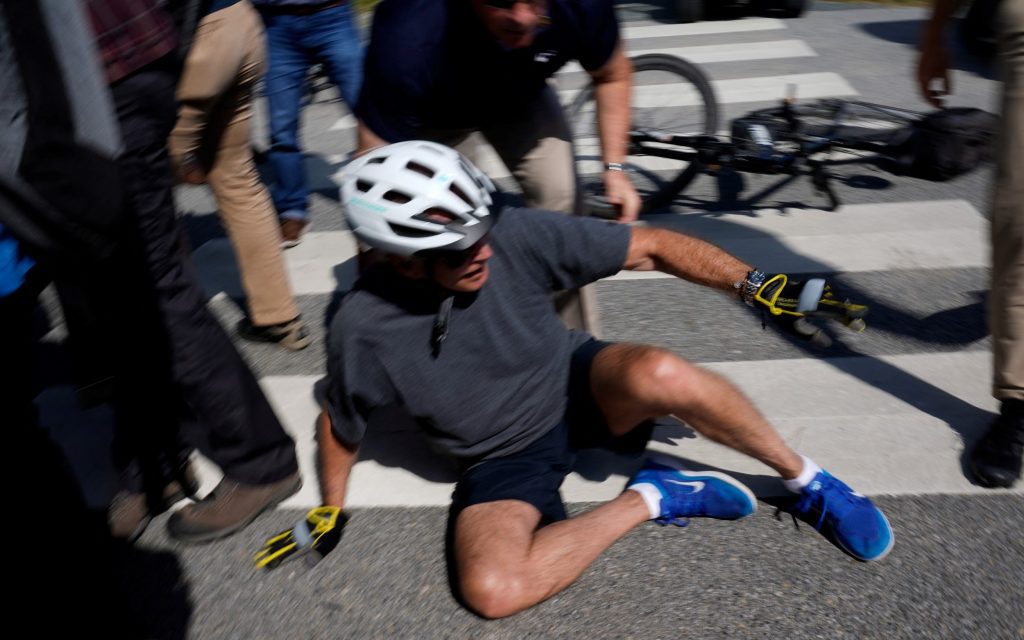
BIDEN FALLS OFF BIKE

As a politician, Biden has always felt the people who he works for in his gut

The White House can be a bubble, but Biden’s was a pretty accurate take on how so many Americans are feeling right now. He went deeper:

“We have a little thing called climate change going on. And it’s having profound impacts. We got the tundra melting. We’ve got the North Pole, I mean, so people are looking and, and I think it’s totally understandable that they are worried because they look around and see,

“My God, everything is changing.” We have more hurricanes and tornadoes and flooding. People saw what — I took my kids years ago to Yellowstone Park. They call me, “Daddy did you see what happened at Yellowstone, right?” Well, it’s unthinkable. These are 1,000-year kinds of events.

I think, you know, I fully understand why the average voter out there is just confused and upset and worried. And they’re worried, for example, you know, can they send their kid back to, back to college? What’s going to happen? Are we going to take away the ability of people to borrow? So I think there’s a lot of reasons for people to want to know what comes next.”

Biden talked about his legislative program, and he thinks he can get the votes to lower the household costs of utility bills and prescription drugs, make investments in technology and broadband, and enact fairer taxes for the super-wealthy.  

Biden knows he has to deliver the goods. 

While the political chatter in Washington lurched into making his stumble off the bike a metaphor for his presidency right now, Biden immediately got back on it and pedaled ahead to his destination:  re-election in 2024.

There is a lot of speculation on whether he will run again. 

Here are the facts:  Biden wants to run again.  He especially wants to run again if Trump runs again.  Biden entered the presidential campaign in 2020 because he felt he had to save the country by stopping Trump from destroying America’s democracy.  And he did. Trump in 2024 only re-ignites the urgency of Biden’s mission.

There is no whispering from inside the White House undermining or contradicting the president’s intention. Among political professionals, there no material dissent from the judgment that Biden is the strongest Democratic candidate:  there is no obvious alternative who commands anything near the support Biden has among Democrats.  
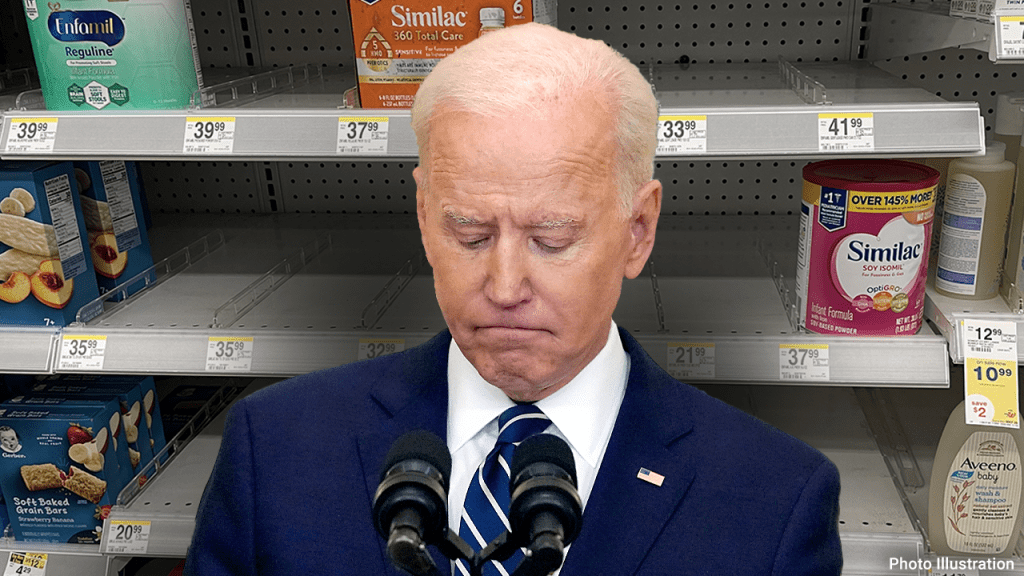
Biden knows his approval rating.  He knows the Republicans smell blood. He knows many Democrats who voted for him have doubts given his age and his current standing.  But Biden knows that inflation will recede, the economy will recover, and the Republicans in 2023 will be the most extremist cohort of radical lawmakers the country has ever seen, and  that the place to be is in the centre, where elections in the United States are won and lost.
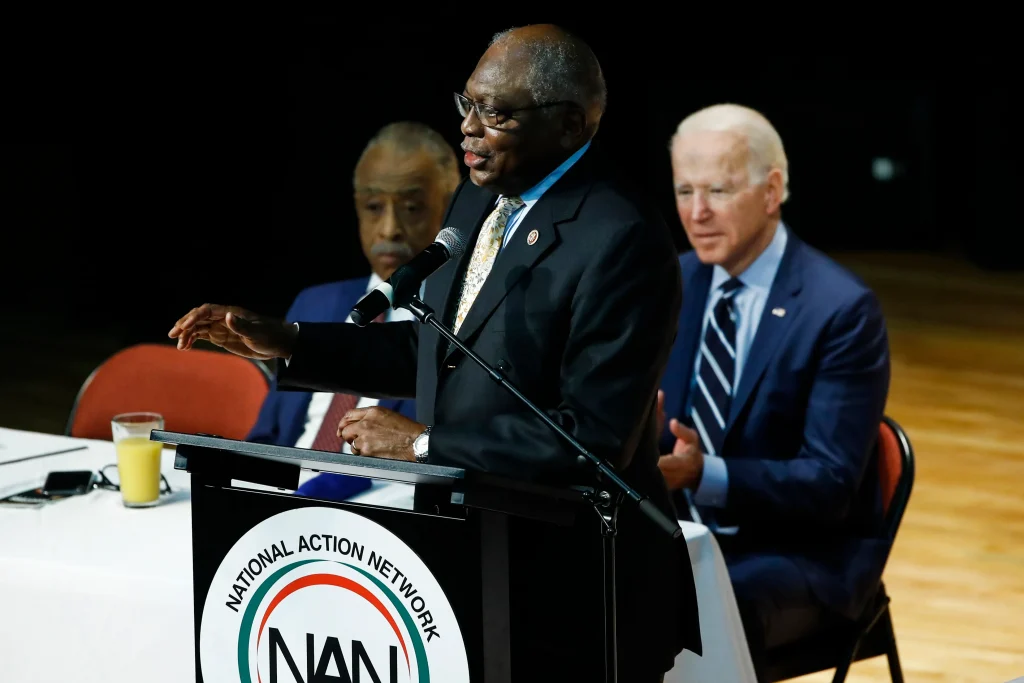
Rep. Jim Clyburn, Democrat of South Carolina

Rep. Jim Clyburn, Democrat of South Carolina and the third ranking leader in the House, whose support for Biden effectively sealed Biden’s nomination in 2020, said over the weekend   “My advice: be yourself, stay focused. Make the promises and keep them.”

That is exactly where Biden is.  To Joe Biden that looks like the winning hand in ’24.

Bruce Wolpe is a Ticker News US political contributor. He’s a Senior Fellow at the US Studies Centre and has worked with Democrats in Congress during President Barack Obama's first term, and on the staff of Prime Minister Julia Gillard. He has also served as the former PM's chief of staff.

Continue Reading

Ticker Views

Immigration panic comes in waves. Data shows who worries most, and when

Published

on

Peter Mayer, University of Adelaide and Sukhmani Khorana, UNSW Sydney

There are several predictable cycles in Australian public opinion, and one of them is the moral panic surrounding immigration.

Some readers will remember the immigration panic of the 1990s, which gave rise to Pauline Hanson and her One Nation party.

Then the issue fades from the mainstream, only to return sometime later. Why?

It turns out it’s possible to chart the voters who will become concerned about immigration, and when.

We studied the cycles of concern

There are predictable cycles in public concerns about the level of migrants accepted into Australia.

The most recent wave of migration panic in Australia was made obvious during the anti-immigration protests across capital cities that began in late August this year.

While the numbers who turned up to these protests were small compared to similar rallies in the United Kingdom, they were not insignificant for a settler-colonial nation built on successive waves of migration.

Australia’s history with anti-immigration fears goes back as far as the Lambing Flat riots in New South Wales in 1860, when white miners attacked and drove off about 2,000 Chinese miners.

What characterises almost all these moments is a period of economic recession and rising unemployment.

Generally, when unemployment rises, so does the number of Australians who feel migrant numbers are “too high”. One such cycle occurred in the early 1980s when unemployment, especially youth unemployment, rose sharply.

A second period of near-panic occurred during the recession in the early 1990s, when more than 70% of the population felt migration levels were too high.

There was a secondary burst of concern during the Asian Financial Crisis in the late 1990s; at that time there was rising concern about the number of asylum-seekers arriving by boat.

In that period Pauline Hanson was disendorsed by the Liberal Party and then founded the One Nation Party in 1997.

John Howard responded to the Tampa Affair in 2001 by passing the Border Protection Bill which undercut rising support for One Nation and opened a path to re-election later that year.

Still, the number of undocumented migrants arriving by boat increased sharply up until 2013.

The COVID pandemic appears to have disrupted the close link between rates of unemployment and concern about migration numbers.

In 2018-19, unemployment rates were relatively low but concerns over immigration numbers began to rise. During 2020, with migration barred, concerns over migration plunged.

After the peak of COVID, unemployment levels have remained very low but concerns over migration levels shot up sharply. Here again, the cause is probably economic – this time reflecting concerns over inflation, the cost of living and housing.

Even at this year’s election, the housing crisis was falsely linked to migration.

Trends in age groups

Who is most likely to feel the number of migrants is too high?

Data from recent Australian electoral surveys, taken after each general election, allow us to form a clearer picture.

It’s clear older voters are more likely to feel numbers are too high. Younger generations tend to be less worried about migration numbers than the generations that preceded them.

At the time of the 2022 election, those feeling migration levels were “much too high” fell to single digits, except for Gen X-ers. In this year’s election, a sharp increase in concern is clear, especially for Boomers and Gen X.

How you vote says a lot

When we look at the relationship between political party voters and immigration attitudes, we can see One Nation voters are much more likely to feel concern about the number of migrants.

In 2022, fewer than 10% of supporters of other major parties expressed great concern. In 2025, there was a noticeable divergence between parties of the right and left.

Virtually all One Nation supporters and more than 40% of Liberal and National supporters felt the number of migrants should be “reduced a lot”. There was only a modest increase in concern expressed by Labor voters and virtually no change by Greens supporters.

There is currently sharply rising concern over migrant numbers in Australia, so it is not surprising that support for One Nation has risen.

This is continuing despite a decisive 2025 election win for the Labor Party which originally seemed to suggest the scapegoating of migrants for the nation’s complex problems is unacceptable to the majority of Australians.

Recent data on social cohesion shows “concerning levels of prejudice, particularly towards people of Islamic faith and Australians from Asian and African backgrounds”.

Governments at all levels need to act promptly to contain this latest moral panic.The Conversation

Peter Mayer, Associate Professor, School of History and Politics, University of Adelaide and Sukhmani Khorana, Associate Professor, Faculty of Arts, Design and Architecture, UNSW Sydney

This article is republished from The Conversation under a Creative Commons license. Read the original article.

Continue Reading

Ticker Views

Australia is about to ban under-16s from social media. Here’s what kids can do right now to prepare

Published

on

Daniel Angus, Queensland University of Technology and Tama Leaver, Curtin University

If you’re a young person in Australia, you probably know new social media rules are coming in December. If you and your friends are under 16, you might be locked out of the social media spaces you use every day.

Some people call these rules a social media ban for under 16s. Others say it’s not a “ban” – just a delay.

Right now we know the rules will definitely include TikTok, Snapchat, Instagram, Facebook, Threads, Reddit, X, YouTube, Kick and Twitch. But that list could grow.

We don’t know exactly how the platforms will respond to the new rules, but there are things you can do right now to prepare, protect your digital memories, and stay connected.

Here’s a guide for the changes that are coming.

Download your data

TikTok, Instagram, Snapchat and most other platforms offer a “download your data” option. It’s usually buried in the app settings, but it’s powerful.

A data download (sometimes called a “data checkout” or “export”) includes things like:

  • photos and videos you’ve uploaded
  • messages and comments
  • friend lists and interactions
  • the platform’s inferences about you (what it thinks you like, who you interact with most, and the sort of content it suggests for you).

Even if you can’t access your account later, these files let you keep a record of your online life: jokes, friendships, cringey early videos, glow-ups, fandom moments, all of it.

You can save it privately as a time capsule. Researchers are also building tools to help you view and make sense of it.

Downloading your archive is a smart move while your accounts are still live. Just make sure you store it somewhere secure. These files can contain incredibly detailed snapshots of your daily life, so you might want to keep them private.

Don’t assume platforms will save anything for you

Some platforms may introduce official ways to export your content when bans begin. Others may move faster and simply block under-age accounts with little warning.

As one example, Meta – the parent company of Facebook, Instagram and Threads – has begun to flag accounts they think belong to under-16s. The company has also provided early indications that it will permit data downloads after the new rules comes into effect.

For others the situation is less clear.

Acting now, while you can still log in normally, is the safest way to keep your stuff.

4 ways to stay connected

Losing access to the platform you use every day to talk with friends can feel like losing part of your social world. That’s real, and it’s okay to feel annoyed, worried, or angry about it.

Here are four ways to prepare.

1. Swap phone numbers or handles on non-banned platforms now.

Don’t wait for the “you are not allowed to use this service” message.

2. Set up group chats somewhere stable.

Use iMessage, WhatsApp, Signal, Discord, or whatever works for your group and doesn’t rely on age-restricted sign-ups.

3. Keep community ties alive.

Many clubs, fandom spaces, gaming groups and local communities are on multiple sites or platforms (Discord servers, forums, group chats). Get plugged into those spaces.

4. Don’t presume you’ll be able to get around the ban.

Teens who get around the ban are not breaking the law. There is no penalty for teens, or parents who help them, if they do get around the ban and have access to social media under 16.

It’s up to platforms to make these new laws work. Not teens. Not parents.

Do prepare, though. Don’t assume you will be able to get around the ban.

Just using a VPN to pretend your computer is in another country, or a wearing rubber mask to look older in an age-estimating selfie, probably won’t be enough.

A note for adults: take big feelings seriously

Most people recognise the social connections, networks and community enabled by social media are valuable – especially to young people.

For some teens, social media may be their primary community and support group. It’s where their people are.

It will be difficult for some when that community disappears. For some it may be even worse.

The ideal role of trusted adults is to listen, validate and support teens during this time. No matter how older people feel, for young people this may be like losing a large part of their world. For many that will be really hard to cope with.

Services like Headspace and Kids Helpline (1800 55 1800) are there to support young people, too.

How to keep your agency in a frustrating situation

A lot of people will find it frustrating that we’re excluding teens, rather than forcing platforms to be built safer and better for everyone. If you feel that way, too, you’re not alone.

But you aren’t powerless.

Saving your data, preparing alternative communication channels, and speaking out if you want to are all ways to:

  • own your digital history
  • stay connected on your own terms
  • make sure youth voices inform how Australia thinks about online life going forward.

You’re allowed to feel annoyed. You’re also allowed to take steps that protect your future self.

If you lose access, you’re not gone – just changing channels

Social media bans for teens will create disruption. But they won’t be the end of your friendships, creativity, identity exploration, or culture.

It just means the map is shifting. You get to make deliberate choices about where you go next.

And whatever happens, the online world isn’t going to stop changing. You’re part of the generation that actually understands that, and that’s a strength, not a weakness.The Conversation

Daniel Angus, Professor of Digital Communication, Director of QUT Digital Media Research Centre, Queensland University of Technology and Tama Leaver, Professor of Internet Studies, Curtin University

This article is republished from The Conversation under a Creative Commons license. Read the original article.

Continue Reading

Ticker Views

‘High-impact sabotage’: spy chief issues grave warning about espionage and sabotage threat

Published

on

Sarah Kendall, The University of Queensland; Griffith University

The Australian Security Intelligence Organisation (ASIO) has given a dramatic warning that sophisticated hackers backed by foreign governments are increasingly targeting Australian infrastructure such as telecommunications and airports.

ASIO chief Mike Burgess warned we are now at “the threshold for high-impact sabotage”.

He said authoritarian regimes are more willing to disrupt or destroy critical infrastructure to damage the economy, undermine Australia’s war-fighting capability, and sow social discord:

Imagine the implications if a nation state took down all the [telecommunications] networks? Or turned off the power during a heatwave? Or polluted our drinking water? Or crippled our financial system? I assure you; these are not hypotheticals – foreign governments have elite teams investigating these possibilities right now.

Burgess also said foreign spies are increasingly targeting the private sector to steal trade secrets to give foreign companies a commercial advantage.

So what exactly is the nature of this serious threat? And what can Australian companies, businesses and their leaders do to protect from the threat?

State-backed hackers targeting companies

Burgess has previously warned of the “unprecedented” threat of espionage and foreign interference.

At a conference on Wednesday, he ramped up that warning. He said although foreign spies usually target government information, they are now increasingly targeting the private sector, including customer data.

In one example given by the spy boss, nation-state hackers compromised the computer network of a major Australian exporter and stole commercially sensitive information. This gave the foreign country a significant advantage in contract negotiations.

In another case, they stole the blueprints of an Australian innovation and mass-produced cheap knock-offs that nearly bankrupted the innovator.

Foreign companies connected to intelligence services have also sought to buy access to sensitive personal data sets and collaborate with university researchers developing sensitive technologies.

These threats are significant – an estimated A$2 billion of trade secrets and intellectual property are stolen from Australian companies by cyber spies each year.

The risks of high-impact sabotage

Burgess said authoritarian regimes are now willing to go even further and act dangerously by engaging in “high harm” activities, such as sabotage.

Advances in technology are making it easier for foreign countries to obtain what they need to conduct sabotage. Sabotage, and particularly cyber-enabled sabotage, is low-cost and deniable, but potentially high-impact.

Burgess revealed authoritarian states are attempting to penetrate Australia’s critical infrastructure, including water, transport, telecommunications and energy networks. The attempts are “highly sophisticated” and testing for vulnerabilities in networks.

Once they have penetrated networks, they are “actively and aggressively” mapping systems, seeking to maintain undetected access that enables them to conduct sabotage at any time.

Burgess provided a very real example involving Chinese hackers known as Salt Typhoon and Volt Typhoon. While Salt Typhoon penetrated the telecommunications system in the United States, Volt Typhoon compromised US critical infrastructure to “pre-position” for potential sabotage.

“And yes, we have seen Chinese hackers probing our critical infrastructure, as well,” he said.

To understand how devastating such an attack would be here, Burgess pointed to the recent Optus outage that lasted less than a day and affected calls to Triple Zero.

The Australian Institute of Criminology has estimated cyber-enabled sabotage of critical infrastructure would cost the economy A$1.1 billion per incident.

On Thursday, a Chinese Foreign Ministry spokesman said China had lodged a protest with the Australian government about the ASIO chief’s comments.

What does the law say?

Espionage, foreign interference and sabotage are all crimes in Australia. While our laws are broad enough to capture the kinds of conduct described by Burgess, we cannot rely on criminal prosecutions to address this problem.

This is because of the practicalities of enforcing laws against offenders who may not be identifiable or may be located overseas.

Instead of relying on the criminal law, we all need to be aware of the risks and take a proactive approach to security.

So what should you do?

According to Burgess, Australian companies, businesses and their leaders can do several things to protect their networks from espionage and sabotage:

  • understand what is valuable and what is vulnerable
  • consider what data, systems, services and people are important to your business and your customers
  • consider what data, systems, services and people are at risk
  • think about where things are stored, who has access and how well are they protected.

He advises the threats are constantly changing, and responses need to keep up and keep changing, too.

Burgess encouraged leaders and boards to ask:

If these threats are foreseeable, and our vulnerabilities are knowable, what are we doing to manage this risk – both at the operational and governance level?

Are you taking reasonable steps to manage the risk effectively and to prepare for, prevent and respond to a disruption?The Conversation

Sarah Kendall, Adjunct Research Fellow, The University of Queensland; Griffith University

This article is republished from The Conversation under a Creative Commons license. Read the original article.

Continue Reading

Trending Now