
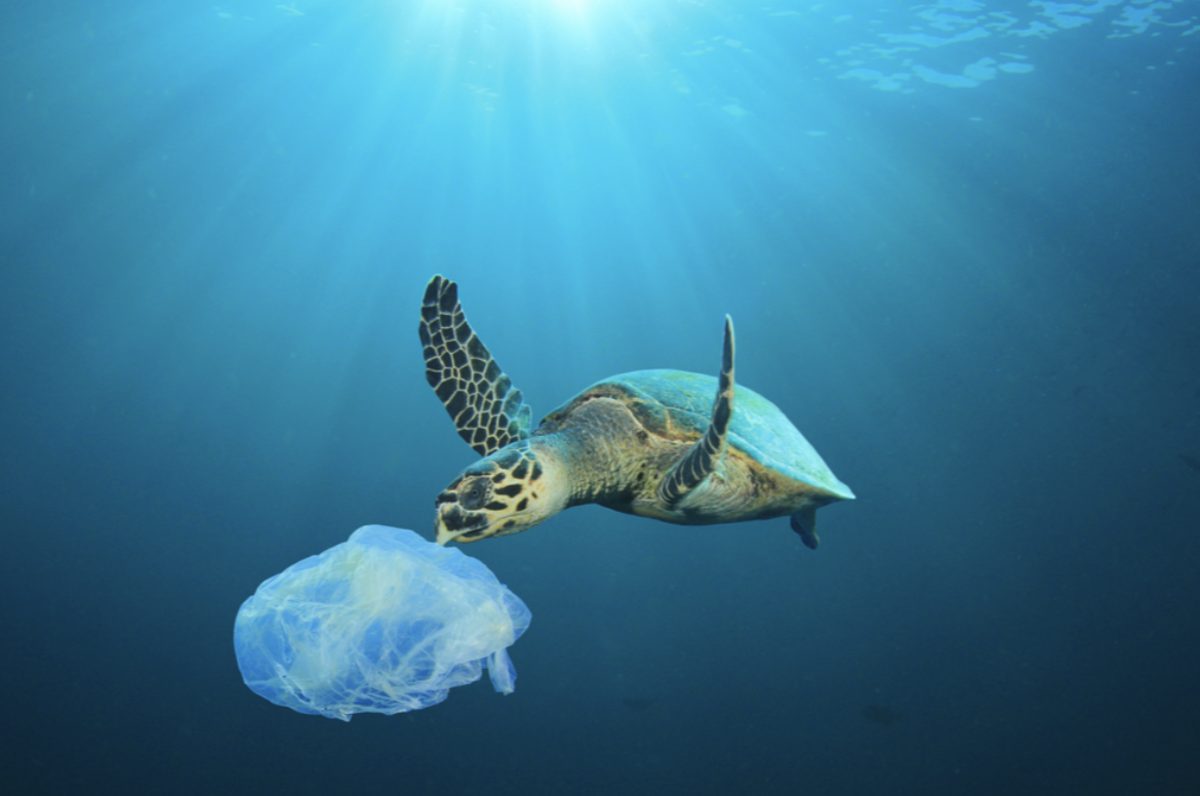
Digital lending and payment provider WLTH and Parley for the Oceans, a new form of environmental organisation, announce a five-year partnership to empower customers with an innovative lending solution that offers an everyday way to protect the oceans and support the movement to end marine plastic pollution across Australia.
WLTH is collaborating with Parley for the Oceans to develop and deliver simple mechanics to its customers to aid in the protection of Australia’s treasured reefs and coastlines from the threats of plastic pollution.
Aimed at a new generations of banking customers who are driven by authentic, impactful commitments to environmental responsibility, WLTH and Parley for the Oceans will deliver an eco-innovative suite of products and services over the next five years.
Scheduled for release in Q4 2021, WLTH will introduce the Convego® Parley Ocean Card developed with Giesecke+Devrient (G+D). The innovative new payment card, made of Parley Ocean Plastic® created from intercepted and upcycled marine plastic waste, will empower cardholders with an everyday tool to take action for the oceans.
Founder and CEO of Parley for the Oceans, Cyrill Gutsch said: “To end plastic pollution and the environmental crises behind it, we need to align our economic system with the ecosystem we all depend on: the oceans. Everyone has the power to demand change and take action to help create it, but it’s on industry leaders to own the responsibility of bringing new and better options into reality. The keys are collaboration and eco-innovation. This Convego® Parley Ocean Card and the alliance behind it represent the future we have the opportunity to create, and the role leaders of financial technology can play in shaping it.”
The dynamic partnership with WLTH gives Parley for the Oceans a new platform to scale its global mission to intercept plastic from beaches and coastlines while educating communities throughout Australia. Together, WLTH and Parley for the Oceans are re-imagining the future of lending and its social impact, creating a practical solution for customers to actively address today’s major ocean threats.
Co-founder of WLTH, Drew Haupt commented: “With sustainability in our core DNA, we have partnered with Parley for the Oceans and G+D to launch the first recycled ocean plastic cards in Australia. Not only is it an honor to be one of the first fintech doing so, but it’s also a goal we’ve been aspiring to achieve since the planning phase of building WLTH.”
“As a business, we want to make a difference to the environment and the world around us, and through this partnership, we will be fighting against the growing threat of marine plastic pollution, as well as protecting the oceans and waterways, that are such a huge part of the Australian lifestyle.”
Out of the gate, WLTH will contribute proceeds to Parley for the Oceans with every new user who activates a WLTH Pay account. WLTH will include additional mechanics such as round-up features, plastic off-setting options, and will host events and customer expeditions with Parley for the Oceans throughout the year to raise awareness for the beauty and fragility of the oceans.
WLTH’s commitment to support Parley for the Oceans includes allocating contributions for every home loan towards Parley for the Oceans’ Australian Clean-up Efforts to support intercepting plastic from beaches and coastlines from around the country.
Global Head of Sales and Distribution at G+D, Dr Carsten Wengel added: “Consumers are looking for new ways to a more sustainable lifestyle. That’s why we offer banks our ecologically eco-innovative payment cards. They remind consumers every day of their own and their bank’s environmental commitment to protecting the planet.”
UAE and Saudi Arabia drive gaming economy growth, positioning MENA as global industry leader, says Chris Hewish from Xsolla
In Short:
– UAE and Saudi Arabia are committed to fostering a thriving local gaming market through government initiatives.
– The MENA region is rapidly growing as a gaming market, with revenue projected to reach $8 billion.
The Middle East is fast emerging as a global gaming hotspot, with the UAE and Saudi Arabia driving growth. Once considered secondary markets, both nations are now positioning the MENA region as a central player in a sector worth billions, supported by ambitious government strategies.
Chris Hewish, president of Xsolla, says this growth is intentional. Governments are creating the infrastructure, policies, and investment frameworks needed for long-term, sustainable gaming ecosystems, focusing on attracting talent, capital, and leading global companies.
Gaming powerhouse
UAE has become a focal point with its Gaming 2033 initiative, which simplifies visas, business licences, and access to funding. The country has attracted more than 350 gaming companies, including international giants like Riot and Ubisoft, while drawing talent from the UK and beyond. Saudi Arabia, through Vision 2030, is taking a complementary but distinct approach, investing heavily in local studios and acquiring stakes in global firms such as Savvy Games and Electronic Arts, aiming to build a strong domestic gaming ecosystem.
The MENA gaming market has surged from $3 billion to $8 billion annually, powered by a young, tech-savvy population with disposable income and high digital adoption. The Gulf is rapidly becoming a gaming powerhouse, with both Dubai and Riyadh contributing in their own ways. For Hewish, this is more than market expansion — it’s a strategic push to diversify economies and cement the MENA region as a major force in the global gaming industry.
Raffy Sgroi discusses sustainable growth vs temporary spikes in business performance for lasting success and balance
In Short:
– Raffy Sgroi explains that growth is sustainable and requires a strong team, unlike short-term spikes from trends.
– Businesses should focus on systems and leadership for lasting success, ensuring they aren’t reliant on the owner’s presence.
Raffy Sgroi from Sage Advice highlights a crucial distinction in business performance: the difference between temporary spikes in results and genuine, sustainable growth.
True growth is defined by a business’s ability to scale sustainably, maintaining quality and stability without added stress. It is not simply about becoming faster, bigger, or chasing rapid expansion—a mindset often associated with hustle culture that rarely lasts.
In contrast, a spike represents a short-lived increase in results, typically driven by seasonal promotions, viral trends, or one-off marketing campaigns. While spikes can boost numbers temporarily, they do not equate to long-term success. Genuine growth, on the other hand, is marked by consistent demand increases, measurable improvements such as higher conversion rates, and a stable foundation for the future.
Financial metrics
Many businesses make the mistake of attempting rapid scaling without a solid team or infrastructure in place. To transform a spike into sustained growth, it is essential to strengthen the team, ensure the repeatability of successful initiatives, and maintain a close understanding of financial metrics—including cash flow and revenue—rather than relying solely on an accountant’s reports.
Sgroi recommends analyzing business performance over 90-day cycles and regularly monitoring key metrics. Assessing operational capacity before taking on new expenses is critical, as unchecked expansion can create unnecessary stress and inefficiencies.
Ultimately, true business success lies in the ability to operate independently of the owner’s daily involvement. Sustainable growth supports a healthy work-life balance and is grounded in strong leadership, disciplined processes, and strategic planning.
Raffy Sgroi can be found at sage.au or on LinkedIn for further insights into building scalable, enduring businesses.
Caroline Brewin highlights confidence’s vital role in leadership amid AI’s rise and its impact on organisational transformation
In Short:
– Caroline Brewin highlights the importance of confidence and emotional intelligence in leadership and AI adoption.
– Over-reliance on AI can diminish human judgment and confidence, risking poor decision-making.
Caroline Brewin from Brain Powered Coaching, discussed the importance of confidence in leadership and its growing impact on AI adoption and organisational change. While job displacement is often the focus of AI debates, Brewin highlighted a less visible risk: the erosion of human judgement. She compared over reliance on AI to blindly following a GPS, where unquestioned directions can lead to poor or harmful outcomes.
Over time, this dependence can weaken individual decision making and self confidence. Brewin stressed that confidence, alongside emotional intelligence, is critical for both personal and professional success. The World Health Organization identifies these as essential future skills. Confident leaders are more likely to set ambitious goals, adapt under pressure and make informed decisions, while emotionally intelligent leadership creates psychologically safe environments where people feel able to speak openly.
Critical thinking
In technology driven organisations, fear-based cultures can intensify the challenges of AI integration. Brewin emphasised the need for open discussions around ethics and accountability, noting that AI ultimately relies on human oversight. Drawing parallels with aviation’s reliance on automation, she warned leaders to ensure teams retain strong critical thinking and judgement.
To reduce over dependence on AI, Brewin advocated configuring systems as tools that support thinking rather than replacing it. Her book, Confident, available on Amazon, examines how confidence can be developed through neuroscience, focusing on strengthening belief in one’s ability to navigate uncertainty and complexity.