
Connect with us
https://tickernews.co/wp-content/uploads/2023/10/AmEx-Thought-Leaders.jpg

News

Drones to target China’s illegal fishing

Published

on

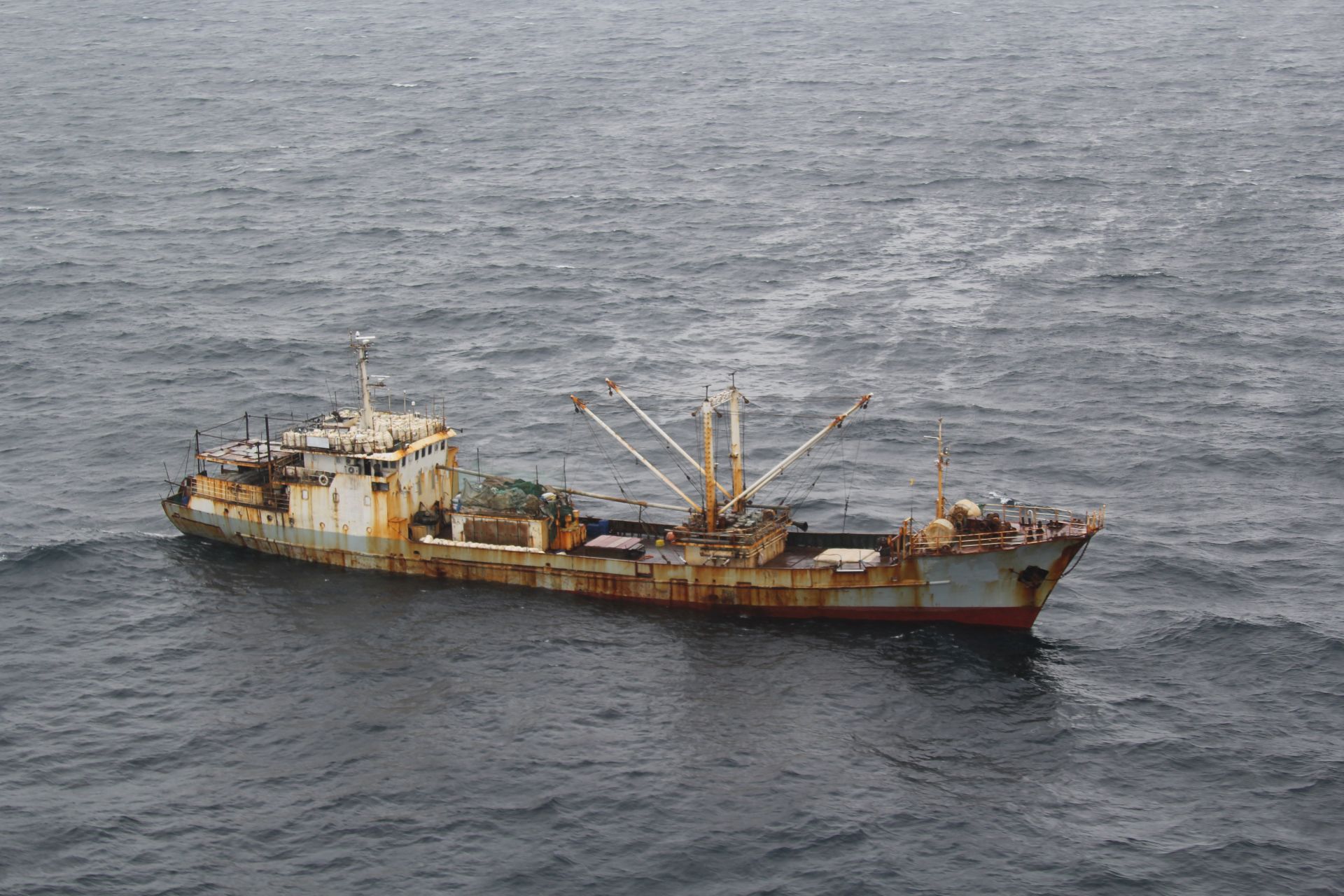
A Chinese fishing vessel suspected of maritime violations.

A senior South Korean Minister has pledged to use surveillance systems to combat China’s illegal fishing.

The Minister of Oceans and Fisheries, Moon Seong-hyeok said illegal fishing must be “completely eradicated”. He also said it creates increased security threats across the region.

“I’m aware of voices that are calling for a coalition with other countries to respond against Chinese boats conducting illegal fishing. But I think it’s ultimately China’s problem,” he explained.

South Korea has long campaigned for an end to illegal fishing in the Yellow Sea. But Seoul has since taken matters into their own hands. From next year, the nation will increase its maritime surveillance systems, including the use of drones and artificial intelligence.

Local media reports suggest around 180 Chinese vessels were found near the maritime border with North Korea each day. In 2011, a Chinese illegal fishing captain stabbed a South Korean coast guard to death in the Yellow Sea. The 43-year-old was sentenced to 30 years in jail.

China is South Korea’s biggest trading partner. However, Seoul’s key military partner is the United States. There are growing tensions between China and the wider region, including diplomatic strains with the United States and Australia.

Although Beijing denies the allegations, a UN Security Council report found North Korea sells up to 1,000 fishing permits each year to countries like China.


Costa is a news producer at ticker NEWS. He has previously worked as a regional journalist at the Southern Highlands Express newspaper. He also has several years' experience in the fire and emergency services sector, where he has worked with researchers, policymakers and local communities. He has also worked at the Seven Network during their Olympic Games coverage and in the ABC Melbourne newsroom. He also holds a Bachelor of Arts (Professional), with expertise in journalism, politics and international relations. His other interests include colonial legacies in the Pacific, counter-terrorism, aviation and travel.

Click to comment

Leave a Reply

Your email address will not be published. Required fields are marked *

News

Iran’s currency collapse sparks mass protests as inflation spirals

Iran president engages protesters amid economic crisis as currency tumbles and inflation surges

Published

on

Iran’s president engages protesters amid economic crisis as currency tumbles and inflation surges

video
play-sharp-fill
In Short:
– Iranian President Pezeshkian urged action to meet protesters’ demands amid economic crisis and currency devaluation.
– Protests intensified with shop closures in Tehran, following significant inflation and political unrest after Mahsa Amini’s death.

Iran is grappling with its most severe economic crisis in years. Mass protests erupted across Tehran following the dramatic collapse of the national currency. The rial plunged to 1.42 million against the U.S. dollar over the weekend, briefly recovering to 1.38 million. This marks a loss of more than two-thirds of its value since 2022.

Annual inflation soared to 42.2 percent in December, with food prices up 72 percent year-on-year. Many Iranians are struggling to make ends meet, fueling public anger and unrest.

In response, Iranian President Masoud Pezeshkian ordered his government to engage directly with protest representatives. Calling the demonstrations “legitimate,” he emphasized the need for reforms in the monetary and banking sectors. Officials announced a dialogue framework to hear the voices of demonstrators.

The unrest coincided with the resignation of Central Bank Governor Mohammad Reza Farzin. Former Economy Minister Abdolnaser Hemmati is set to replace him, signaling possible shifts in economic policy.

Tehran’s commercial districts were paralyzed as shopkeepers in the Grand Bazaar and major streets closed businesses in solidarity. Videos on social media showed crowds chanting slogans as security forces used tear gas to disperse them.

International pressure is also rising. U.S. officials warned they would support action against Iran if the country resumes nuclear or missile development, following recent airstrikes on Iranian facilities.

The World Bank forecasts Iran’s GDP will contract 1.7 percent in 2025 and 2.8 percent in 2026, deepening economic concerns. How the government responds to these protests and reforms its economy may shape the country’s stability in the months ahead.


Download the Ticker app

Continue Reading

News

CIA launches first drone strike in Venezuela

CIA conducts first drone strike in Venezuela, targeting drug gang facility amid escalating US military campaign

Published

on

CIA conducts first drone strike in Venezuela, targeting drug gang facility amid escalating US military campaign

video
play-sharp-fill
In Short:
– The CIA conducted its first drone strike in Venezuela since the Trump administration’s military campaign began.
– Trump’s operation targeted a dock linked to drug trafficking, resulting in no casualties.

The United States has carried out its first confirmed drone strike inside Venezuela, marking a dramatic escalation in Washington’s expanding military campaign across the Caribbean. The operation, reportedly conducted by the CIA, targeted a remote port facility believed to be used by the Tren de Aragua gang to store and transport narcotics. No casualties were reported, as the dock was empty at the time of the strike.

President Donald Trump publicly acknowledged the attack in late December, describing a “major explosion” at a dock where drug-laden boats were allegedly loaded. Trump first revealed the strike during a radio interview, placing the operation around December 24, before later confirming it to reporters while declining to specify whether the CIA or the military carried out the mission. “I know exactly who it was, but I don’t want to say who it was,” he said from his Mar-a-Lago residence.

Drug networks

The strike comes amid a significant expansion of Operation Southern Spear, now the largest US military deployment in the Caribbean since the Cuban Missile Crisis. Around 15,000 US troops have been positioned across the region, supported by the USS Gerald R. Ford carrier strike group and F-35 fighter jets. Since September, US forces have carried out at least 28 strikes on vessels in the Caribbean and eastern Pacific, resulting in more than 100 deaths, as Washington intensifies efforts to dismantle transnational drug networks.

The campaign has drawn fierce criticism from legal experts and international bodies. United Nations investigators have condemned the strikes as “extrajudicial executions,” warning they violate the UN Charter’s prohibition on the use of force. US legal scholars have also questioned the domestic legality of the operation, arguing it exceeds constitutional and statutory limits on executive power.

A slave’s peace

Venezuela has not formally commented on the dock strike, though Interior Minister Diosdado Cabello has accused the United States of months of “imperial madness.” President Nicolás Maduro has rejected Trump’s demands to step aside, telling supporters the country seeks peace “with sovereignty, equality, and freedom” — not what he described as “a slave’s peace.”


Download the Ticker app

Continue Reading

News

NASA’s Pandora satellite set to search for alien life

NASA’s Pandora satellite set for January launch to search exoplanets for signs of alien life

Published

on

NASA’s Pandora satellite set for January launch to search exoplanets for signs of alien life

video
play-sharp-fill
In Short:
– NASA and Lawrence Livermore National Laboratory will launch the Pandora Mission on January 5, 2026, to find signs of life.
– The mission will study 20 exoplanets’ atmospheres for biosignatures, utilising an innovative telescope design.

NASA is gearing up to launch the Pandora Mission on January 5, 2026, aboard a SpaceX Falcon 9 rocket from Vandenberg Space Force Base. The compact satellite, developed with Lawrence Livermore National Laboratory, is designed to probe distant exoplanets for signs of life by analyzing their atmospheric composition. This $20 million mission focuses on detecting water vapor and other biosignatures across 20 known worlds.

At the core of Pandora is CODA, a 45-centimeter all-aluminum telescope offering innovative, cost-effective observations in both visible and near-infrared light. By separating planetary signals from the bright light of host stars, scientists hope to confirm the presence of water—a critical ingredient for life as we know it. Each of the 20 target planets will be observed 10 times during planetary transits, enabling continuous 24-hour monitoring sessions.

Pandora arrives amid growing excitement over exoplanet discoveries, including potential biosignatures found on K2-18b in 2025. Its observations will pave the way for future missions, like NASA’s Habitable Worlds Observatory, while rideshare payloads from Spire Global and Kepler Communications join the launch. The mission operations center at the University of Arizona will process all incoming data.


Download the Ticker app

Continue Reading

Trending Now