Connect with us
https://tickernews.co/wp-content/uploads/2023/10/AmEx-Thought-Leaders.jpg

Ticker Views

Trump republicans on Ukraine: To Russia, with love

Published

on

Is Ronald Reagan turning in his grave? 

Would the president who told Mr Gorbachev in Berlin to “Tear down this wall!” tell Mr Putin that the West really should not care if he tears down Ukraine? 

The president who said – in Moscow — in 1988, “Here’s my strategy on the Cold War:  We win, they lose,” take this from Republican Rep. Paul Gosar of Alabama:  “We have no dog in the Ukraine fight.”?

The Gipper would be standing with the Republican leaders in the Senate, led by Mitch McConnell, on what needs to be done – and who support, in large measure, what President Biden has done.

“It appears to me the administration is moving in the right direction,”

McConnell said.

A day later, he added, “My advice to the president and his team from the very beginning was, ‘Let’s do the following things and do them now: both ground-to-air stinger missiles, the weapons that can also be used against tanks into Ukraine now.’”

White House Press Secretary Jen Psaki underscored the importance of this alignment on Ukraine:  “One country should not be able to invade and take over territory from another country—that’s not just a Democratic belief or Republican belief,” she said. 

“That’s central to who we are as a country and who leaders like Leader McConnell or…like President Biden [are]. That’s what their belief has been for many decades, so we certainly welcome that.”

But several major Republicans in Congress and drivers of the party’s Trumpist trajectory are decidedly in the Putin camp – with shocking statements. 

Trump himself told Lou Dobbs that sending troops to NATO would serve, “To start World War III, to start World War III. It’s just all so crazy. And it would have never happened under me. It would have never happened.”

This rings true to those who believed Trump supported Putin more than he stood with NATO in his presidency. And who believe Trump would surrender Ukraine to Putin.

Tucker Carlson had the largest cable news ratings in 2021 and has over 3.2million viewers each night. Carlson is Trump’s favourite megaphone for the base. He said to Axios:

“Why is it disloyal to side with Russia, but loyal to side with Ukraine? It’s a sincere question. I just want to go on the record and say I could care less if they call me a pawn of Putin”

Tucker Carlson

“It’s too stupid. I don’t speak Russian. I’ve never been to Russia. I’m not that interested in Russia. All I care about is the fortunes of the United States, because I have four children who live here. I really hope that Republican primary voters are ruthless about this,” and vote out any Republican “who believes Ukraine’s borders are more important than our borders.”

You judge whether Tucker Carlson is a pawn of Putin.

Not only are the biggest Trumpists in Congress supporting these views, but the Trumpists running for election in November have seized on them too. 

Several Republican Senate candidates for Ohio, Arizona and Nevada are on board: “This country has actual problems that our politicians should prioritize election integrity, the border crisis, soaring inflation, violent crime, failing schools, and Big Tech, to name a few. The Ukrainian border isn’t even in the top 20,” Arizona Senate hopeful Blake Masters said.

So many in the Republican Party have not just run from Reagan, they have severed ties with Reagan. Trump wants to dominate the party for decades to come –  even longer than Reagan held sway from his election in 1980 through the presidencies of two Bushes, ending in 2009. 

Given what up-and-coming Republicans are saying, and doing, to the biggest threat to European and US security since the Cold War, Trump is on track to succeed.  

Putin hopes he will.  

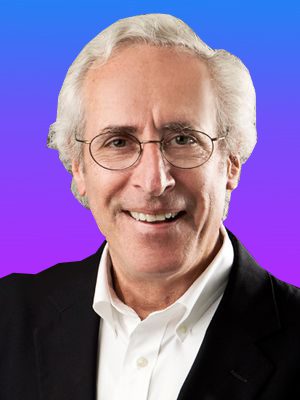
Bruce Wolpe is a Ticker News US political contributor. He’s a Senior Fellow at the US Studies Centre and has worked with Democrats in Congress during President Barack Obama's first term, and on the staff of Prime Minister Julia Gillard. He has also served as the former PM's chief of staff.

Ticker Views

U.S. ambassador responds to NATO criticism at Munich Security Conference

At Munich Security Conference, U.S. NATO ambassador discussed defense autonomy, hybrid warfare, and transatlantic cooperation amid rising tensions.

Published

on

At Munich Security Conference, U.S. NATO ambassador discussed defense autonomy, hybrid warfare, and transatlantic cooperation amid rising tensions.


At the Munich Security Conference, the U.S. ambassador to NATO faced tough questions on global order as European allies explored greater defense autonomy amid rising geopolitical tensions. The discussion highlighted the challenges NATO faces in maintaining unity while responding to evolving threats.

The ambassador addressed criticisms directly, emphasizing the importance of transatlantic cooperation and NATO’s role in ensuring international security. European nations voiced concerns about independent defense capabilities and the impact of hybrid warfare from Russia on regional stability.

The conversation also covered Arctic strategy cooperation and the broader implications for NATO policies and transatlantic relations. For more, I’m joined by Oz Sultan from Sultan Interactive Group.

Subscribe to never miss an episode of Ticker – https://www.youtube.com/@weareticker

#MunichSecurityConference #NATO #GlobalSecurity #DefenseAutonomy #Geopolitics #TransatlanticAlliance #HybridWarfare #USForeignPolicy


Download the Ticker app

Continue Reading

Ticker Views

Israeli President Herzog visits Australia amid rising antisemitism

Israeli President Herzog’s Australia visit strengthens solidarity and shared values amid recent attacks on the Jewish community.

Published

on

Israeli President Herzog’s Australia visit strengthens solidarity and shared values amid recent attacks on the Jewish community.


Israeli President Isaac Herzog’s visit to Australia marks a significant moment of solidarity between the two nations, especially following recent tragic attacks affecting the Jewish community. The visit underscores shared democratic values and a commitment to combating antisemitism.

Professor Tim Harcourt from UTS discusses the deeper significance of the visit, including the Australian government’s message and the broader implications for Jewish Australians. The timing, following the Bondi attack, highlights the sensitive context in which this diplomatic engagement occurs.

Subscribe to never miss an episode of Ticker – https://www.youtube.com/@weareticker


Download the Ticker app

Continue Reading

Ticker Views

Rebuilding Gaza: Lessons from the Phoenix Plan

Published

on

What will a rebuilt Gaza look like? The competing visions for the Strip’s future

A girl walks along a street in Gaza to get food during the war between Hamas and Israel.
Jaber Jehad Badwan / Wikimedia Commons, FAL

Timothy J. Dixon, University of Reading; University of Oxford

Following a visit to Gaza in January, the UN undersecretary general, Jorge Moreira da Silva, called the level of destruction there “overwhelming”. He estimated that, on average, every person in the densely populated territory is now “surrounded by 30 tonnes of rubble”.

This staggering level of destruction raises urgent questions about how, and by whom, Gaza should be rebuilt. Since 2023, a variety of reconstruction plans and other initiatives have tried to imagine what Gaza could look like when the conflict ends for good. But which of these visions will shape Gaza’s future?

The Israeli government’s Gaza 2035 plan, which was unveiled in 2024, lays out a three-stage programme to integrate the Gaza Strip into a free-trade zone with Egypt’s El-Arish Port and the Israeli city of Sderot.

AI renderings show futuristic skyscrapers, solar farms and water desalination plants in the Sinai peninsula. The plan also shows offshore oil rigs and a new high-speed rail corridor along Salah al-Din Road, Gaza’s main highway that connects Gaza City and Rafah.

The US government has proposed a similar futuristic vision for Gaza. Its August 2025 Gaza Reconstitution, Economic Acceleration and Transformation Trust plan shows a phased series of modern, AI-powered smart cities developed over a ten-year time frame. The plan, which would place Gaza under a US-run trusteeship, suggested that poor urban design lies at the heart of “Gaza’s ongoing insurgency”.

Jared Kushner presenting the ‘Gaza Riviera’ Project at World Economic Forum in Davos, January 2026.

The latest iteration of this vision was unveiled by Donald Trump’s son-in-law, Jared Kushner, at the recent World Economic Forum in Davos.

He presented slides showing Gaza reconstructed as a “Riviera” of the Middle East, with luxury beachfront resorts, gleaming tower blocks, residential zones and modern transport hubs. Kushner suggested it was “doable” to complete the construction of a “new” Rafah city in “two to three years”.

It has been reported that the US and Israeli visions are heavily influenced by US-based economics professor Joseph Pelzman’s economic plan for Gaza. This plan, Pelzman said on a podcast in 2024, would involve destroying Gaza and restarting from scratch.

In contrast to the US and Israeli visions, the February 2025 Gaza “Phoenix” plan includes input from the people of Gaza. It has a much stronger focus on maintaining and reconstructing the existing buildings, culture and social fabric of the enclave.

The plan was developed by a consortium of international experts together with professionals and academics from Gaza, the West Bank and the Palestinian diaspora, and suggests a reconstruction and development phase of at least five years.

Other plans from the Arab world take a more technocratic view of reconstruction, but still have a short timescale for reconstruction. These include a five-year plan by the United Arab Emirates-based Al Habtoor Group, which promises to grant 70% of ownership in the holding company that will manage Gaza’s reconstruction to the Palestinians.

Feasibility of rebuilding Gaza

So, how feasible are these different visions and how inclusive are they for the people of Gaza? Rebuilding cities after war takes time and money, and also requires local resources. Even in China, a country with plentiful resources and abundant skilled labour, major new cities are rarely completed in less than 20 years.

And in Gaza rebuilding will be complicated by the fact that there are now 61 million tonnes of rubble there, as well as other hazardous debris such as unexploded munitions and human remains. This will need to be removed before any reconstruction can commence, with the UN estimating that clearing the rubble alone could take as long as 20 years.

For comparison, the Polish capital of Warsaw experienced a similar level of destruction during the second world war and it took four decades to rebuild and reconstruct the city’s historic centre. The time frames for reconstruction outlined in all of the plans for Gaza are far shorter than this and, even with modern construction methods, are unlikely to be feasible.

The US and Israeli visions also fail to include Palestinians in the planning of Gaza’s future, overlooking any need to consult with Gazan residents and community groups. This has led critics to argue that the plans amount to “urbicide”, the obliteration of existing cultures through war and reconstruction.

Reports that suggest Gazan residents will be offered cash payments of US$5,000 (£3,650) to leave Gaza “voluntarily” under the US plan, as well as subsidies covering four years of rent outside Gaza, will not have alleviated these concerns.

At the same time, the US plan does not propose a conventional land compensation programme for Gazan residents who lost their homes and businesses during the war. These people will instead be offered digital tokens in exchange for the rights to redevelop their land.

The tokens could eventually be redeemed for an apartment in one of Gaza’s new cities. But the plan also envisages the sale of tokens to investors being used to fund reconstruction. The Council on American-Islamic Relations, the largest Muslim civil rights and advocacy organisation in the US, says the “mass theft” of Palestinian land through the token scheme would amount to a war crime.

With their emphasis on community engagement and the repair and renewal of existing structures, the Phoenix plan and the other Arab-led visions are at least a step forward. But without a fully democratic consensus on how to rebuild Gaza, it is difficult to see how the voices of the Gazan people can be heard.

Whichever vision wins out, history shows that post-war reconstruction succeeds when it involves those whose lives have been destroyed. This is evidenced somewhat ironically by the US Marshall Plan, which funded the reconstruction of many European economies and cities after the second world war, and involved close engagement with civil society and local communities to achieve success.The Conversation

Timothy J. Dixon, Emeritus Professor in the School of the Built Environment, University of Reading; University of Oxford

This article is republished from The Conversation under a Creative Commons license. Read the original article.

Continue Reading

Trending Now