

Ticker Views
How the federal budget was built on a major lie

For months the Federal Government has been telling Australians that property investors are the villains of the housing market.
The justification for breaking election promises – winding back negative gearing and increasing capital gains tax in the betrayal Budget – was that investors were supposedly driving up house prices and making home ownership less affordable.
The latest research suggests a very different reality and provides evidence that the Federal Budget was built on a major lie.
New analysis from property research group Cotality, based on 16 years of data across around 3,000 suburbs, indicates that owner-occupiers have a far greater influence on long-term price growth than investors.
In fact, the strongest capital growth has consistently occurred in suburbs where owner-occupiers dominate rather than investors.
That finding deserves far more public attention than it has received, because it completely undermines one of the key arguments used to justify the Federal Budget’s attack on residential property investment.
The report, released in July 2026, found that units located in owner-occupier-dominated suburbs increased in value by 99% between 2010 and 2026. Comparable units in investor-heavy suburbs rose by only 65%.
Applied to the national median unit price in 2010, that represents an additional $148,000 in capital growth simply because a suburb was dominated by home-buyers rather than investors.
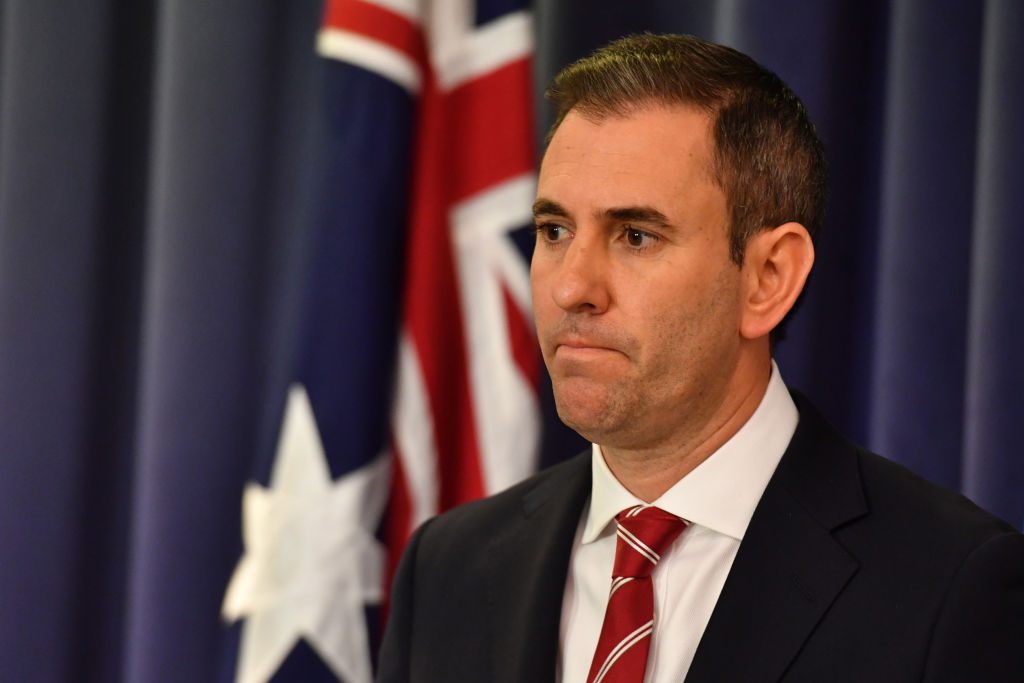
Australian Treasurer Jim Chalmers.
Political narrative
Even in the detached housing market, where the relationship is less pronounced, suburbs with relatively few investors still comfortably outperformed those with large investor populations. Houses in owner-occupier suburbs recorded growth of 136% between 2010 and 2026, compared with 117% in investor-heavy locations.
These are not trivial differences. They completely contradict the simplistic political narrative that investors are the principal force driving prices higher.
The opposite is true.
The explanation is fairly straightforward according to the Cotality analysis.
Owner-occupiers buy homes for reasons investors don’t. They pay premiums to live near good schools, transport, employment centres and lifestyle amenities. They renovate their homes, improve them over time and generally hold them for much longer periods. Their purchasing decisions are driven by lifestyle rather than purely financial calculations.
Investors behave differently.
They are naturally more price-sensitive because they have to make the numbers work. Rental yields, interest rates, taxation and cash flow all matter. If prices become too high relative to rental income, investors simply stop buying.
Now, that’s hardly the behaviour of a group supposedly responsible for pushing prices endlessly upwards everywhere in Australia.
It’s yet another massive lie from a dishonest Prime Minister, an incompetent Federal Treasurer and a Federal Housing Minister completely out of her depth.
The report reinforces something experienced property investors have understood for many years.
The best investment locations are usually places where owner-occupiers want to live.
Strong owner-occupier demand creates competition based on lifestyle rather than rental return. Buyers compete for school catchments, transport links, beaches, cafes and employment opportunities. That competition supports long-term price appreciation.
Investor concentrations, by comparison, often reflect areas chosen because they appear affordable or produce attractive rental yields. Those characteristics do not necessarily translate into superior capital growth.

The Property Playbook host, Terry Ryder.
Housing problem
Perhaps the most important conclusion from this research is that governments continue to misdiagnose Australia’s housing problems.
Housing affordability has deteriorated because Australia hasn’t built enough homes to accommodate rapid population growth and changes in household formation. Planning delays, excessive taxation, restrictive zoning, escalating construction costs and bureaucratic obstacles have constrained supply for years.
Blaming investors has always been politically convenient because it diverts attention away from those policy failures.
Now we have independent research that finds, categorically, that investors are not the strongest drivers of price growth.
Instead, owner-occupiers themselves are creating much of the upward pressure because they are willing to pay more for desirable locations and quality neighbourhoods.
None of this means that investors have no impact on prices. But the evidence indicates they are followers far more often than leaders, particularly in established markets. They tend to respond to price movements rather than create them.
The Federal Government built its housing tax reforms on the assumption that reducing investor activity would improve affordability.
This latest research raises a serious question. If owner-occupiers are the strongest force behind long-term capital growth, then attacking investors will do little to improve affordability while almost certainly reducing the supply of rental housing.
That was always the fundamental flaw in the Government’s policy.
The Cotality research simply provides the data to prove it.

-
 News3 days ago
Meta tests human concierge for Muse AI assistant
-
News2 days ago
Super El Niño to cause heat deaths globally
-
News4 days ago
Iran’s U.N. visit aims for Middle East diplomacy
-
Ticker Views3 days ago
‘Australians aren’t stupid’: Inflation anger grows
-
Ticker Views2 days ago
Medicare AI breach raises questions over government timing
-
News4 days ago
Two-thirds of Australians support immigration cuts
-
Shows2 days ago
Buyers gain negotiating power as property market slows
-
Shows4 days ago
Understanding contractor classification and legal obligations