The FAA has issued another directive to airlines – this time over concerns for the Boeing 737
The Federal Aviation Administration says over 10,000 aircraft around the world could be impacted by a faulty switch impacting cabin altitude pressure.
‘Cabin altitude pressure switches’ are of concern to the American watchdog and the directive requires airlines to conduct regular checks.
The FAA says airlines must replace or fix switches that are deemed faulty.
Aircraft cabins are pressurised to the equivalent of more than 8,000 feet.
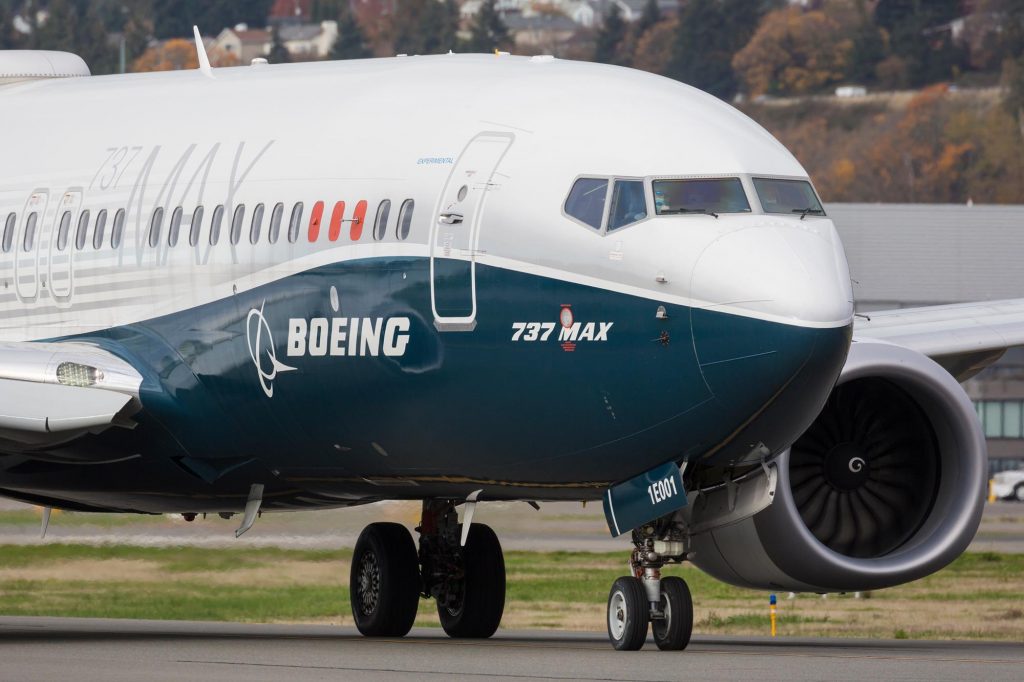
Boeing supportive of the FAA directive
The FAA says the directive has been issued for all types of 737 aircraft.
Boeing stated it supports “the FAA’s direction, which makes mandatory the inspection interval that we issued to the fleet in June.”The FAA directive did not report any in-flight failures of the switches.
The watchdog stated that all aircraft assessments must be conducted within 2,000 flight hours since the last test of the cabin altitude pressure switches, before airplanes have flown 2,000 hours, or within 90 days of the directive’s effective date.
Boeing initially reviewed the issue, including the expected failure rate of the switches, and found it did not pose a safety issue.

Boeing’s increased problems
Boeing says it will cut 787 Dreamliner production after finding another production-related structural defect.
America’s aviation watchdog discovered problems with undelivered Boeing Dreamliners, forcing the manufacturer to take swift action.
The Federal Aviation Administration revealed that some undelivered Boeing 787 Dreamliner jets have a manufacturing quality issue impacting the nose of the aircraft.
The issues will likely further delay deliveries of the popular wide-body jets.
The FAA says the issue is “near the nose on certain 787 Dreamliners in the company’s inventory of undelivered airplanes. This issue was discovered as part of the ongoing system-wide inspection of Boeing’s 787 shimming processes required by the FAA.”
It also comes after a major customer partially canceled a 737 MAX order in a double hit to the U.S. planemaker’s COVID-19 recovery.
Boeing says it plans to fix the issues impacting the nose of the aircraft on the Boeing 787
The FAA added that “although the issue poses no immediate threat to flight safety, Boeing has committed to fix these airplanes before resuming deliveries.” The air regulators added after a review of data it “will determine whether similar modifications should be made on 787s already in commercial service
Boeing plans to address and fix the issue before the planes will be delivered
The aircraft manufacturing company has about 100 undelivered 787s in inventory.
Boeing suspended deliveries of the 787 in late May after the FAA raised concerns about its proposed inspection method, saying it was “waiting for additional data from Boeing before determining whether the company’s solution meets safety regulations.”
The FAA in May had issued two airworthiness directives to address production issues for in-service airplanes.

In Short:
– World equities are expected to reach record highs in 2025, driven by anticipated Federal Reserve rate cuts and AI gains.
– The MSCI index gained nearly 21% in 2025, while the S&P 500 achieved its 39th record close this year.
Global equity markets ended 2025 on a historic high, capping off a year of extraordinary gains. The MSCI world equity gauge recorded an almost 21% year-to-date increase, while the S&P 500 closed at 6,932.05 on Christmas Eve—its 39th record close of the year. European shares also touched intraday records, as investors bet on continued Federal Reserve interest rate cuts and strong AI-driven growth.
Asian markets led the year-end surge, with Taiwan’s benchmark index hitting a record high of 28,832.55, fueled by gains from Taiwan Semiconductor Manufacturing. South Korea’s Kospi rose 2.2%, marking its best year since 1999. Across the region, investors placed big bets on artificial intelligence, overshadowing concerns about trade tariffs and economic uncertainty.
The U.S. Federal Reserve’s rate cuts provided further optimism for global markets. After lowering its main funds rate to 3.5%-3.75% in December, money markets are anticipating additional cuts in 2026. While gold dipped slightly, it still recorded its largest annual gain since 1979, and copper hit a new record high. Investors are balancing bullish AI exposure with safe-haven hedges, signaling cautious confidence as 2025 draws to a close.
In Short:
– New Zealand’s economy grew by 1.1% in Q3, exceeding expectations after a mid-year contraction.
– Fourteen industries reported gains, with business services and manufacturing leading the growth at 2.2%.
New Zealand’s economy bounced back in the third quarter, growing by 1.1% and exceeding forecasts of 0.9%. This follows a revised 1.0% contraction in Q2, signaling a clear turnaround. According to Statistics New Zealand, 14 out of 16 industries reported growth, with business services and manufacturing leading the charge. Construction also picked up, rising by 1.7%, while exports were boosted by strong dairy and meat sales.
Retail spending showed robust gains, especially in categories sensitive to interest rates, including a 9.8% increase in electrical goods and a 7.2% jump in motor vehicle parts. Despite the positive quarter-on-quarter growth, the economy was still 0.5% lower than the same period last year, with telecommunications and education the only sectors experiencing declines.
Cautiously optimistic, Reserve Bank Governor Anna Breman noted that monetary policy will continue to depend on incoming data, as financial conditions have tightened beyond earlier projections. While positive GDP numbers support current low rates, the services sector—comprising two-thirds of GDP—has contracted for 21 consecutive months, suggesting the recovery may remain uneven.
In Short:
– The US economy grew by 4.3 percent in Q3 2025, exceeding forecasts and showing consumer resilience.
– Consumer spending rose by 3.5 percent, with increases in healthcare and recreational goods driving growth.
The US economy grew at a robust annual rate of 4.3% in Q3 2025, exceeding forecasts and marking its strongest quarterly expansion in two years. This growth comes despite lingering inflation concerns and political instability, showing that American consumers are continuing to spend and drive economic momentum.
Consumer spending, which accounts for roughly 70% of the economy, jumped 3.5% in the quarter, up from 2.5% previously. Much of this increase was fueled by healthcare expenditures, including hospital and outpatient services, along with purchases of recreational goods and vehicles. Exports surged 8.8%, while imports fell 4.7%, giving net economic activity a boost, and government spending bounced back 2.2% after a slight decline in Q2.
Remains optimistic
Despite the strong growth, inflation remains in focus. The personal consumption expenditures (PCE) price index rose 2.8%, up from 2.1%, with core PCE also climbing. Economists are closely watching the job market and tariff-related pressures. Meanwhile, the recent federal “Schumer shutdown” is expected to slow Q4 growth, potentially trimming GDP by 1 to 2 percentage points. Treasury Secretary Scott Bessent, however, remains optimistic that 2025 will still reach a 3% growth rate.
The Q3 numbers are also influencing expectations for the Federal Reserve. Analysts now see an 85% probability that interest rates will remain stable at the January 2026 meeting. Steady rates could provide a measure of certainty for investors, businesses, and consumers alike as they make decisions heading into 2026. Overall, the data paints a picture of a resilient US economy navigating both challenges and opportunities.