Connect with us
https://tickernews.co/wp-content/uploads/2023/10/AmEx-Thought-Leaders.jpg

Ticker Views

Will democracy save the Democrats?

Published

on

Politics is not a Hemingway novel, but there is no doubt that Democrats are suddenly wondering: for whom are the bells tolling this midterm election year?  And has the earth moved?

A month ago, there was no doubt that this November would look like virtually every other midterm election:  the party that holds the White House, the President’s party, loses seats in Congress in the midterm elections. 

Given that Democrats hold the House by only four seats, and the Senate is tied 50:50 between the two parties, the expectation – until right now – was that the Republicans were a slam dunk to take control both houses of Congress.

In the past 100 years of midterm elections, only twice has the president’s party gained seats in both the House and Senate. 

The first time was in 1934, when FDR started delivering on his overwhelmingly popular New Deal. 

The second time was in 2002, when the country was united behind President George W. Bush in the aftermath of the 9/11 attacks.  (Prime Minister John Howard also won re-election that year in part on his stance with the US on 9/11).

The Republicans believed they had this year nailed.  Inflation exploding, gasoline prices through the roof, interest rates rising sharply with more pain ahead, crime out of control in the inner cities, the southern border out of control with immigrants pouring into the country, a Democratic party suffused with wokeness on cultural issues from what is taught in schools to transgender rights to a party dominated by radical activists and socialists. 

The Republicans were in no doubt that the Democrats, led by their branding Biden as a weak, ineffective and too-old president, meant that November would be breeze.

The winds of change were also being fed by a powerful sense that the country is deeply troubled.  Nearly 70% of Americas believe the country is headed in the wrong direction. Two thirds view the economy negatively.  More than half of voters have an unfavourable view of Biden.  

Signs of America’s quality of life in decline abound

US life expectancy has fallen because of the Covid pandemic – the sharpest fall in 100 years. Today, it is 76 years – down from 79 years in 2019.  Reading and math scores for 9-year-olds dropped sharply. The drinking water system in Jackson Mississippi has collapsed.

Trump spent the first seven months of the year backing his hand-picked acolytes for the House and Senate and also for offices responsible for counting and certifying the votes in the states that denied him victory in 2020:  Arizona, Georgia, Michigan and Wisconsin.  Trump is counting on their winning and “fixing” the system to ensure that he will be declared the victor in those states in 2024 – regardless of whether he actually wins a majority of votes or not.

Then the earth moved.

At the end of June, the Supreme Court overturned the constitutional right of women to access abortion services. As of today, one in three American women have lost the ability to legally have an abortion, and more restrictions are coming. The Supreme Court’s ruling is exceptionally unpopular.  60% of Americans believe abortion should be legal without undue restrictions. And voters know which political party is responsible for this.

In just one month, the abortion issue exploded.  Kansas – which has not voted for a Democrat for president in nearly 60 years – voted overwhelmingly to keep abortion rights in their state constitution.  In upstate New York, a Democrat, campaigning on this issue, came from behind to beat the Republican.  In Senate races, Trump anti-abortion extremists in several states are trailing.

In July, President Biden suddenly started winning in Congress.  The biggest clean energy program ever enacted.  The biggest health care package since Obamacare.  The most significant investment in computer chips and allied technologies – ever. A bipartisan gun safety law.  Better health care for veterans. 

In August, the FBI raided Trump’s home at Mar-A-Lago to recover thousands of documents, including dozens of classified documents, which belong to the US government and the American people. Trump may be subject to criminal prosecution for not turning over the documents took out of the White House.

By September, the overall trends were clear.  Where political analysts had been expecting a swing to Republicans of 20-30 seats in the House, the projected Republican gain today is just 12 seats.  In the Senate, the growing consensus is a 1-2 seat Democratic gain.

A poll this weekend by the Wall Street Journal reported that voters were most concerned about:

“The economy and inflation first, followed by abortion. But when offered a choice of five issues and asked which made them most likely to vote, they put the Supreme Court ruling overturning Roe v. Wade ahead of inflation.”

WSJ

So the earth has moved.

Biden wants it to move to some more. Last week he invoked the reason he entered the presidential campaign in 2019:  to assert that the extremism fomented by Trump is not what America is, and not what America should ever become.  Biden sees Trump as a direct threat to America’s democracy.

Biden has seen enough, and this is why he addressed the country last week.  

“As I stand here tonight equality and democracy are under assault. We do ourselves no favor to pretend otherwise…
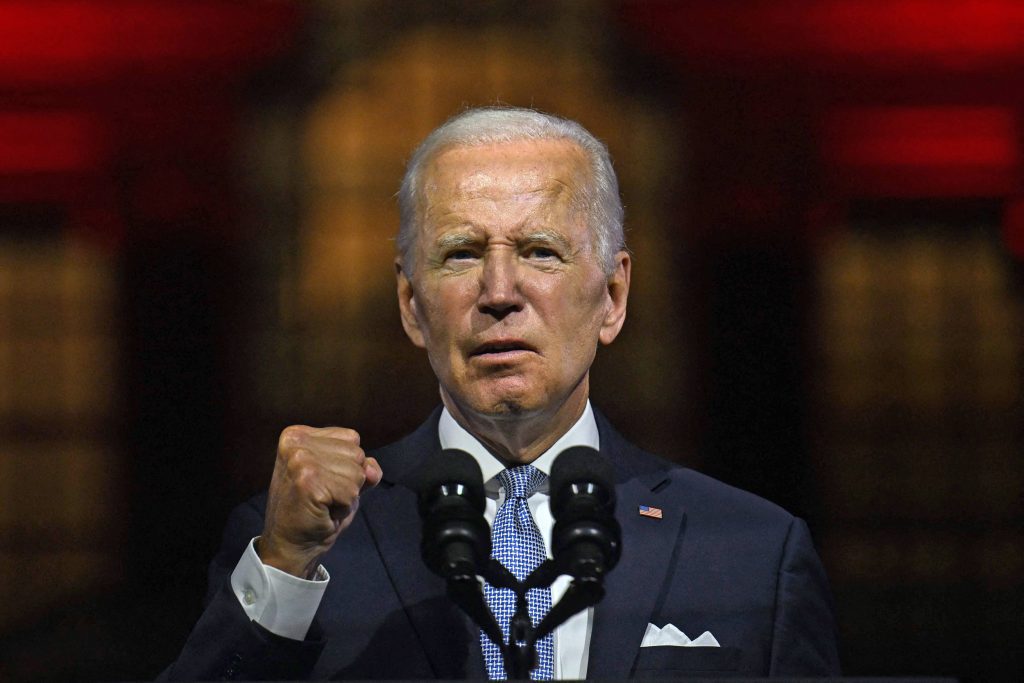
TOPSHOT – US President Joe Biden speaks about the soul of the nation, outside of Independence National Historical Park in Philadelphia, Pennsylvania, on September 1, 2022. (Photo by Jim WATSON / AFP) (Photo by JIM WATSON/AFP via Getty Images)

“There’s no question that the Republican Party today is dominated, driven and intimidated by Donald Trump and the MAGA [Make America Great Again] Republicans. And that is a threat to this country … blind loyalty to a single leader and a willingness to engage in political violence is fatal to democracy…MAGA Republicans are destroying American democracy.”

BIDEN’S SPEECH ON DEMOCRACY

No president since the Civil War has given such a speech about the country’s future.

Trump exploded in his response at a rally in Pennsylvania over the weekend. Trump thundered that Biden’s speech was,

“The most vicious, hateful, and divisive speech ever delivered by an American president…

TRUMP

“You’re all enemies of the state … It was not just my home that was raided last month. It was the hopes and dreams of every citizen who I’ve been fighting for … There can be no more vivid example of the very real threats from American freedom than just a few weeks ago, you saw, when we witnessed one of the most shocking abuses of power by any administration in American history,”

Biden believes that this urgency of affirming America’s democracy will save the country and his fellow Democrats.  We will know the day after the midterm elections whether this is true. 

If Republicans win back the Senate, Trump backed candidates will be the margin of victory. Trump will be boosted to declare his candidacy for president in 2024.
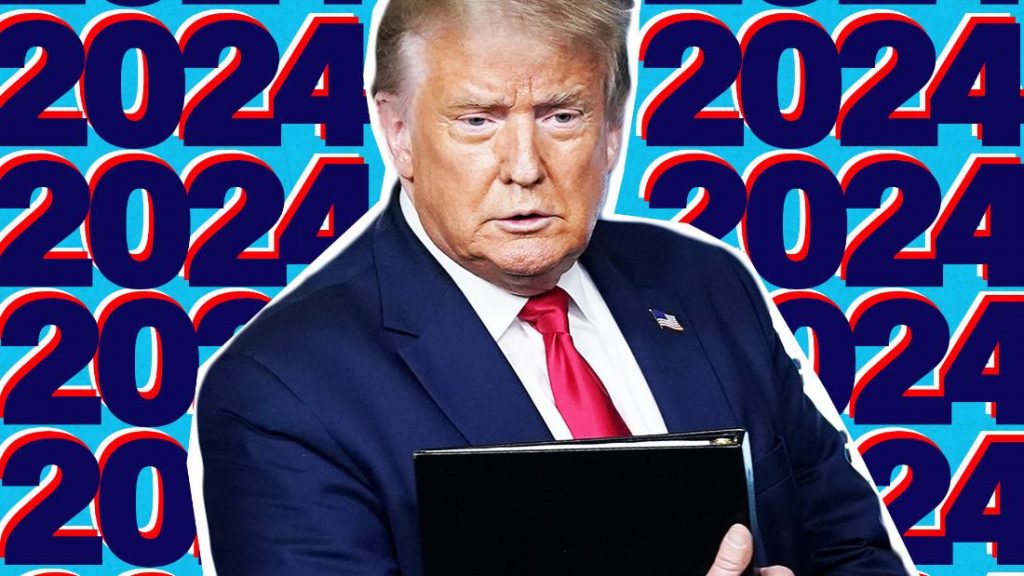
If the Democrats hold the Senate, it will be because they defeated the extremist Trump candidates.  That would mean that the Trump movement has peaked and is in decline – that if the party sticks with Trump the party loses elections.  
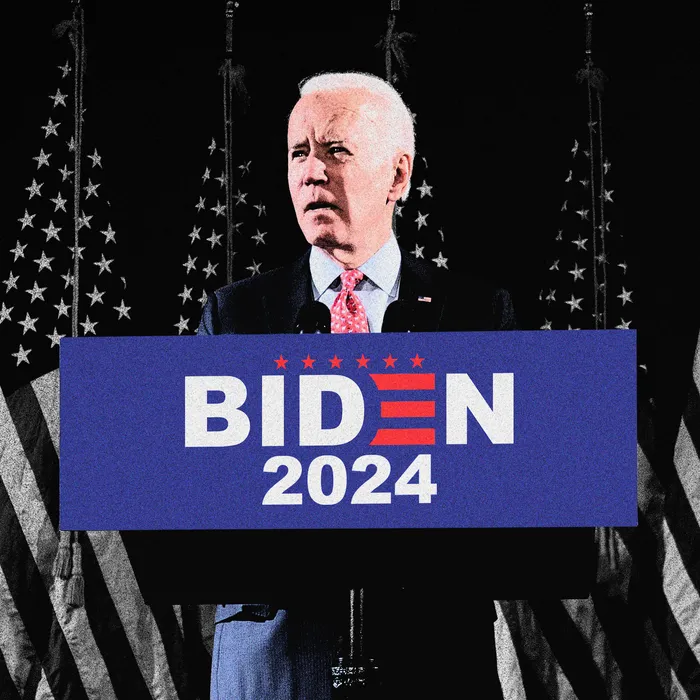
If the Democrats also keep the House – which still must be considered very unlikely – that will be a shocker. 

If both occur, they will constitute a Hemingway event of Richter scale. 

Bruce Wolpe is a Ticker News US political contributor. He’s a Senior Fellow at the US Studies Centre and has worked with Democrats in Congress during President Barack Obama's first term, and on the staff of Prime Minister Julia Gillard. He has also served as the former PM's chief of staff.

Ticker Views

Why Greenland matters in a multipolar world

Published

on

Four ways to understand what’s going on with the US, Denmark and Greenland

Shutterstock/Michal Balada

Ian Manners, Lund University

European countries, and Denmark in particular, are scrambling to respond to threats from US officials over the future of Greenland.

Having successfully taken out the leadership of Venezuela in a raid on January 3, an emboldened US government is talking about simply taking Greenland for itself.

Various European leaders have expressed their concern but haven’t been able to formulate a coherent response to the betrayal by a supposed ally.

Since the September 11 attacks in 2001, Danish governments have willingly participated in US-led invasions of Afghanistan (2001-2021) and Iraq (2003-2007). The rightward movement across the Danish political spectrum had led to Denmark rejecting some Nordic and EU cooperation in favour of pro-US transatlanticism.

However, the 2022 Russian invasion of Ukraine led to a rethink of Danish foreign policy. The country joined the EU’s common security and defence policy and tightened cooperation with recent Nato members Finland and Sweden.

And when Trump came to power for the second time, the chaotic rightward swing of US foreign policy left Denmark reaching out for support from its EU colleagues over the challenge to Greenland.

While a member of the European Union, Denmark has placed itself at the bloc’s periphery since copying the UK in opting out of the euro and from cooperation in justice and home affairs. But any US invasion of Greenland is likely to break Denmark’s fixed exchange rate policy with the euro (and before that the deutschmark) that has been in place since 1982. So there are economic implications as well as territorial.

The fallout from the US’s threats, and certainly any US intervention in Greenland, go much further than Denmark. While the EU tried to stay in step with the US in its support of Ukraine during Joe Biden’s presidency, since the re-election of Trump, EU member states have very much fallen out with the US. During 2025, the US and EU clashed over trade and tariffs, social media regulation, environment and agriculture policies.

But the latest developments demonstrate that Trump’s US can no longer be trusted as a long-term ally – to Greenland and Denmark, the EU and Europe.

This is a crisis engulfing many countries and triggered by many drivers. In order to understand this complex situation, we can use four different analytical approaches from academic thinking. These can help us contextualise not just the Greenland case, but also the emerging multipolar world of “might makes right”.

1. Realism

Currently the most popular approach comes from within the conservative tradition of “realism”. This predicts every state will act in their own national interest.

In this framing, Trump’s actions are part of the emergence of a multipolar world, in which the great powers are the US, China, India and Russia. In this world, it makes sense for Russia to invade Ukraine to counter the US, for the US to seize assets in Venezuela and Greenland to counter China, and for China to invade Taiwan to counter the US.

2. The new elites

Many think that to understand the events of the past few years, including Trump’s return and Vladimir Putin’s foreign policies, you need to look beyond conservative or liberal explanations to seek out who holds power and influence in the global superpowers. That means the wealthy families, corporations and oligarchs who exert control over the politics of the ruling elite through media and campaign power and finance.

In the cases of Venezuela and Greenland there are two factors at work – the US rejection of the rule of law and the desire for personal wealth via energy resources. But the timing is also important. The operation in Venezuela has been the only story to eclipse the Epstein files in the news in many months.

3. The decline of the liberal order

Many academic explanations see these recent events in the context of the decline of a “liberal order” dominated by the US, Europe, the “developed world” and the UN. In this view, the actions of Putin and Trump are seen as the last days of international law, the importance of the UN, and what western nations see as a system based on multilateralism.

However, this approach tends to overlook the continued dominance of the global north in these systems. The lack of support for the US and EU’s defence of Ukraine has been repeatedly demonstrated in the unwillingness of many global south countries, including China and India, to condemn the Russian invasion in the UN general assembly. It would be interesting to see how such voting would play out if it related to a US invasion of Greenland.

4. The planetary approach

The final – and most important – view is found in the planetary politics approach. This approach is based on the simple observation that so many planetary crises, such as global heating, mass extinctions of wildlife, climate refugees, rising autocracy and the return of international conflict are deeply interrelated and so can only be understood when considered together.

From this perspective it is Greenland’s sustainability and Greenlanders’ lives that must shape the understanding of Denmark’s and other European responses to Trump’s claims. It is through acknowledging the deep relationship that indigenous people have to their ecology that solutions can be found.

And Greenlanders have already expressed their vision for the future. Living on the frontline of the climate crisis, they want an economy built on resilience – not on ego-driven political drama.

While it’s quick and easy to to judge the events in Venezuela or Greenland in terms of the daily news cycle, the four perspectives set out here force people to think for themselves how best to understand complex international crises.

There is, however, a final observation to emphasise. Only one of these perspectives is likely to bring any way of thinking ourselves out of our planetary political crisis.The Conversation

Ian Manners, Professor, Department of Political Science, Lund University

This article is republished from The Conversation under a Creative Commons license. Read the original article.

Continue Reading

Ticker Views

Pentagon’s AI gamble: Is Grok safe for defense?

Pentagon to integrate Elon Musk’s AI chatbot Grok, exploring military data and innovation amid AI controversies.

Published

on

Pentagon to integrate Elon Musk’s AI chatbot Grok, exploring military data and innovation amid AI controversies.


Defense Secretary Pete Hegseth announced that Elon Musk’s AI chatbot Grok will soon be integrated with the Pentagon’s networks.

The move aims to harness military data to develop advanced AI technology, despite recent controversies surrounding Grok’s content generation. This integration signals a bold step toward combining commercial AI tools with national defence systems.

Dr Karen Sutherland from UniSC explores the implications of this partnership. We discuss how Hegseth’s approach to AI differs from the Biden administration’s framework, the measures in place to ensure responsible use, and the limitations on Grok’s image generation capabilities.

We also examine the potential risks and international reactions, as well as Hegseth’s vision for innovation within the military. From civil rights considerations to prioritising key technologies, this story highlights the complex balancing act of AI in modern defence.

Subscribe to never miss an episode of Ticker – https://www.youtube.com/@weareticker

#PentagonAI #ElonMusk #GrokAI #MilitaryTech #AIControversy #TechNews #DefenseInnovation #TickerNews


Download the Ticker app

Continue Reading

Ticker Views

U.S. pushes Latin American dominance

Published

on

What lies ahead for Latin America after the Venezuela raid?

Nicolas Forsans, University of Essex

The Trump administration has justified the recent capture of Venezuelan leader Nicolás Maduro as a law enforcement operation to dismantle a “narco‑state”. It also claimed it would break Venezuela’s ties to China, Russia and Iran, and put the world’s largest known oil reserves back under US‑friendly control.

This mix of counter‑narcotics, great power rivalry and energy security had already been elevated to a central priority by the administration in its national security strategy. Published in late 2025, the document announced a pledge to “reassert and enforce American preeminence in the western hemisphere” and deny “strategically vital assets” to rival powers.

Donald Trump has referred to this hemispheric project as the “Donroe doctrine”, casting it as a revival of the Monroe doctrine policy of the 19th century through which the US sought to stop European powers from meddling in the Americas. He seems to be seeking to tighten the US grip on Latin America by rewarding loyal governments and punishing defiant ones.

If Venezuela is the first test case of the Donroe doctrine, several other Latin American countries now sit squarely in Washington’s crosshairs. The most immediate target is Cuba, which the US has opposed since 1959 when communist revolutionary Fidel Castro overthrew a US-backed regime there.

Trump and his secretary of state, Marco Rubio, have openly hinted that Cuba could be Washington’s next target. They have described Cuba as “ready to fall” after the loss of Venezuelan oil and have boasted that there is no need for direct intervention because economic collapse will finish the job.

Cuba is enduring its worst crisis since 1959. Blackouts now regularly last up to 20 hours, real wages are collapsing and roughly 1 million Cubans have fled the country since 2021. This is all happening as Venezuelan crude oil is being redirected under US control.

For over two decades, Venezuela has provided Cuba with fuel and financing in exchange for doctors, teachers and security personnel – 32 of whom were killed in the US capture of Maduro, according to the Cuban government. Strangling Cuba’s remaining lifelines may well be enough to topple the government there without US forces needing to fire a single shot.

It is possible that Mexico will also soon come under fire. Mexico has quietly become Cuba’s main oil supplier, shipping roughly 12,000 barrels per day in 2025 to account for about 44% of the island’s crude imports. This is unlikely to please the Trump administration, which has recently renewed its threats to “do something” about Mexican drug cartels.

The raid in Venezuela’s capital, Caracas, took six months of meticulous planning and required an extraordinary amount of resources. So it is unrealistic to expect similar raids on other Latin American countries. However, targeted military strikes cannot be excluded.

Speaking on Fox News’s “Hannity” show on January 8, Trump said: “We are going to start now hitting land with regard to the cartels. The cartels are running Mexico.” He did not provide further details about the plans.

Mexico’s president, Claudia Sheinbaum, is trying to construct protective buffers. She has combined condemnation of the raid on Caracas with intense cooperation with the US on migration and security. This includes a deal for Mexico’s navy to intercept suspected drug-running boats near its coastline before US forces do.

But as part of a strategy that pushes US dominance of Latin America, Trump has already floated classifying Mexico’s cartels as terrorist organisations and the fentanyl they traffic across the border as a weapon of mass destruction. These are legal framings that could be used to justify strikes on Mexican soil in the name of counter-narcotics in the near future.

Trump’s other targets

Colombia, historically Washington’s closest military ally in South America, has flipped from “pillar” to possible target. The country’s president, Gustavo Petro, has been one of the loudest critics of the Venezuela raid. He called it an “abhorrent violation” of Latin American sovereignty committed by “enslavers”, adding that it constituted a “spectacle of death” comparable to Nazi Germany’s 1937 carpet bombing of Guernica in Spain.

Trump, who imposed sanctions on Petro and his family in October, responded by labelling the Colombian president a “sick man who likes making cocaine and selling it to the United States”. He then mused that a Venezuela‑style operation in Colombia “sounds good to me” before a hastily arranged phone call and White House invitation dialled back the immediate threat.

How long the conciliation between the two men lasts remains to be seen. Colombia has entered a heated presidential campaign season in which Trump’s remarks are already being read as an attempt to tilt the race, much as his interventions shaped recent contests in Argentina and Honduras.

Further down the hierarchy, Nicaragua’s government will also have watched events unfold in Venezuela with terror. Long treated in Washington as part of a trilogy of dictatorships with Cuba and Venezuela, Nicaragua features in US indictments against Maduro as a transit point for cocaine flights. Nicaragua was also recently designated by the US as a key drug‑transit country.

The unusually cautious statement on the Venezuela raid by Nicaraguan presidential couple Daniel Ortega and Rosario Murillo, as well as the rapid reinforcement of the presidential compound in the capital Managua, suggest a regime that knows it could be next in line should Trump choose to extend his “narco‑terrorism” narrative.

Trump appears to be turning longstanding US concerns – drugs, migration and interference by other major powers – into a flexible toolbox for coercion in Latin America. Countries that defy Washington or host its rivals risk being framed as security threats, stripped of economic lifelines and, possibly, targeted militarily.

Those that keep their heads down may avoid immediate punishment. But this comes at the price of treating hemispheric dominance as a fact of life rather than a doctrine to be resisted.The Conversation

Nicolas Forsans, Professor of Management and Co-director of the Centre for Latin American & Caribbean Studies, University of Essex

This article is republished from The Conversation under a Creative Commons license. Read the original article.

Continue Reading

Trending Now