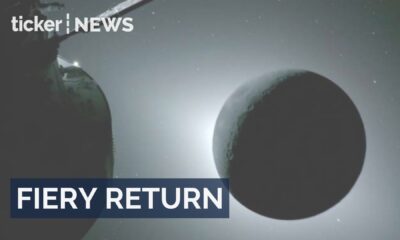
The first ever orbital space launch from British soil is getting ready to blast off.
The mission will see a repurposed 747 jumbo jet release a rocket over the Atlantic to take nine satellites high above the Earth.
After weeks of delays, Britain is finally launching an orbital space rocket into the galaxy, in what’s become a big moment for the UK and its aerospatial program.
That’s because it’s the first-ever launch from British soil. Previous cooperation was with the European space agency and took place abroad.
This first foray is with Sir Richard Branson’s Virgin Orbit company – not like a typical NASA launch.
Flight plans have it leaving Cornwall, England and heading out over the Atlantic ocean. Once it reaches 35,000 feet – the engines will fire up and the rocket will blast into space.
If the launch goes to plan, nine small satellites will be released into an orbit more than 500km above the planet. They have a mix of civil and military applications, ranging from ocean monitoring to navigation technology.
Ukraine’s energy and nuclear safety systems have come under severe strain after a major Russian missile and drone attack struck critical power infrastructure, forcing all nuclear power plants in Kyiv-controlled territory to halt electricity generation and triggering urgent international warnings.
The February 7 assault damaged high-voltage substations supplying nuclear facilities, destabilising the national grid. The International Atomic Energy Agency said the disruption compromised nuclear safety, with one reactor shutting down automatically and others reducing output due to grid instability. IAEA Director General Rafael Grossi called for military restraint, warning of potentially dangerous consequences.
Nuclear terrorism
The attack targeted infrastructure across eight regions as Ukraine faces a deep freeze, with temperatures in Kyiv forecast to fall to minus 19 degrees Celsius. Emergency power outages have been introduced nationwide, while energy companies report extensive damage to thermal power plants.
President Volodymyr Zelensky condemned the strikes as nuclear terrorism and called for a global response. The IAEA also confirmed a recent loss of off-site power at the Chornobyl site, raising concerns that continued attacks on energy infrastructure could increase nuclear risks beyond Ukraine’s borders.
President Donald Trump has moved to reshape US trade policy on two major fronts, signing executive orders that both ease tariffs on India and threaten new levies on countries that continue to trade with Iran.
The rollback of tariffs on India follows New Delhi’s commitment to halt imports of Russian oil, a move welcomed by Washington as it seeks to tighten pressure on Moscow’s energy revenues. The decision signals a thaw in trade tensions between the two nations and underscores the administration’s willingness to reward partners that align with US foreign policy priorities.
At the same time, Trump warned that nations maintaining commercial ties with Iran could face fresh US tariffs, escalating economic pressure on Tehran and its trade partners. The move reinforces a hardline strategy aimed at isolating Iran economically, while using trade measures as leverage in broader geopolitical negotiations.
Together, the twin decisions highlight the Trump administration’s increasingly assertive use of tariffs as a diplomatic tool, targeting both allies and adversaries. From the Indo-Pacific to the Middle East, the approach underscores how trade policy is being deployed not just to protect US industries, but to advance America’s strategic interests on the global stage.
The United States has announced an additional $6 million in humanitarian aid for Cuba, bringing total assistance since Hurricane Melissa struck the island in October to $9 million. The new relief package will focus on Cuba’s eastern provinces, including Holguín, Granma, Santiago de Cuba, and Guantánamo, providing staples like rice, beans, pasta, canned tuna, and solar lamps. U.S. officials said embassy staff will monitor distribution to prevent the government from diverting supplies.
The announcement comes amid worsening energy and fuel shortages. Cuba has faced widespread blackouts, leaving millions without electricity in several provinces, while rising food prices and limited fuel supplies have intensified humanitarian pressures. Officials warn that without sufficient oil imports, hospitals, transport, and essential services could be severely affected. The crisis has escalated following U.S. restrictions on Cuba’s oil shipments and Venezuela’s inability to supply fuel, forcing Cuba to turn to Mexico as its primary energy partner.
Humanitarian situation
Cuba’s President Miguel Díaz‑Canel accused the U.S. of imposing an “energy blockade,” while Mexican officials work to deliver fuel without triggering U.S. tariffs. Díaz‑Canel expressed willingness to engage in dialogue but insisted talks must respect Cuba’s sovereignty. U.N. Secretary-General António Guterres has voiced serious concern, warning that the humanitarian situation could deteriorate further if oil supplies remain restricted.
As Cuba struggles to balance disaster recovery with an ongoing energy crisis, the international community faces a delicate challenge: providing humanitarian support while navigating complex geopolitical tensions.