Connect with us
https://tickernews.co/wp-content/uploads/2023/10/AmEx-Thought-Leaders.jpg

Ticker Views

Trump republicans on Ukraine: To Russia, with love

Published

on

Is Ronald Reagan turning in his grave? 

Would the president who told Mr Gorbachev in Berlin to “Tear down this wall!” tell Mr Putin that the West really should not care if he tears down Ukraine? 

The president who said – in Moscow — in 1988, “Here’s my strategy on the Cold War:  We win, they lose,” take this from Republican Rep. Paul Gosar of Alabama:  “We have no dog in the Ukraine fight.”?

The Gipper would be standing with the Republican leaders in the Senate, led by Mitch McConnell, on what needs to be done – and who support, in large measure, what President Biden has done.

“It appears to me the administration is moving in the right direction,”

McConnell said.

A day later, he added, “My advice to the president and his team from the very beginning was, ‘Let’s do the following things and do them now: both ground-to-air stinger missiles, the weapons that can also be used against tanks into Ukraine now.’”

White House Press Secretary Jen Psaki underscored the importance of this alignment on Ukraine:  “One country should not be able to invade and take over territory from another country—that’s not just a Democratic belief or Republican belief,” she said. 

“That’s central to who we are as a country and who leaders like Leader McConnell or…like President Biden [are]. That’s what their belief has been for many decades, so we certainly welcome that.”

But several major Republicans in Congress and drivers of the party’s Trumpist trajectory are decidedly in the Putin camp – with shocking statements. 

Trump himself told Lou Dobbs that sending troops to NATO would serve, “To start World War III, to start World War III. It’s just all so crazy. And it would have never happened under me. It would have never happened.”

This rings true to those who believed Trump supported Putin more than he stood with NATO in his presidency. And who believe Trump would surrender Ukraine to Putin.

Tucker Carlson had the largest cable news ratings in 2021 and has over 3.2million viewers each night. Carlson is Trump’s favourite megaphone for the base. He said to Axios:

“Why is it disloyal to side with Russia, but loyal to side with Ukraine? It’s a sincere question. I just want to go on the record and say I could care less if they call me a pawn of Putin”

Tucker Carlson

“It’s too stupid. I don’t speak Russian. I’ve never been to Russia. I’m not that interested in Russia. All I care about is the fortunes of the United States, because I have four children who live here. I really hope that Republican primary voters are ruthless about this,” and vote out any Republican “who believes Ukraine’s borders are more important than our borders.”

You judge whether Tucker Carlson is a pawn of Putin.

Not only are the biggest Trumpists in Congress supporting these views, but the Trumpists running for election in November have seized on them too. 

Several Republican Senate candidates for Ohio, Arizona and Nevada are on board: “This country has actual problems that our politicians should prioritize election integrity, the border crisis, soaring inflation, violent crime, failing schools, and Big Tech, to name a few. The Ukrainian border isn’t even in the top 20,” Arizona Senate hopeful Blake Masters said.

So many in the Republican Party have not just run from Reagan, they have severed ties with Reagan. Trump wants to dominate the party for decades to come –  even longer than Reagan held sway from his election in 1980 through the presidencies of two Bushes, ending in 2009. 

Given what up-and-coming Republicans are saying, and doing, to the biggest threat to European and US security since the Cold War, Trump is on track to succeed.  

Putin hopes he will.  

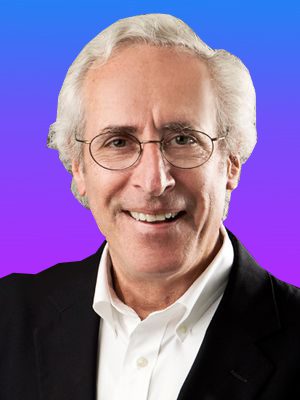
Bruce Wolpe is a Ticker News US political contributor. He’s a Senior Fellow at the US Studies Centre and has worked with Democrats in Congress during President Barack Obama's first term, and on the staff of Prime Minister Julia Gillard. He has also served as the former PM's chief of staff.

Ticker Views

Trump warns of Iran conflict: What it means for global markets

Trump warns the Iran conflict may last weeks, raising concerns over regional stability and global economic impacts.

Published

on

Trump warns the Iran conflict may last weeks, raising concerns over regional stability and global economic impacts.


As tensions rise in the Middle East, President Trump has warned that the campaign against Iran could last weeks. Economists and investors are now asking how a prolonged conflict might impact both regional stability and the global economy.

Professor Tim Harcourt from UTS talks about the economic implications of the Iran conflict, including trade disruptions, oil price volatility, and the ripple effects on markets worldwide.

Subscribe to never miss an episode of Ticker – https://www.youtube.com/@weareticker

#IranConflict #GlobalEconomy #MiddleEast #OilPrices #IndiaIsrael #TradeDynamics #EconomicForecast #TickerNews


Download the Ticker app

Continue Reading

Ticker Views

Iran’s exiled crown prince is touting himself as a future leader

Published

on

Iran’s exiled crown prince is touting himself as a future leader. Is this what’s best for the country?

Simon Theobald, University of Oxford; University of Notre Dame Australia

As Iranian and US diplomats meet in Geneva for crucial negotiations to avoid a potential war, opposition groups in exile are sniffing an opportunity.

The Islamic Republic faces its greatest political crisis since its inception. US President Donald Trump is threatening an imminent attack if Iran doesn’t capitulate on its nuclear program. And anti-regime protesters continue to gather, despite a brutal government crackdown that has killed upwards of 20,000 people, and possibly more.

Talk of a future Iran after the fall of the Islamic regime has grown increasingly fervent. And buoyed by cries heard during some of the protests in Iran of “long live the shah” (the former monarch of Iran), the voices of royalists in the Iranian diaspora are everywhere.

But is a return of the shah really what Iranians want, and what would be best for the country?

What are the monarchists promising?

Iran’s monarchy was ancient, but the Pahlavi dynasty that last ruled the country only came to power in 1925 when Reza Khan, a soldier in the army, overthrew the previous dynasty.

Khan adopted the name Pahlavi, and attempted to bring Iran closer to Western social and economic norms. He was also an authoritarian leader, famous for banning the hijab, and was ultimately forced into exile by the British following the Anglo-Soviet invasion of Iran in 1941.

His son, Mohammad Reza Pahlavi, attempted to continue his father’s reforms, but was similarly authoritarian. Presiding over a government that tolerated little dissent, he was ultimately forced out by the huge tide of opposition during the Islamic Revolution of 1979.

Now, the exiled crown prince, 65-year-old Reza Pahlavi, is being touted by many in the diaspora as the most credible and visible opposition figure to be able to lead the country if and when the Islamic Republic collapses.

Pro-monarchy groups such as the US-based National Union for Democracy in Iran (NUFDI) have become vocal supporters of Pahlavi.

In early 2025, the NUFDI launched a well-coordinated and media savvy “Iran Prosperity Project”, offering what the group claimed was a roadmap for economic recovery in a post-Islamic Republic Iran. Pahlavi himself penned the foreword.

Then, in July, the group released its “Emergency Phase Booklet”, with a vision for a new political system in Iran.

Although the document is mostly written in the language of international democratic norms, it envisions bestowing the crown prince with enormous powers. He’s called the “leader of the national uprising” and given the right to veto the institutions and selection processes in a transitional government.

One thing the document is missing is a response to the demands of Iran’s many ethnic minority groups for a federalist model of government in Iran.

Instead, under the plan, the government would remain highly centralised under the leadership of Pahlavi, at least until a referendum that the authors claim would determine a transition to either a constitutional monarchy or democratic republic.

But students of Iranian history cannot help but note echoes of the 1979 Islamic Revolution. Ayatollah Ruhollah Khomeini had promised a more democratic Iran with a new constitution, and without himself or other clerics in power.

After the revolution, though, Khomeini quickly grasped the reigns of power.

Online attacks against opponents

Pahlavi and his supporters have also struggled to stick to the principles of respectful debate and tolerance of different viewpoints.

When interviewed, Pahlavi has avoided discussing the autocratic nature of his father’s rule and the human rights abuses that occurred under it.

But if Pahlavi tends to avoid hard questions, his supporters can be aggressive. At the Munich Security Conference in February, British-Iranian journalist Christiane Amanpour interviewed the crown prince.

Christiane Amanpour’s interview with Reza Pahlavi.

After the interview, Amanpour’s tough questions resulted in an explosion of anger from his supporters. In a video that has been widely shared on X, royalists can be seen heckling Amanpour, saying she “insulted” the crown prince.

In online forums, the language can be even more intimidating. Amanpour asked Pahlavi point-blank if he would tell his supporters to stop their “terrifying” attacks on ordinary Iranians.

While saying he doesn’t tolerate online attacks, he added, “I cannot control millions of people, whatever they say on social media, and who knows if they are real people or not.”

Do Iranians want a monarchy?

As I’ve noted previously, the monarchist movement also talks as though it is speaking for the whole nation.

But during the recent protests, some students could be heard shouting: “No to monarchy, no to the leadership of the clerics, yes to an egalitarian democracy”.

The level of support for the shah within Iran is unclear, in part because polling is notoriously difficult.

A 2024 poll by the GAMAAN group, an organisation set up by two Iranian academics working in the Netherlands, attempted to gauge political sentiment in Iran. Just over 30% of those polled indicated Pahlavi would be their first choice if a free and fair election were held.

But the poll doesn’t indicate why people said they wanted to vote for him. It also showed just how fragmented the opposition is, with dozens of names getting lower levels of support.

The future of Iran is very unclear at the moment. Even if the Islamic Republic were to be dislodged – a very big “if” – the transition could very well be chaotic and violent.

Would Pahlavi make a good leader? For many critics, his behaviour, and that of his supporters, call into question the royalists’ promises of a more liberal and tolerant Iran.The Conversation

Simon Theobald, Research Fellow, University of Oxford; University of Notre Dame Australia

This article is republished from The Conversation under a Creative Commons license. Read the original article.

Continue Reading

Ticker Views

Tropfest sparks debate with controversial AI-generated short film

Tropfest sparks debate over AI-generated films, impacting creativity and traditional filmmaking in the festival circuit. #AIinFilm

Published

on

Tropfest sparks debate over AI-generated films, impacting creativity and traditional filmmaking in the festival circuit. #AIinFilm


Tropfest, the world’s largest short film festival, caused a stir in Sydney with the screening of a controversial AI-generated short film. The festival’s decision has reignited debates over the role of artificial intelligence in filmmaking and the impact on creative industries.

Filmmakers and audiences are divided. Some praise the innovation, while others question whether AI films should compete alongside human-directed works. The controversy also raises questions about jobs, creative ownership, and ethical considerations in using AI.

Darren Woolley from TrinityP3 weighs in on whether AI could become a legitimate creative partner or if it risks undermining traditional storytelling.

The Tropfest inclusion may mark a turning point for film festivals worldwide in how they embrace or regulate AI content.

Subscribe to never miss an episode of Ticker – https://www.youtube.com/@weareticker

#AIinFilm #Tropfest2026 #ShortFilms #FilmFestivalDebate #AIFilmmaking #CreativeFuture #DigitalCinema #FilmInnovation


Download the Ticker app

Continue Reading

Trending Now