Ticker Views
NAB’s massive job cuts are just the beginning as major companies are forced to compete

NAB’s decision to cut 2,500 jobs should serve as a warning to corporate Australia. The age of the big, protected company is coming to an end, as artificial intelligence accelerates what it means to work.
NAB chief executive Andrew Irvine insists the cuts are not fundamentally linked to AI. Instead, he says they’re about productivity, reducing duplication and making the bank more efficient.
And that may well be true. But let’s not pretend this isn’t part of a much bigger shift taking place across the economy.
This is just the beginning, as the industrial revolution rolls on.
First it transformed blue collar jobs, now it’s coming after white collar workers.
Over the coming years, major companies will increasingly turn to artificial intelligence to do more with fewer people. Jobs that once required entire departments will be completed by smaller teams, supported by technology that works faster, costs less and doesn’t take annual leave.
In 2019 I hosted a show called The Innovation Forum on Sky News. We weren’t talking about AI back then, but rather machine learning, with predictions that 10,000 bank jobs would disappear in Australia by 2030. Well here we are in 2026, and Nab just cut a quarter of that figure in just one day.
There’s an uncomfortable conversation Australia needs to have.
At precisely the moment the federal government, backed by dominant unions, is increasingly focused on strengthening employee rights, workplace protections and entitlements, businesses are facing enormous pressure to reduce costs and remain competitive. There comes a point that you don’t care how many people your bank employs, you just want your Apple Pay card to work on your phone.
Now those two forces are heading for a messy collision.


NAB office in Docklands
We’ve seen this story before
Just ask the thousands of Australians who once worked in our car manufacturing industry.
For decades, the industry operated in an environment of government assistance, workplace protections and increasingly expensive production costs. Workers fought for better pay and conditions, as they were entitled to do.
But ultimately, none of that could change the economics.
When customers could buy cheaper cars manufactured overseas, Australian factories became increasingly difficult to justify. When Steve Bracks recommended tariffs be reduced on overseas made cars, Aussie car buyers voted with their feet and bought Asian made mass produced cars with features unavailable in Fords, Holdens and Toyotas.
So eventually the Abbott government sniffed the wind and saw an opportunity to turn off the gravy train funding for the car companies, and Ford, GM and Toyota closed up shop. My Ford is now made in Thailand.
The lesson wasn’t that workers shouldn’t have rights or that they don’t deserve or need better pay to live. It was that no amount of protection can guarantee a job when the underlying business can no longer compete.
And that lesson is about to become relevant to millions of Australians working in offices.

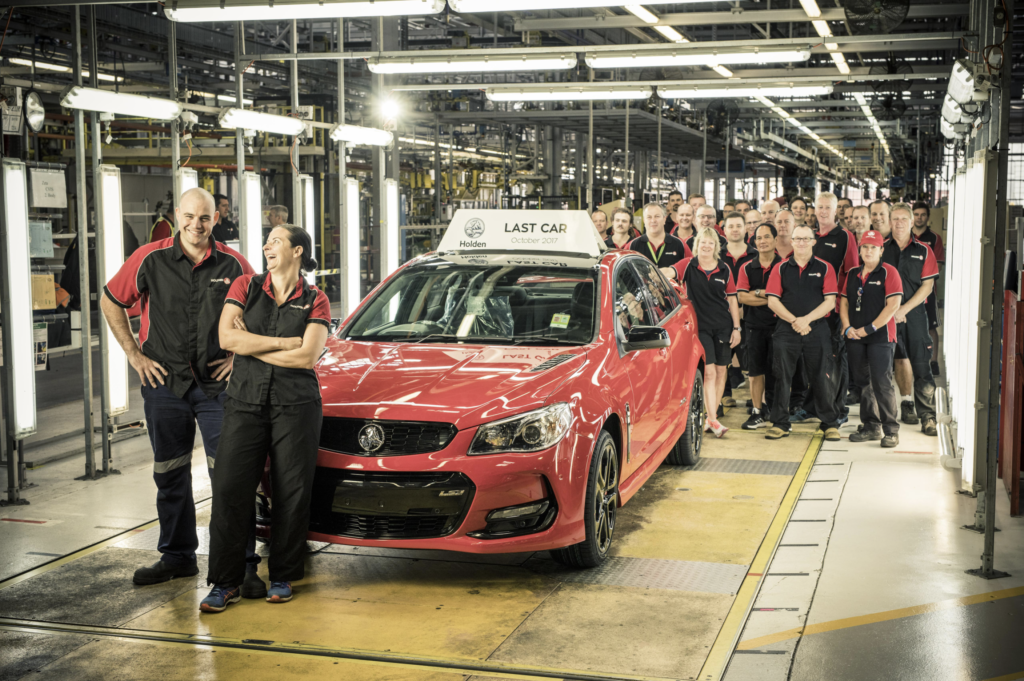
Australia’s car industry collapsed when the cost of producing a vehicle was higher than what customers were willing to pay.
We saw it with Qantas when the government deregulated the skies and sold off the national carrier. The only way to survive against an upstart like Virgin was to transform the company and sack thousands of workers. There was national outrage, but I don’t see much of that when I look at the people at T4 at Melbourne airport on the 6am Jetstar flight because they wanted to save $25 by flying early.
You can demand more entitlements, higher wages, greater flexibility and stronger workplace protections. But if your company’s customers are chasing cheaper prices in an increasingly price-competitive world, then you had better be damn good at what you do.
Because the customer ultimately decides whether a business survives. And the decisions they make aren’t personal, they too are just trying to survive.
Technology is giving those customers more choices than ever before, and entrepreneurs are entering big, heavy industries, and creating an app that can compete with a company that employs thousands of people.
Look at banking. Customers don’t care how many layers of management sit between a decision and its implementation. They don’t care how many strategy teams, project managers or marketing departments a bank employs.
They want competitive rates, better service and faster decisions.
If a competitor can deliver those things with fewer employees and lower costs, the traditional banks have a serious problem. And given how reliant the ASX is on the performance of the big banks, and how tied in our suoper accounts are to the same goal, well you can see where this could be heading.
This isn’t unique to NAB. ANZ, Westpac and other major businesses have already embarked on substantial restructuring programs. Across corporate Australia, companies are reviewing whether the way they’ve operated for decades still makes economic sense.
Artificial intelligence will make those reviews even more confronting.
None of this means we should celebrate job losses.
Behind every redundancy is a person with a mortgage, a family and financial commitments. Losing a job can be devastating, particularly for experienced workers who have spent decades building careers in industries that are rapidly changing.
I have had to make people redundant, and it’s an awful experience. Some bosses see it as the easy way out, rather than dealing with performance. For me, I try to encourage the person to find another job with as much time as possible before I have to make the call. It’s never good for your mental health to be made to feel ‘redundant’.
Governments can legislate workplace conditions but they can’t regulate our right to choose, though it wouldn’t surprise me if they eventually try.
What they cannot legislate is customer demand, profitability or the pace of technological change.
The protests in Europe, and other parts o the world, signal the start of the pushback. With higher prices, insecure jobs, and an unstable governments, what does the future hold for millions of people coming of age?
They will turn to the government for answers, but the real power is now with the tech companies, who are five, six or seven steps ahead of governments and their mingling bureaucrats.
Challenge for Australia
The challenge for Australia isn’t simply protecting the jobs we have today. It’s that we haven’t created the conditions where big AI firms can startup and scale here. We prefer to regulate and worry about AI than be part of its development.
So where does all this head? A society impacted by the good and bad of AI without having a say in its development?
We have long needed to encourage productivity, adaptability, and technological skills plus a willingness to embrace change.
NAB’s announcement is significant, but it won’t be the last.
The next wave of corporate restructuring won’t necessarily come from businesses in financial trouble. It will come from profitable companies discovering they can operate more efficiently with fewer people.
And as artificial intelligence becomes more capable, the pressure to make those decisions will only grow.
The era of the big, protected company is over.