
Connect with us
https://tickernews.co/wp-content/uploads/2023/10/AmEx-Thought-Leaders.jpg

Tech

Jeff Bezos set to go to space

Published

on

Billionaire Jeff Bezos is set to board a space flight with his company, Blue Origin.

The flight will take off on July 20th, just 15 days after he is set to resign as CEO of Amazon.

It will also be somewhat special, with Blue Origin revealing Bezos’ younger brother, Mark Bezos, will also join the flight.

“What a remarkable opportunity, not only to have this adventure but to do it with my best friend.”

Mark Bezos Said About Flying To The Moon With His Brother

Bezos, 57, said in a Monday morning Instagram post. “On July 20th, I will take that journey with my brother. The greatest adventure, with my best friend.”

Battle of the billionaires
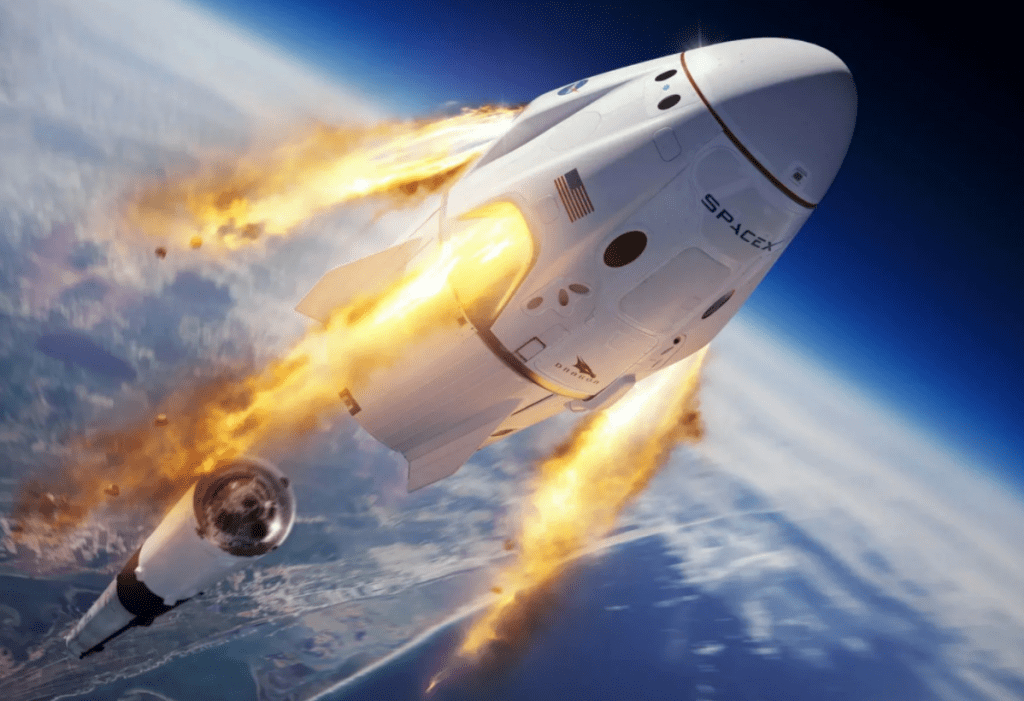
ELON MUSK SPACE-X

Blue Origin is a distant second in the public eye to Elon Musk’s SpaceX, but this appears to be one space race Bezos is likely to win.

If all goes according to plan, Bezos will be the first of the billionaire space tycoons to experience a ride aboard the rocket technology that he’s poured millions into developing.

The Amazon CEO announced Blue Origin will launch its new Sheppard rocket and capsule in July.
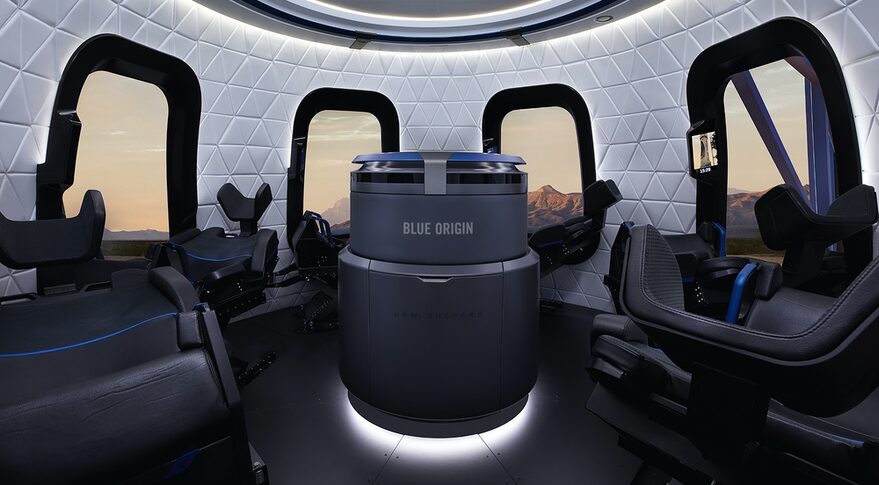
The interior of the New Shepard crew capsule, which will carry people for the first time on a July 20 launch

New Shepard is designed to carry as many as six people at a time on a ride past the edge of space, with the capsules on previous test flights reaching an altitude of more than 340,000 feet.

The Sheppard’s flights are “sub-orbital” meaning they will take passengers on a short trip into space and back down to earth.

The company says “only 569 people have ever been over the so-called Kármán Line in space… and it wants to change this and change it dramatically”

SpaceX also plans to launch people into space by Autumn this year. 

So the battle between the billionaires to turn their rockets to riches continues on.

Click to comment

Leave a Reply

Your email address will not be published. Required fields are marked *

Tech

SoftBank plans acquisition of DigitalBridge for AI expansion

SoftBank advances towards acquiring DigitalBridge to boost AI infrastructure amid soaring global data center demand

Published

on

SoftBank advances towards acquiring DigitalBridge to boost AI infrastructure amid soaring global data center demand

video
play-sharp-fill
In Short:
– SoftBank may acquire DigitalBridge to enhance its AI infrastructure amid rising global data centre demand.
– The deal could control $108 billion in digital assets, with financial details yet to be disclosed.

SoftBank Group is reportedly in advanced talks to acquire DigitalBridge Group, a move that would dramatically expand the Japanese conglomerate’s control over critical AI infrastructure as global demand for data centres accelerates. The potential deal, which could be announced within days, would give SoftBank exposure to roughly $108 billion in digital infrastructure assets, including data centres, cell towers and fibre networks. While financial terms remain undisclosed, the talks are said to be at an advanced stage.

The acquisition fits squarely into founder Masayoshi Son’s renewed bet on artificial intelligence and computing capacity. DigitalBridge manages investments in major data centre operators such as Vantage Data Centers, Switch, DataBank and AtlasEdge, placing SoftBank at the centre of the infrastructure powering next-generation AI. The company is also a key participant in Stargate, a $500 billion private-sector AI initiative announced earlier this year, and recently agreed to buy ABB’s robotics division as part of its broader push into physical AI.

Intensifying competition

Markets have reacted strongly to the prospect of the deal, with DigitalBridge shares surging as much as 47% after the initial reports emerged. The rally highlights intensifying competition for data centre assets, as AI drives unprecedented demand for computing power. McKinsey estimates AI-related infrastructure spending could reach $6.7 trillion by 2030, while Goldman Sachs forecasts global data centre power consumption will rise 175% from 2023 levels by the end of the decade. If completed, the acquisition would mark SoftBank’s return to direct ownership of a major digital infrastructure platform at a pivotal moment in the AI race.


Download the Ticker app

Continue Reading

Tech

Italy orders Meta to open WhatsApp to AI competitors

Italy orders Meta to allow rival AI chatbots on WhatsApp amid regulatory battle over market dominance

Published

on

Italy orders Meta to allow rival AI chatbots on WhatsApp amid regulatory battle over market dominance

video
play-sharp-fill
In Short:
– Italy’s antitrust authority requires Meta to allow access to rival AI chatbots on WhatsApp during an investigation.
– Meta plans to appeal the ruling, claiming it disrupts their system and questioning WhatsApp’s role as an AI service platform.

Italy’s antitrust authority has ordered Meta to allow competing AI chatbots access to WhatsApp, suspending rules that blocked rivals. The decision comes amid concerns that Meta’s policies could limit competition and harm consumers in the rapidly growing AI services market. Meta plans to appeal, calling the ruling “fundamentally flawed” and arguing that WhatsApp wasn’t designed to support third-party AI chatbots.

The Italian Competition Authority began investigating Meta after its March 2025 launch of Meta AI on WhatsApp, later expanding the probe to cover updated business terms that excluded rival AI providers, such as ChatGPT, Microsoft Copilot, and Perplexity. The European Commission has launched a parallel investigation, highlighting growing regulatory scrutiny on tech giants in Europe.

Europe’s stricter stance on Big Tech has sparked pushback from the industry and political figures in the U.S., including former President Donald Trump. Meta maintains that its Business API restrictions still allow AI for customer support and order tracking, but says general-purpose chatbot distribution falls outside its intended use.


Download the Ticker app

Continue Reading

Tech

China’s maglev breakthrough hits 700 km/h in seconds, reshaping the future of transport

China sets world record with maglev train hitting 700 km/h in just two seconds, revolutionising ultra-high-speed transport

Published

on

China sets world record with maglev train hitting 700 km/h in just two seconds, revolutionising ultra-high-speed transport

video
play-sharp-fill
In Short:
– Chinese researchers set a world record, accelerating a test vehicle to 700 km/h in two seconds.
– This milestone positions China as a leader in ultra-high-speed maglev technology and future transport developments.

China has set a new world record in magnetic levitation technology after accelerating a ton-class superconducting maglev test vehicle to 700 kilometres per hour in just two seconds. The achievement, reported by state broadcaster CCTV, marks the fastest acceleration ever recorded for an electric maglev system and cements China’s position at the forefront of ultra-high-speed transport innovation.

The test was conducted by researchers at the National University of Defense Technology on a 400-metre track, where footage showed the vehicle flashing across the rail-like structure in a blur, leaving a misty trail behind it. The breakthrough follows more than a decade of research tackling complex challenges such as ultra-high-speed electromagnetic propulsion, electric suspension guidance systems, and high-field superconducting magnets, all of which are critical to stable travel at extreme speeds.

Hyperloop technology

Beyond headline-grabbing velocity, the milestone opens the door to future transport systems, including vacuum-tube maglev networks, commonly referred to as hyperloop technology. Scientists say the same advancements could also be applied to aerospace launch assistance, electromagnetic launch systems, and advanced experimental testing. According to Professor Li Jie from the National University of Defense Technology, the successful trial will significantly accelerate China’s research into frontier technologies, with future work focusing on pipeline-based high-speed transport and aerospace equipment testing.

While China now leads in superconducting maglev acceleration, global competition remains fierce. Japan still holds the record for the fastest manned train, with its L0 Series maglev reaching 603 kilometres per hour during testing in 2015. China, however, operates the world’s only commercial maglev service — the Shanghai Maglev — which currently runs at 300 kilometres per hour after its top speed was reduced from 431 kilometres per hour in 2021.

The December test builds on earlier progress made this year, including a 1.1-ton test sled that reached 650 kilometres per hour in seven seconds over a 600-metre track in June 2025. Together, these developments signal rapid momentum in China’s push toward next-generation transport systems that could redefine how people and payloads move across the planet.


Download the Ticker app

Continue Reading

Trending Now