
During India’s deadly second wave of Covid-19, hospitalisations across the nation soared. Now, struggling Indians are using crowdfunding to repay their medical debt
In India, a trip to the ICU and treatment for Covid-19 costs one family over 80 thousand dollars. And this price is growing by the day.
It has one of the lowest rates of public spending in the world at just 1.2% of the nation’s GDP. Almost 75% of Indians don’t have access to health insurance.
The pandemic has meant growth for crowdfunding cites
The three largest crowdfunding sites in the country – Ketto, Milaap and Give India – have collectively raised around $161 million during the pandemic.
Ketto says its grown four times during both waves, raising more than $40m for 12,000 Covid-19 relief campaigns.
“In many cases, crowdfunding became an alternate safety net to fill the existing gaps in the healthcare system,” said Ravina Banze and Irfan Bashir. They are co-authors of ‘Crowdfunding: The Story of People.’
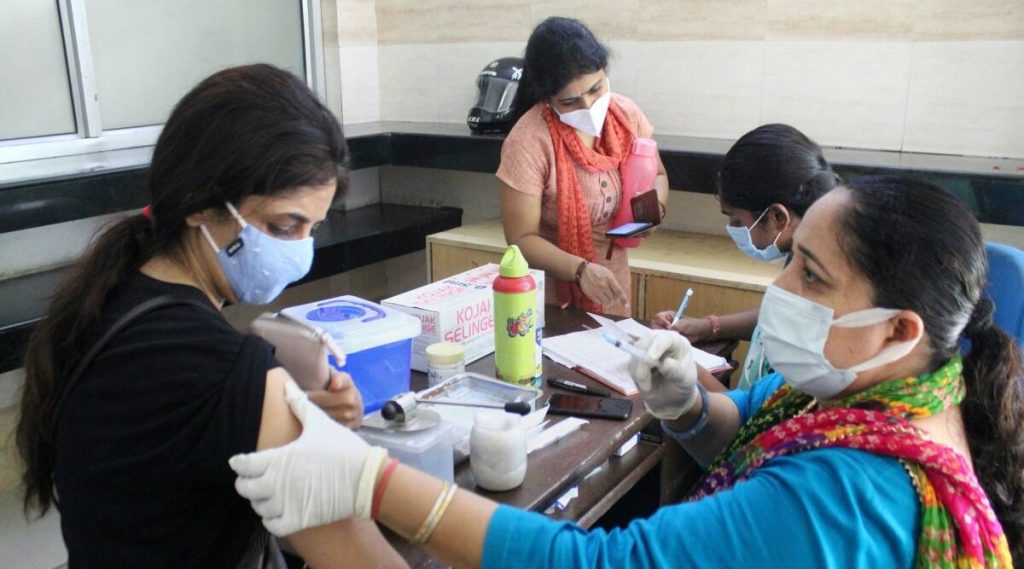
India struggles to pay its medical debt
One study by the Duke Global Health Institute and the PHFI estimates that 75% of India’s self-employed and half of its salaried workforce could not afford to pay for critical medical care.
The burden falls heaviest on India’s poorest. last year, this group increased by 230 million Indians, according to researchers at Azim Premji University.
“Having unexpected medical emergencies is a recipe for disaster when most people live under the constant threat of financial instability,” Mr Bashir said.

Natasha is an Associate Producer at ticker NEWS with a Bachelor of arts from Monash University. She has previously worked at Sky News Australia and Monash University as an Online Content Producer.
PM announces royal commission to address anti-Semitism and social cohesion following pressure from various communities and leaders
In Short:
– Anthony Albanese has announced a royal commission into anti-Semitism and social cohesion, led by Virginia Bell.
– The inquiry aims to foster unity in Australia amid rising tensions and concerns from various community groups.
Anthony Albanese has initiated a commonwealth royal commission into anti-Semitism and social cohesion following mounting pressure.
The inquiry, announced in Canberra, will be led by former High Court justice Virginia Bell, despite opposition from some Jewish groups.The Prime Minister stated the need for a royal commission was essential for promoting unity within Australia, particularly after engaging with families of Bondi attack victims and the Jewish community.
He confirmed discussions with NSW Premier Chris Minns and expects the single commission to run over the next 12 months, with further comments from Mr Minns anticipated soon.
The prime minister has been asked if he’s still worried a royal commission would fuel antisemitism.Anthony Albanese insists he doesn’t want the inquiry to weaken social cohesion.
“The royal commissioner will bear in mind how hearings are conducted in the processes of their conduct,” Albanese says.
“We have been working on this for weeks. I have been engaged with the community.”
The prime minister was questioned about whether it was a mistake to reject calls for a royal commission into antisemitism.Following the Bondi terror attack, the federal government faced pressure to establish such a commission.
Anthony Albanese stated that the government has implemented various measures within the 25 days following the attack.
“We have increased funding for security agencies. We have had daily briefings of the National Security Committee,” Albanese says.
“The Commonwealth have particular resources and one of the groups and individuals I’ve spoken to as well have been people outside of New South Wales,” he says.
Highly-respected former High Court judge Justice Virginia Margaret Bell is the PM’s pick to lead the royal commission.
Sustained advocacy
This decision comes after sustained advocacy from various groups, including victims’ families, former leaders, and prominent figures across sectors.
Over recent weeks, Albanese and his team had put forth several arguments against a royal commission, such as concerns over divisiveness and potential exposure of sensitive information.
Gamel Kheir from the Lebanese Muslim Association has suggested that a broader inquiry into all forms of “minority religion” discrimination is needed, expressing wariness within the Muslim community regarding the federal inquiry’s focus.
Broad Support
A significant number of community and cultural organisations back a royal commission addressing social tensions and discrimination related to the Israel-Gaza conflict.
In support of this sentiment, nearly 50 diaspora and faith groups released an open letter urging a thorough examination of rising anti-Semitism and related issues following the Bondi Beach terror attack.
US sharpens focus on Greenland; Rubio emphasizes ongoing strategic interest ahead of diplomatic talks with Denmark.
The United States is sharpening its focus on Greenland, with Secretary of State Marco Rubio confirming that Washington is keeping every option on the table. His comments come ahead of a high-level diplomatic meeting with Danish leaders next week.
The visit is seen as a signal of President Donald Trump’s ongoing strategic interest in the Arctic territory, which holds growing geopolitical and security significance as global competition in the region intensifies.
While the administration has not outlined specific next steps, the message from Washington is clear that Greenland remains firmly on the US agenda.
Subscribe to never miss an episode of Ticker – https://www.youtube.com/@weareticker
U.S. seizes two oil tankers linked to Venezuela, escalating efforts against oil smuggling and raising international legal concerns.
In a dramatic escalation of its campaign against Venezuelan oil smuggling, the U.S. has seized two oil tankers linked to Caracas. The Russian-flagged Marinera — formerly known as the Bella-1 — was captured in the North Atlantic after a weeks-long chase by U.S. forces, who allege it was violating sanctions tied to Venezuelan and Iranian oil. This rare high-seas seizure has drawn international attention due to the change of flag and the involvement of Russian maritime interests.
Meanwhile, a second vessel, the Sophia, was taken in the Caribbean in a coordinated operation against alleged sanctioned shipments. U.S. authorities describe these moves as part of a broader effort to clamp down on illicit oil flows and enforce sanctions by interdicting vessels before they can deliver crude to sanctioned buyers. The Sophia was reportedly operating with its tracking systems off, a tactic used in “dark fleet” smuggling operations.
Defense News
While the White House defends the operations as necessary to uphold sanctions and curb illicit oil trafficking, legal experts and foreign governments — especially Russia — are questioning the legality of boarding and seizing foreign-flagged ships in international waters. The debate over maritime law and sanctions enforcement is heating up as the U.S. signals it will continue to aggressively target Venezuela’s oil network.
Subscribe to never miss an episode of Ticker – https://www.youtube.com/@weareticker