
News
Federal Judge sets March 2024 as start date for Trump election trial




News
Israel strikes Tehran anew as conflict escalates and global markets react
Israel strikes Tehran after Khamenei’s death; U.S. warns of prolonged conflict as tensions escalate in the Middle East.

Israel strikes Tehran after Khamenei’s death; U.S. warns of prolonged conflict as tensions escalate in the Middle East.
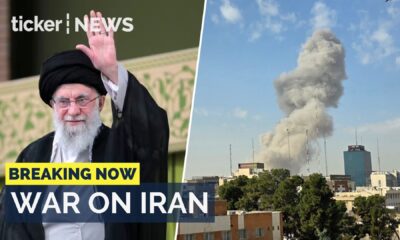
Israel has launched a new wave of strikes on Tehran, following the reported killing of Iran’s Supreme Leader, Ali Khamenei. U.S. President Donald Trump has warned the campaign could last up to a month, framing the operation as a move to prevent Iran from acquiring nuclear capabilities.
Iran has retaliated with missile attacks, while its Revolutionary Guards claim responsibility for assaults on oil tankers in the Gulf. The escalating hostilities are already disrupting global shipping lanes and air travel, sending shockwaves through international markets.
With reports of the first U.S. casualties emerging and Washington declaring the Tehran operation a success, tensions across the Middle East are intensifying rapidly. The question now is how far this conflict could spread — and at what cost.
Subscribe to never miss an episode of Ticker – https://www.youtube.com/@weareticker
#Israel #Iran #Tehran #MiddleEastConflict #Geopolitics #OilMarkets #BreakingNews #GlobalSecurity

News
U.S. and Israel strike Iran as missiles hit Gulf bases and oil surges
U.S. and Israel launch major military operation against Iran; tensions rise as conflict escalates, impacting global markets.

U.S. and Israel launch major military operation against Iran; tensions rise as conflict escalates, impacting global markets.
The United States and Israel have launched a sweeping military operation against Iran, striking leadership targets and more than 500 military sites in what President Trump has dubbed Operation Epic Fury.
Explosions have rocked Tehran, with civilians fleeing the capital as U.S. sea and air assets carry out sustained attacks. Washington says the mission is designed to prevent a nuclear armed Iran and has even called on Iranians to rise up against the regime.
Iran has retaliated with a barrage of missiles and drones targeting Israel and U.S. bases across the region, including in Qatar, Kuwait, the United Arab Emirates and Bahrain. While many projectiles were intercepted, a U.S. base in Bahrain sustained damage.
Gulf states long seen as stable hubs for global business are now directly in the firing line, raising fears of a wider regional war.
Oil prices are climbing and tankers are diverting from the Strait of Hormuz as markets react to the escalating conflict. U.S. aircraft carriers, advanced fighter jets and missile destroyers remain in position, signalling more strikes could follow.
With global leaders scrambling diplomatically, the world is watching to see whether this spirals further or shifts back to negotiations.
-
 Tech4 days ago
Meta launches lawsuits over alleged scam advertising operations
-
Money5 days ago
Australia’s inflation report and Nvidia earnings impact explained
-
News2 days ago
Crude oil prices spike amid U.S.-Israel military action
-
News2 days ago
Iran warns ships to avoid Strait of Hormuz
-
News2 days ago
U.S. and Israel attack Iran, escalating regional conflict
-
News21 hours ago
Iran live updates: Trump Says Iran strikes to continue for four to five weeks
-
Tech5 days ago
Nvidia earnings soar as AI drives 75% revenue growth
-
News5 days ago
Qantas announces 8,500 jobs and frequent flyer changes