
Connect with us
https://tickernews.co/wp-content/uploads/2023/10/AmEx-Thought-Leaders.jpg

News

China’s stimulus efforts amid Trump’s tariffs challenge

China must increase domestic consumption and implement stimulus measures to counteract Trump’s tariffs and achieve its economic growth target.

Published

on

China must increase domestic consumption and implement stimulus measures to counteract Trump’s tariffs and achieve its economic growth target.

In Short

China struggles to meet its 5% economic growth target due to US tariffs, prompting a potential stimulus package to boost domestic consumption.

The upcoming Politburo meeting is crucial for shaping economic policies and tackling underlying issues like local government debt.

China is facing challenges in achieving its 5% economic growth target this year, primarily due to increased tariffs imposed by the US. These tariffs, currently at 145%, have made it difficult to avoid a repeat of previous economic slowdowns.

To counter these challenges, China must stimulate domestic consumption and divert focus from exports. The Chinese government aims to implement a substantial stimulus package, with estimates ranging from 1.5 trillion to 2 trillion yuan to boost consumer spending, support the housing market, and combat deflation.

Macro measures

Analysts see the necessity for urgent measures, especially as Goldman Sachs predicts only 4% growth for China in 2025. Macro measures could include fiscal spending increases and official interest rate cuts. However, doubts remain about how effectively these policies will provide sustainable demand support.

The upcoming Politburo meeting could be crucial in determining the direction of economic policy and potential reforms aimed at enhancing social safety nets. These reforms would need to address rural-urban divides and support consumption among households.

Despite these efforts, underlying issues such as high local government debt and limited healthcare spending hamstring progress.

A significant shift in policy and mindset within the Communist Party is essential to establish a consumer-driven growth model.

Ahron Young is an award winning journalist who has covered major news events around the world. Ahron is the Managing Editor and Founder of TICKER NEWS.

News

AI stocks surge amid market shifts and spending warnings

AI sector drives economic growth; Meta adjusts strategy, Palantir’s valuation sparks questions, and Nvidia leads amid rising competition.

Published

on

AI sector drives economic growth; Meta adjusts strategy, Palantir’s valuation sparks questions, and Nvidia leads amid rising competition.


The artificial intelligence sector continues to be a major driver of growth for both the U.S. and global economies. Companies at the forefront of AI innovation are influencing market trends and reshaping industries worldwide.

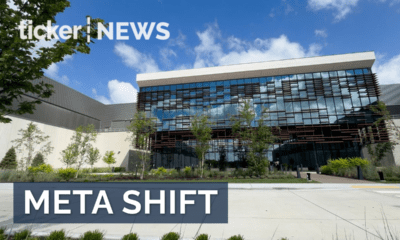
Meta’s stock has rebounded slightly following reports of potential cost-cutting measures and job reductions in its Reality Labs division. Investors are watching closely as the company adjusts its strategy to manage rising expenses and optimize innovation.

Palantir is trading at over 120 times forward sales and 180 times forward earnings, signaling investor confidence but also raising questions about valuation risks. Meanwhile, Nvidia maintains a market cap of $4.2 trillion as a leading AI chip supplier, yet competition is ramping up.

These moves highlight the growing tension between tech giants’ AI ambitions and the practical need to balance profits with heavy R&D spending.

Some analysts, however, warn that rapid growth may not be sustainable, with current levels of AI-related spending potentially overshooting realistic returns.

Subscribe to never miss an episode of Ticker – https://www.youtube.com/@weareticker

#AIStocks #TechInvesting #Nvidia #Meta #Palantir #ArtificialIntelligence #StockMarket #TickerNews


Download the Ticker app

Continue Reading

News

AI investments set to surge in 2026 as companies target productivity gains

Analysts forecast $500 billion AI investment by 2026, transforming corporate spending priorities and enhancing economic productivity.

Published

on

Analysts forecast $500 billion AI investment by 2026, transforming corporate spending priorities and enhancing economic productivity.


Analysts predict that artificial intelligence companies could invest over $500 billion in 2026, signaling a major shift in corporate spending priorities. This surge in capital allocation comes as businesses look to harness AI to drive growth and efficiency across multiple sectors.

Following strong third-quarter earnings, overall capital spending estimates for 2026 have been revised upward. However, investors are becoming more selective, focusing on companies that can clearly demonstrate revenue benefits from their AI investments, separating hype from tangible results.

AI adoption is expected to boost economic productivity, with significant investment already flowing into AI infrastructure such as semiconductors and data centres. The coming year could redefine how companies leverage technology to gain a competitive edge.

Subscribe to never miss an episode of Ticker – https://www.youtube.com/@weareticker

#AIInvestment #TechGrowth #FutureEconomy #DataCenters #Semiconductors #ArtificialIntelligence #ProductivityBoost #CapitalSpending


Download the Ticker app

Continue Reading

News

Stocks, AI and the economy: What to expect in 2026

2025’s market turmoil analyzed: AI hype, tariffs, global politics, and Federal Reserve impacts—tune in for expert insights!

Published

on

2025’s market turmoil analyzed: AI hype, tariffs, global politics, and Federal Reserve impacts—tune in for expert insights!


2025 has been a rollercoaster for investors, with AI hype, tariffs, and global politics shaking up markets. We break down what these trends mean for your portfolio and the risks ahead.

Joining us for insights is Kyle Rodda from Capital.com, who explains how Treasury yields, unemployment data, and inflation readings are shaping investor sentiment. We also dive into what the Federal Reserve’s recent moves could mean for 2026.

From the potential impact of a 43-day government shutdown to payroll numbers and market expectations, this episode gives you the clarity you need to navigate the next year in stocks.

Subscribe to never miss an episode of Ticker – https://www.youtube.com/@weareticker

#StockMarket #Investing2026 #AIStocks #FederalReserve #EconomyWatch #MarketTrends #FinanceNews #TreasuryYields


Download the Ticker app

Continue Reading

Trending Now