
Connect with us
https://tickernews.co/wp-content/uploads/2023/10/AmEx-Thought-Leaders.jpg

Ticker Views

Australia set to bid for COP29, despite lack of climate action

Published

on

Australia is set to bid for the opportunity to host the COP29 climate conference, despite its lack of climate action recently

Australia’s opposition Labor party says it will bid to host the 2024 COP29 climate conference if they win the upcoming Federal Election.

They say it will be in partnership with the Pacific and Soloman Island Nations ‘if they want to.’

Australia has never hosted a United Nations climate conference but it could set them on the global stage as a leader in climate change action. 

However, Australia has been dubbed a laggard on its climate change action and may not be equipped to host such a significant event.


“This is a real shift in Australia’s policy…For 30 years in the history of the United Nations Climate negotiations Australia hasn’t hosted a meeting… Instead it usually shys away from them”

richie merzian, the australia institute
Richie merzian, australia institute

Australia’s rocky relationship with the Solomon Islands will make the deal even more uncertain.

A recent security pact between China and the Solomon Islands has been finalised, meaning China will build a military base just Kilometres from Australia’s borders.

Australia has recently cristicised the Solomon Islands for its friendly ties to China and how that will negatively impact Australia’s national security.

Now the biggest question is do the Pacific, and the Solomon Islands, even want to partner with Australia at COP29?

“It’s a real opportunity for Australia to gear up it’s diplomacy, to demonstrate leadership of the global stage and hopefully shake of its reputation as a laggard on climate action”

richie merzian, the australia institute

Deadly heatwave

Climate change has reared its head more frequently over recent years, including wildfires, ravaging floods, and extreme weather events.

This comes as millions of people in India and Pakistan experience a brutal heat wave that has left hundreds dead.

The high temperatures have been surfacing for the last two months, with the Government unprepared to handle it.

The heatwave is causing wide sweeping water shortages, heat stroke, and power outages.

The region has reached its highest April temperatures in 122 years.
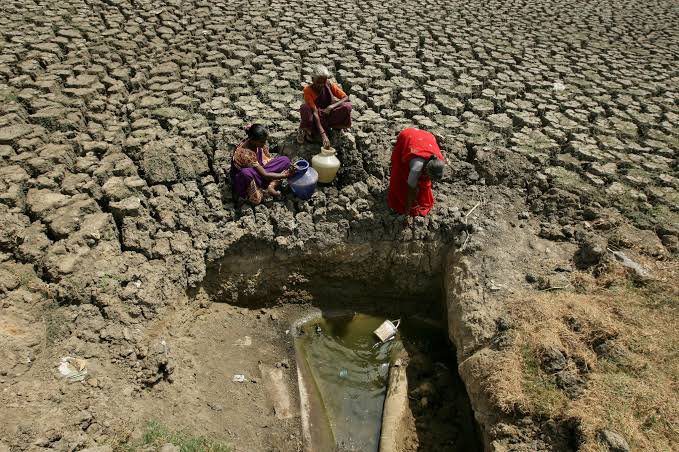
Photo credit: New York Times

“Global warming means more extreme heatwaves, and longer heatwaves… It’s a sign of things to come.”

richie merzian, australia institute

Ticker Views

Iran uprising: Competing narratives and the battle for perception

Published

on

One uprising, two stories: how each side is trying to frame the uprising in Iran

Ali Mamouri, Deakin University

Since the outbreak of the current wave of protests in Iran, two sharply competing narratives have emerged to explain what is unfolding in the streets.

For the ruling establishment, the unrest is portrayed as a foreign-engineered plot. They argue it is an externally-driven attempt to destabilise the state through manipulation, infiltration, and psychological operations.

For the opposition, the same events are framed as a nationwide uprising rooted in long-standing grievances. They argue the protests signal a rupture between society and the political system.

How the “story” of a conflict is told is a key component in warfare. The Iran protests are offering two very different stories.

Narrative crafting as psychological warfare

In the digital age, psychological warfare has moved beyond conventional propaganda into the realm of what academics Ihsan Yilmaz and Shahram Akbarzadeh call Strategic Digital Information Operations (SDIOs).

Psychological operations function as central instruments of power, designed not only to suppress dissent but reshape how individuals perceive reality, legitimacy, and political possibility. Their objective is cognitive and emotional:

  • to induce fear, uncertainty, and helplessness
  • to discredit opponents
  • to construct a sense of inevitability around a certain political scenario.

These techniques are employed not only by states, but increasingly by non-state actors as well.

Social media platforms have become the primary theatres of this psychological struggle. Hashtags, memes, manipulated images, and coordinated commenting – often amplified by automated accounts – are used to frame events, assign blame, and shape emotional responses at scale.

Crucially, audiences are not passive recipients of these narratives. Individuals sympathetic to a particular framing actively reproduce, reinforce, and police it within digital echo chambers. In this way, confirmation bias flourishes and alternative interpretations are dismissed or attacked.

Because of this, narrative control is not a secondary dimension of conflict but a central battleground. How an uprising is framed can shape its trajectory. It can determine whether it remains peaceful or turns violent, and whether domestic repression or foreign intervention comes to be seen as justified or inevitable.

The Iranian regime’s narrative

The Iranian regime has consistently framed the current uprising as a foreign-engineered plot, orchestrated by Israel, the United States and allied intelligence services. In this narrative, the protests are not an expression of domestic grievance but a continuation of Israel’s recent confrontation with Iran. This, it argues, is part of a broader campaign to overthrow the regime and turn the country into chaos.

Two weeks after the protests began, the state organised large pro-regime demonstrations. Shortly afterward, supreme leader Ayatollah Ali Khamenei declared these rallies had “thwarted the plan of foreign enemies that was meant to be carried out by domestic mercenaries”.

The message was clear: dissent was not only illegitimate but treasonous. Those participating in it were portrayed as instruments of external powers rather than citizens with political demands.

Demonising dissent serves a dual purpose. It is not only a method of silencing opposition, but also a tool for engineering perception and shaping emotional responses.

By portraying protesters as foreign agents, the regime seeks to manufacture compliance, discourage wavering supporters, and project an image of widespread popularity. The objective is not simply to punish critics, but to signal that public dissent will carry heavy costs.

To reinforce this narrative, pro-regime social media accounts have circulated content that blends ideological framing with selective factual material. Analyses arguing that events in Iran follow a familiar “regime change playbook” have been widely shared, as have Israeli statements suggesting intelligence operations inside Iran. Cherry-picking expert commentary or isolated data points to justify repression is a common feature of this approach.

The timing and amplification of such content are also significant. Social media networks are deployed via “algorithmic manipulation” to make the regime’s framing go viral and marginalise counter views.

As this digital campaign unfolds, it is reinforced by more traditional forms of control. Internet restrictions and shutdowns limit access to alternative sources of information. This allows state media to dominate communications and thwart challenges to the official narrative.

In this environment, the regime’s story functions not merely as propaganda, but as a strategic instrument. It aims to redefine the uprising, delegitimise dissent, and preserve authority by controlling how events are understood.

The opposition narrative

The opposition is divided, but two main groups have appeared active in framing the opposition narrative: those who support an Iranian monarchy, and dissenting armed group Mojahedin-e-Khalq (MEK). Despite their differences, the two have contributed to the same story.

They have crafted a persuasive narrative, framing the uprising as a moral emergency requiring external intervention, particularly by the United States and Israel. This narrative does not represent all opposition voices, but it has gained visibility through social media, exile media outlets, and activist networks. Its core objective is to bring international attention to the conflict and put the case for, then bring about, regime change in Iran.

One central technique has been the legitimisation and encouragement of violence. Calls for armed protest and direct confrontation with security forces mark a clear shift away from demand-based, civilian mobilisation toward a violent uprising.

A high number of state forces casualties – reportedly more than 114 by January 11 – is an example of the effectiveness of this technique. This escalation is often justified as necessary to “keep the movement alive” and generate a level of bloodshed that would compel international intervention.

According to external conflict-monitoring assessments, clashes between armed protesters and state forces have in fact resulted in significant casualties on both sides.

A second technique involves the strategic inflation of casualty figures. Opposition platforms have claimed the death toll to be far higher than figures cited by independent estimates.

Such exaggeration serves a clear psychological and political purpose. It is intended to shock and sway international opinion, frame the situation as genocidal or exceptional, and increase pressure on foreign governments to act militarily.

A third element has been the use of intimidation and rhetorical coercion. In some high-profile media appearances, opposition figures have openly threatened pro-regime commentators, warning of retribution once power changes hands.

This language serves multiple functions. It seeks to silence alternative viewpoints, project confidence and inevitability, and present the situation as one of good versus evil. At the same time, such rhetoric risks alienating undecided audiences and reinforcing regime claims the uprising will lead to chaos or revenge politics.

These practices reveal how parts of the opposition have also embraced narrative warfare as a strategic tool. This narrative is used to amplify violence, inflate harm, and suppress competing interpretations. It aims to redefine the uprising not merely as a domestic revolt, but as a humanitarian and security crisis that demands foreign intervention.

In doing so, it mirrors the regime’s own effort to weaponise storytelling in a conflict where perception is as consequential as power.

In different ways, both narratives ultimately sideline the protesters themselves. They reduce a diverse, grassroots movement into an instrument of power struggle, either to legitimise repression at home or justify intervention from abroad.The Conversation

Ali Mamouri, Research Fellow, Middle East Studies, Deakin University

This article is republished from The Conversation under a Creative Commons license. Read the original article.

Continue Reading

Ticker Views

The trouble with Trump’s Greenland strategy

Published

on

Trump’s annexation of Greenland seemed imminent. Now it’s on much shakier ground.

Eric Van Rythoven, Carleton University

Looking at headlines around the world, it seemed like United States President Donald Trump’s annexation of Greenland was imminent. Buoyed by the success of his military operation to oust Venezuelan President Nicolás Maduro, Trump ratcheted up his rhetoric and threatened tariffs on any nation that opposed him.

Adding insult to injury, he openly mocked European leaders by posting their private messages and sharing an AI-generated image of himself raising the American flag over Greenland.

But behind these headlines a different story has emerged that has likely forced Trump to back down on using military force against Greenland and to drop threatened tariffs against Europe.

Trump’s military threats had toxic polling numbers with the American public. His Republican allies openly threatened to revolt. European countries are sending reinforcements to Greenland, hiking the costs of any potential invasion. And Europeans started to contemplate what economic retaliation might look like.

Far from being inevitable, Trump’s Greenland gambit is now on shaky ground.

No good options

Trump has three options to take control of Greenland: diplomacy, money and military force. The latest diplomatic talks collapsed as Greenland and Denmark’s foreign ministers left the White House in “fundamental disagreement” over the future of the territory.

Simply buying the territory is a non-starter. Greenlanders have already said the territory is not for sale, and U.S. Congress is unwilling to foot the bill. That’s left military force, the worst possible option.

It’s difficult to convey in words just how stunningly unpopular this option is with Americans. A recent Ipsos poll found that just four per cent of Americans believe using military force to take Greenland is a good idea.

To put that in perspective, here are some policies that are more popular:

If your official foreign policy is less popular than pardoning drug traffickers, then your foreign policy might be in trouble.

Sensing this unpopularity, Trump has already begun to walk back his military threats. Using his platform at Davos, he claimed “I don’t have to use force. I don’t want to use force. I won’t use force.” He also said he and NATO Secretary General Mark Rutte have “formed the framework of a future deal with respect to Greenland.”

It’s too early to tell whether Trump is being sincere. Not long after claiming to be the “president of peace,” he was invading Venezuela and bombing Iran.

The broader point is that if diplomacy has failed, money is a non-starter, and now military action is ostensibly being taken off the table, then Trump has no good options.

The danger of defections

Trump’s political coalition, in fact, is increasingly fragile and in danger of defections. The Republican House majority has shrunk to a razor-thin margin, and Republicans are already signalling a loud break with Trump over Greenland.

Nebraska congressman Don Bacon recently told USA Today: “There’s so many Republicans mad about this … If he went through with the threats, I think it would be the end of his presidency.”

The situation in the Senate looks even worse. Multiple Republican senators have pledged to oppose any annexation, with Thom Tillis and Lisa Murkowski visiting Copenhagen to reassure the Danish government. With enough defections, U.S. congress could sharply curtail Trump’s plans and force a humiliating climb-down.

There’s yet another danger of defection. Senior military officers can resign, retire or object to the legality of orders to attack America’s NATO allies. Just last year, Adm. Alvin Holsey, the leader of U.S. Southern Command, abruptly retired less than year into what is typically a multi-year posting.

Holsey’s departure came amid reports that he was questioning the legality of U.S. boat strikes in the Caribbean. Americans still have a high level of confidence in the military, so when senior officers suddenly leave, it can set off alarm bells.

Creating a tripwire

In recent days, Denmark and its European allies have rushed to send military reinforcements to Greenland. These forces, however, would have no hope of defeating a committed American invasion. So why are they there?

In strategic studies, we call this a “tripwire force.” The reasoning is that any attack on this force will create strong pressure at home for governments to respond. If Danes and Swedes — and other Europeans for that matter — saw their soldiers being captured or killed, it would force their governments to escalate the conflict and retaliate against the United States.

The Trump administration would like to seize Greenland, face no European forces and suffer no consequences. But the entire point of a tripwire force is to deny easy wins and to signal that any attack would be met with costly escalation. It creates a price to invading Greenland for an administration that rarely wants to pay for anything.

The B-word

Amid the Trump administration’s economic and sovereignty threats, people are forced to grapple with what comes next. European governments are already quietly debating retaliation, including diplomatic, military and economic responses.

Chief among these is the European Union’s Anti-Coercion Instrument, colloquially known as the “trade bazooka,” that could significantly curb America’s access to the EU market.

But for ordinary Europeans, a different B-word will come to mind: boycott.

Some Europeans began boycotting U.S. goods last year amid Trump’s trade threats — but never to the same level as Canadians. That could quickly change if the U.S. engages in a stunning betrayal of its European allies. Fresh anger and outrage could see Europeans follow Canada’s lead.

Trump repeatedly threatened Canada with annexation, and it triggered a transformation of Canadian consumer habits. Canadians travel to the U.S. less, buy less American food and alcohol and look for more home-grown alternatives. Despite Canada’s small population, these boycotts have caused pain for U.S. industries.

Now imagine a similar scenario with the EU. In 2024, the U.S. exported almost US$665 billion in goods and services to the EU. It’s one of the largest export markets for the U.S., fuelling thousands of jobs and businesses.

The real danger for American companies, however, is when consumer pressure moves upwards to governments and corporations. European governments and corporations who buy from American giants like Microsoft, Google and Boeing will start to see public pressure to buy European — or at least not American. America’s most valuable corporate brands risk being contaminated by the stigma of the U.S. government.

Will he, won’t he?

None of this will stop the Trump administration from trying. Trump’s own words — that there is “no going back” on his plans for Greenland — ensure he’s backed himself into corner.

The more likely scenario seems to be starting to play out — Trump will try and then fail. His threats to annex Greenland will likely be remembered next to “90 trade deals in 90 days” and “repeal and place” in the pantheon of failed Trump policies.

The tragedy here is not simply a Trump administration with desires that consistently exceeds its grasp. It’s that the stain of betraying America’s closest allies will linger long after this administration is gone.The Conversation

Eric Van Rythoven, Instructor in Political Science, Carleton University

This article is republished from The Conversation under a Creative Commons license. Read the original article.

Continue Reading

Ticker Views

Market Watch: Greenland deals, Japan bonds & Australia jobs

Join David Scutt as we dissect fast-moving global markets and key insights from Greenland to Japan and Australia.

Published

on

Join David Scutt as we dissect fast-moving global markets and key insights from Greenland to Japan and Australia.


From Greenland to global bonds, and right here at home in Australia, markets are moving fast—and we break down what it all means for investors.

David Scutt from StoneX joins us to give expert insights on the key risks and opportunities shaping the week.

First, the U.S. is back in Greenland with its “Sell America 2.0” strategy. We explore the geopolitical wins, the potential economic gains, and the hurdles that could derail this ambitious plan.

Then, Japan’s bond market meltdown has shaken global investors. Scutt explains what triggered the rout, whether it’s over, and the implications for markets across Asia and the US.

Finally, Australia’s December jobs report is more than just numbers—it’s a critical piece of the RBA rates puzzle. We break down the scenarios and what a surprise result could mean for the economy and local markets.

Subscribe to never miss an episode of Ticker – https://www.youtube.com/@weareticker

#MarketWatch #GlobalMarkets #GreenlandDeals #JapanBonds #AustraliaJobs #RBA #DavidScutt #TickerNews


Download the Ticker app

Continue Reading

Trending Now