Connect with us
https://tickernews.co/wp-content/uploads/2023/10/AmEx-Thought-Leaders.jpg

News

Anthony Fauci, Biden’s Chief Medical Advisor, to leave White House

Published

on

Dr. Anthony Fauci, America’s highly regarded infectious disease expert who has served under seven presidents, said Monday that he will step down from his post in December

Fauci, who shot to fame during the height of the COVID-19 pandemic, wants to pursue the “next chapter” of his career.

“I am announcing today that I will be stepping down from the positions of Director of the National Institute of Allergy and Infectious Diseases (NIAID) and Chief of the NIAID Laboratory of Immunoregulation, as well as the position of Chief Medical Advisor to President Joe Biden,”

Fauci said in a statement.

He emerged as a household name at the start of the COVID-19 pandemic in the spring of 2020.

His face became well-known, appearing at daily White House briefings to deliver sober updates about the deadly spread of the coronavirus.

That role boosted rivalry with former President Donald Trump, who went to great lengths to downplay the severity of the crisis.

Many other Republicans criticised Fauci for pushing strict mitigation measures and accused him of trying to harm Trump politically.
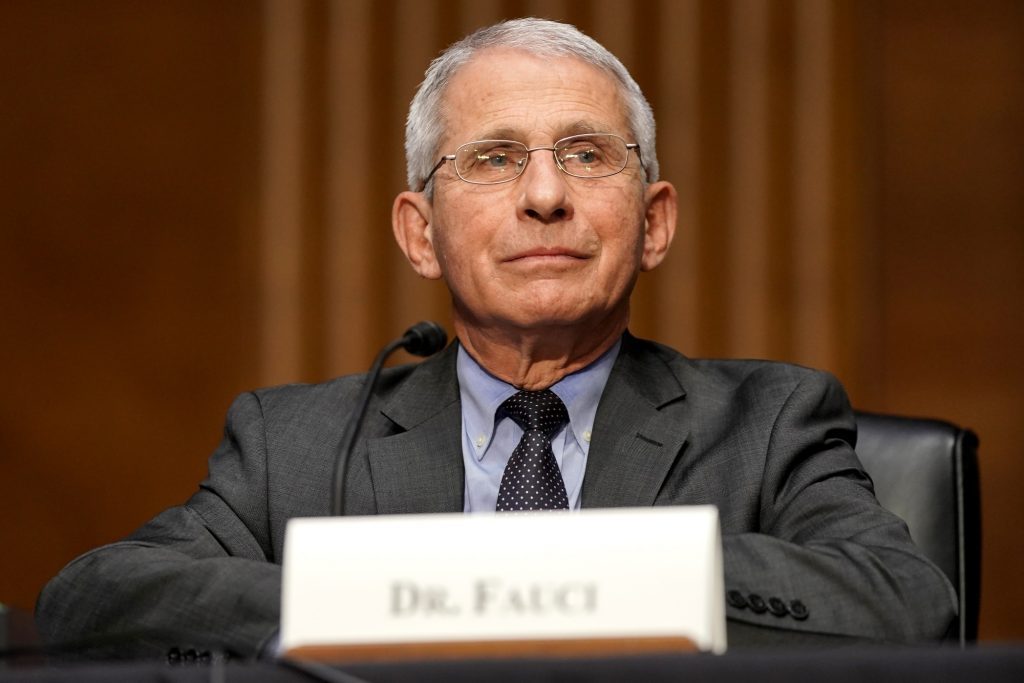
In a statement coinciding with Fauci’s own announcement on Monday, the president thanked Fauci for his years of government service.

Biden called him a “dedicated public servant, and a steady hand with wisdom and insight honed over decades at the forefront of some of our most dangerous and challenging public health crises.”

“Because of Dr. Fauci’s many contributions to public health, lives here in the United States and around the world have been saved,”

biden says on fauci.

“As he leaves his position in the U.S. Government, I know the American people and the entire world will continue to benefit from Dr. Fauci’s expertise in whatever he does next.”

Fauci said he is not retiring, and instead plans to “pursue the next phase of my career while I still have so much energy and passion for my field.”

“My time is running out. I’m 81 years old,” Fauci said in an interview with an Australian radio station.

He said that by 2024, “it is unlikely that I will still be at this job no matter who gets to be president of the United States.” 

Over the coming months, Fauci will help prepare the Institute for a leadership transition.

“NIH is served by some of the most talented scientists in the world, and I have no doubt that I am leaving this work in very capable hands,”

“Thanks to the power of science and investments in research and innovation, the world has been able to fight deadly diseases and help save lives around the globe. I am proud to have been part of this important work and look forward to helping to continue to do so in the future.”

Fauci concludes his statement.

News

China deploys over 100 ICBMs near Mongolia border

China deploys over 100 ICBMs near Mongolia amidst ongoing tensions and lack of arms control talks with the US

Published

on

China deploys over 100 ICBMs near Mongolia amidst ongoing tensions and lack of arms control talks with the US

video
play-sharp-fill
In Short:
– China has deployed over 100 ICBMs in new silos near Mongolia, marking a significant nuclear expansion.
– Beijing aims to enhance military strategies for Taiwan by 2027, potentially affecting U.S. operations in the region.

China has deployed over 100 solid-fueled intercontinental ballistic missiles (ICBMs) in newly constructed silo fields near its border with Mongolia, according to a draft Pentagon report reviewed by Reuters.This marks the most significant nuclear expansion by Beijing to date. The United States indicates that China shows no intention of engaging in arms control negotiations, despite President Trump’s calls for denuclearization talks with both China and Russia.

The report states that the DF-31 missiles, which have a range of 7,000 to 11,700 kilometers, are positioned across three silo fields. While the Pentagon had previously acknowledged these fields, this is the first confirmation of the number of deployed missiles.

China’s nuclear warhead stockpile was estimated at around 600 in 2024. The report projects an increase to over 1,000 warheads by 2030. It highlights a lack of willingness from Beijing to pursue arms control measures.

Beijing has dismissed such reports as attempts to discredit China and claims that it follows a nuclear strategy of self-defense with a no-first-use policy.

Forceful means

The Pentagon assessment indicates that China plans to be capable of fighting and winning a conflict over Taiwan by 2027. Beijing is reportedly enhancing military strategies to capture the island through forceful means.

These military strikes could potentially disrupt U.S. operations in the Asia-Pacific region.

Neither the Pentagon nor China’s embassy in Washington responded to requests for comment. U.S. officials cautioned that the draft report could change before its formal submission to lawmakers.


Download the Ticker app

Continue Reading

News

Global race for AI infrastructure amid soaring energy costs

Japan invests ¥1 trillion in AI infrastructure amid global tech race as energy costs and concerns rise

Published

on

Japan invests ¥1 trillion in AI infrastructure amid global tech race as energy costs and concerns rise

video
play-sharp-fill
In Short:
– Japan plans to invest ¥1 trillion in domestic AI to enhance infrastructure and compete globally.
– China is focusing on technological independence as domestic chipmakers prepare for public offerings.

Japan plans to invest ¥1 trillion ($6.34 billion) over five years in a domestic artificial intelligence company. This initiative aims to build infrastructure for AI, despite rising electricity costs raising concerns about the industry’s sustainability.The government will collaborate with SoftBank Group and Preferred Networks to develop the largest foundation model in Japan, employing around 100 engineers to compete globally. This effort reflects worries about the risks of relying on foreign AI technology.

China is also increasing its focus on technological independence. Domestic chipmakers are preparing for public offerings to enhance their capabilities, following successful launches by Moore Threads and MetaX in Shanghai. Companies such as Biren Technology and Baidu’s Kunlunxin are also planning to go public.

SoftBank is pursuing a $22.5 billion funding commitment to OpenAI by year-end, by selling assets and securing loans. CEO Masayoshi Son’s significant investment signifies a strong commitment to AI infrastructure.

AI Infrastructure

The rapid expansion of data centers is putting pressure on energy resources. Projections suggest data centers will consume 945 terawatt-hours by 2030, nearly tripling from 415 TWh in 2024. In the U.S., energy use by data centers could reach 9% to 12% of total supply by 2028.

Concerns have arisen over whether tech companies’ activities are raising residential electricity costs, with investigations launched by three Democratic senators targeting major companies like Alphabet, Microsoft, and Amazon. Utilities face significant expenses to upgrade grids, which may be passed on to consumers.

The energy demand is benefiting companies that supply power infrastructure. Jefferies recently upgraded GE Vernova to Buy, citing expected growth in gas pricing and long-term service demand amid rising energy needs.


Download the Ticker app

Continue Reading

News

Australia’s property market set to soar in 2026

Australia’s property market is set for strong growth in 2026, driven by demand and strategic investments across key regions.

Published

on

Australia’s property market is set for strong growth in 2026, driven by demand and strategic investments across key regions.


Australia’s property market is predicted to perform strongly in 2026, with no major losers expected as demand and prices rise across 14 key regions. Hotspotting’s latest analysis highlights which areas are set to shine and the factors driving this unprecedented growth.

Join Tim Graham from Hotspotting as he explains the methodology behind the price predictions and why infrastructure investments and government policies are playing a key role in shaping the market.

From regional hotspots to major cities, we explore emerging trends, buyer behavior, and the outlook for places like Darwin and Perth. Whether you’re a first home buyer or seasoned investor, this episode is packed with insights to navigate Australia’s booming property landscape.

Subscribe to never miss an episode of Ticker – https://www.youtube.com/@weareticker

#AustraliaProperty #PropertyMarket2026 #Hotspotting #RealEstateTrends #HousingMarket #InvestingAustralia #PropertyGrowth #FirstHomeBuyers


Download the Ticker app

Continue Reading

Trending Now