
Money
The ‘huge impact’ that will cause disruption to every business until 2026

As the war in Ukraine remains chaotic, many key industries are feeling the brunt with unintended consequences
The world is facing severe supply disruptions. However, some countries are being impacted more severely than others.
Delivery speed is a key metric in supply chains and this has never been more essential when it comes to the crisis between Russia and Ukraine.
Ukrainian forces are needing military aid as quickly as possible to combat Russian aggression – so with major disruptions, sanctions and a war, how is Ukraine getting supplies?
What differentiates military supply chains in comparison to commercial supply chains?
Peter Jones from Prological consulting joined a panel with ticker’s Brittany Coles and Holly Stearnes.
The supply chain expert says in military supply chain, it is absolutely critical that things happen the way that they are intended to happen.
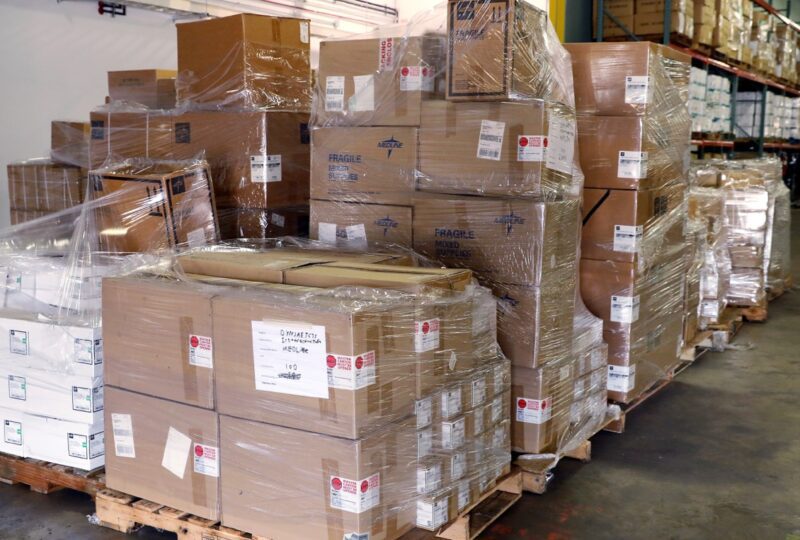
“It’s a very big part of alternative forces strategies to disrupt the supply chain of their particular enemy, because that means then people aren’t being fed food and water can’t get through, let alone armament and other military types of support infrastructure. So there’s actually quite a significant difference at that first base level that people’s lives are at stake,” Peter says.
He continues to say the second level is in commercial supply chains, and at war time, nations tend to “open up the chequebook and whatever is required. So from a financial perspective, that support is given as much as possible with domestic commercial supply chains, that commercial imperative always has to be considered.”
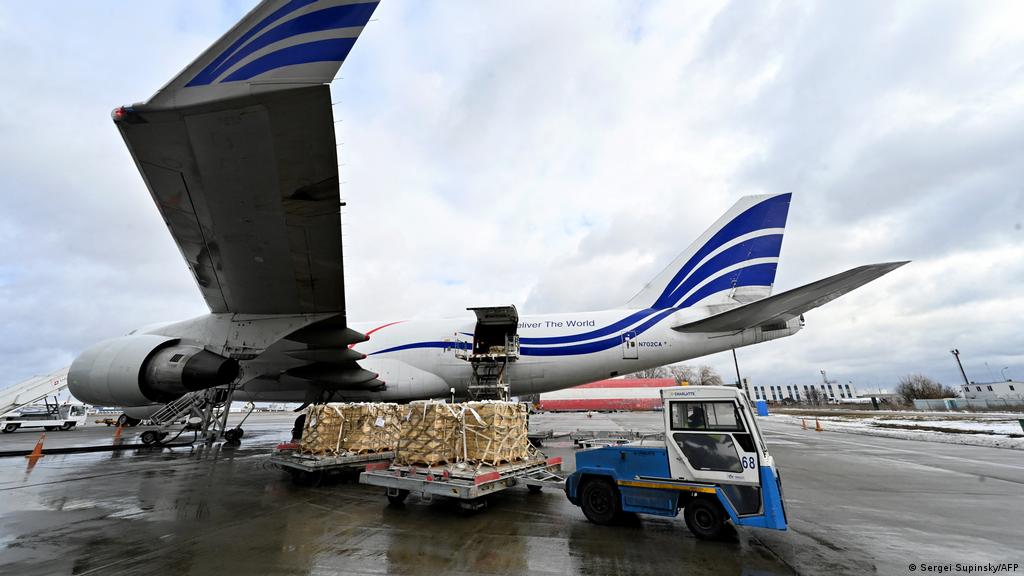
How are goods transported to Ukraine and Russia amid war?
There’s sanctions on Russia, global companies boycotting. So what does the supply chain landscape look for shipping and also air freight?
Peter breaks this down to two elements.
At a local level
Peter begins with Crimea, which is basically Russia’s major gateway, into their nation, and then out of Ukraine. These local areas will be enormously disrupted.
At a global level
Peter says Russia only occupies around about one and a half percent of global movement or product in and out of Russia.
“So that global level, Russia doesn’t have a big impact in terms of the volume going through the networks, and the Ukraine is only half a percent. So at that local level, it’s enormous, because nothing can move in and out, due to ports disrupted,” he says.
“But at an international level, that factor by itself is not going to have a huge impact. The follow on to that though, where the big impact will come into global shipping is firstly, the energy crisis as this is creating.”
Energy and employment crisis brewing at ports
Ships are one of the biggest consumers of crude oil in on the globe. With Russia being the second largest exporter of oil in the world, Peter says commercial pressure on businesses will impact global trade.
On the other side, there’s employment.
According to the global shipping chamber, around 15% of global seafarers within merchant navies come from Russia, a bit over 10% and the Ukraine a little under 5%. So that’s 15% of a global employment group coming from the two countries that are in conflict.
“Global shipping lines are going to get conflicted about their ability to continue to employ the Russian employees. And the Ukrainian government more and more is bringing as many of their men back into the Ukraine to look after the nation. So those two elements with is going to have a huge impact if this conflict goes on for any length of time.”
What about China?
Peter says global shipping is still a long way from recovered from the events of 2020.
When demand around the world just fell off a cliff, the shipping lines took the opportunity to retire their old equipment, because it was coming with new taxes and fees being applied because of emissions regulations.
“So they said rather than us applying those taxes and fees, here’s an opportunity, we’ll get rid of the ships demand came back very, very quickly and unexpectedly, but the ships had been retired. So that was one of the issues that led to a lack of demand,” Peter says. “Then we put up the overlay on top of that port shutting down, empty containers being in all the wrong places. All of those issues are still very present today from COVID.”
Now with the Ukraine situation having emerged and the wash back through to China, and the things happening there, these issues are just going to amplify even further.
The question is how long is this disruption going to go for?
So with global shipping, the general thoughts were until a month ago, maybe towards the middle of 2024, q3 2024.
Peter says the industry has really been thrown a curveball due to war and further lockdowns in China.
“If the Ukraine Russia scenario lasts for many months, then that timetable is going to get pushed right out 2025/2026.”
PETER JONES
The implication to that comes back to countries being able to get what they need in order to run the nation from government perspective.
Peter is based in Australia and says he has heard of quite a lot of talk about onshoring more manufacturing and becoming more self sufficient as a nation.
“So what these issues will lead to is just that conversation being amped up again, at government level and in boardrooms as they try and work out what their risk profile looks like in terms of how long we believe this Russia and Ukraine scenario is gonna last,” Peter says.
He believed we could well see a pivoting back towards much more national security from a manufacturing and a maintaining sovereignty perspective.

-
 Tech2 days ago
Nvidia to double chip sales next year
-
News2 days ago
Qantas fights against holiday ground crew strikes
-
Shows4 days ago
Australia’s childcare sector faces major change as reforms accelerate
-
News2 days ago
Canada’s potential EU membership sparks discussion
-
Shows3 days ago
Why traditional property investment strategies need updating
-
Ticker Views2 days ago
One Nation controversy puts political messaging under the spotlight
-
Ticker Views2 days ago
‘Pressure on Labor to deliver’: Immigration plan faces hurdles
-
Ticker Views4 days ago
‘Like the CIA on steroids’: Iran crowdsources dissident tracking