

Connect with us
https://tickernews.co/wp-content/uploads/2023/10/AmEx-Thought-Leaders.jpg

Ticker Views

Venezuela, Gaza, Ukraine: is the UN failing?

Published

on

Juliette McIntyre, Adelaide University and Tamsin Phillipa Paige, Deakin University

The United Nations turned 80 in October last year; a venerable age for the most significant international organisation the world has ever seen.

But events of recent years – from last weekend’s Trumpian military action to seize Venezuelan President Nicolás Maduro and Russia’s unlawful invasion of Ukraine in 2022, to the ongoing humanitarian catastrophe in Gaza – represent major challenges to the UN system.

Many are now asking whether the United Nations has any future at all if it cannot fulfil its first promise of maintaining international peace and security.

Has the UN reached the end of its lifespan?

The UN Security Council

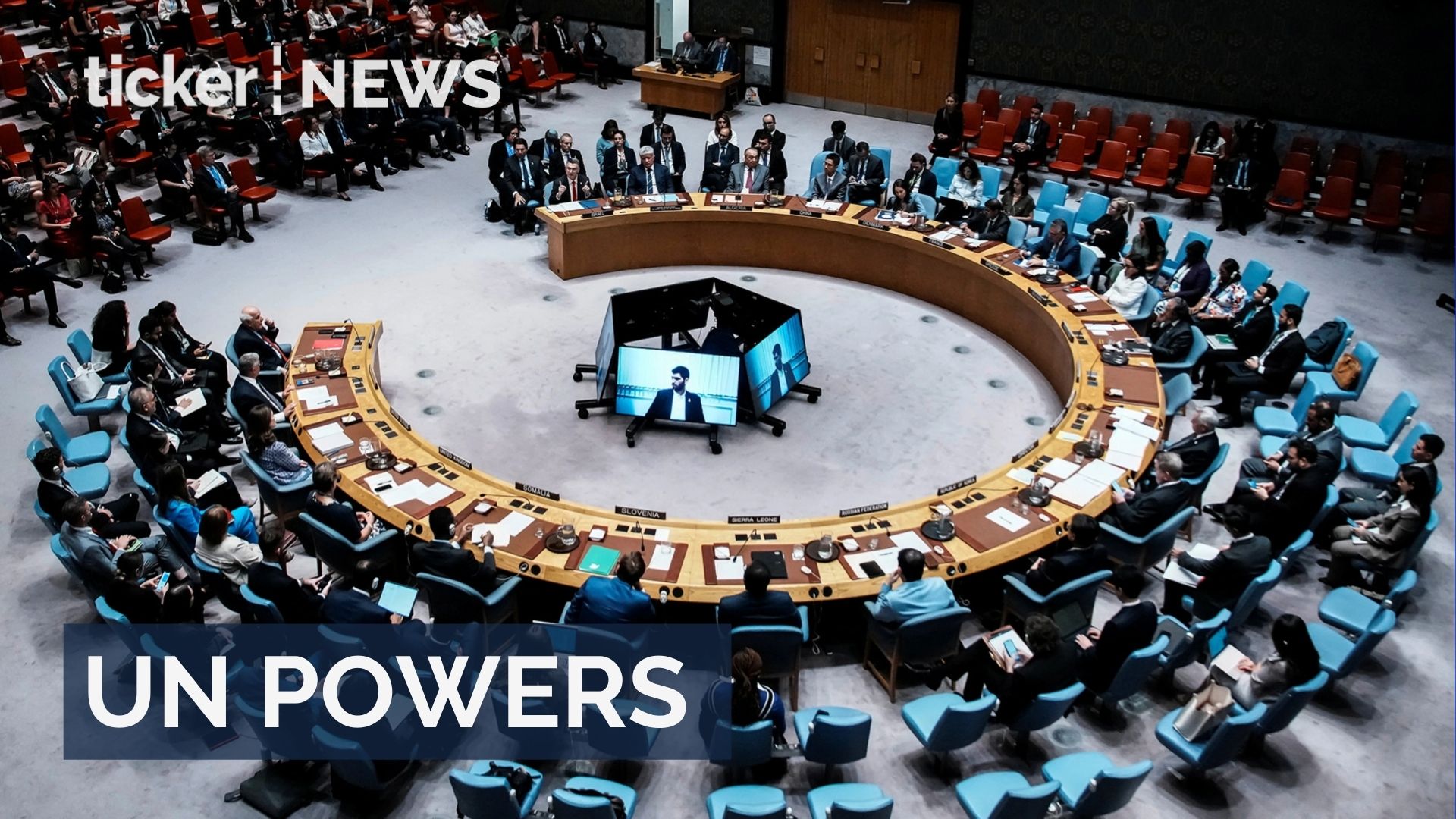
The organ of the UN that plays the main role maintaining peace and security is the UN Security Council.

Under the rules established by the UN Charter, military action – the use of force – is only lawful if it has been authorised by a resolution from the UN Security Council (as outlined in Article 42 of the Charter), or if the state in question is acting in self-defence.

Self-defence is governed by strict rules requiring it to be in response to an armed attack (Article 51). Even then, self-defence is lawful only until the Security Council has stepped in to restore international peace and security.

The Security Council is made up of 15 member states:

  • five permanent (China, France, Russia, the United Kingdom and the United States – also known as the P5)
  • ten non-permanent members elected for two-year terms.

Resolutions require nine affirmative votes and no veto from any permanent member, giving the P5 decisive control over all action on peace and security.

This was set up expressly to prevent the UN from being able to take action against the major powers (the “winners” of the second world war), but also to allow them to act as a balance to each other’s ambitions.

This system only works, however, when the P5 agree to abide by the rules.

Could the UN veto system be reformed?

As aptly demonstrated by the Russians and Americans in recent years, the veto power can render the Security Council effectively useless, no matter how egregious the breach of international law.

For that reason, the veto is often harshly criticised.

As one of us (Tamsin Paige) has explained previously, however, self-serving use of the veto power (meaning when a member state uses its veto power to further its own interests) may be politically objectionable but it is not legally prohibited.

The UN Charter imposes no enforceable limits on veto use.

Nor is there any possibility of a judicial review of the Security Council at the moment.

And herein lies one of the most significant and deliberate design flaws of the UN system.

The charter places the P5 above the law, granting them not only the power to veto collective action, but also the power to veto any attempt at reform.

Reforming the UN Security Council veto is thus theoretically conceivable – Articles 108 and 109 of the charter allow for it – but functionally impossible.

Dissolving and reconstituting the UN under a new charter is the only structural alternative.

This, however, would require a level of global collectivism that presently does not exist. One or more of the P5 would likely block any reform or redesign that would see the loss of their veto power.

An uncomfortable truth

It does, therefore, appear as though we are witnessing the collapse of the UN-led international peace and security system in real time.

The Security Council cannot – by design – intervene when the P5 (China, France, Russia, the UK and US) are the aggressors.

But focusing only on the Security Council risks missing much of what the UN actually does, every day, largely out of sight.

Despite its paralysis when it comes to great-power conflict, the UN is not a hollow institution.

The Secretariat, for instance, supports peacekeeping and political missions and helps organise international conferences and negotiations.

The Human Rights Council monitors and reports on human rights compliance.

UN-administered agencies coordinate humanitarian relief and deliver life-saving aid.

The UN machinery touches on everything from health to human rights to climate and development, performing functions that no single state can replicate alone.

None of this work requires Security Council involvement, but all of it depends on the UN’s institutional infrastructure (of which the Security Council is an integral part).

The uncomfortable truth is we have only one real choice at present: a deeply flawed global institution, or none at all.

The future of the UN may simply be one of sheer endurance, holding together what can still function and waiting for political conditions to change.

We support it not because it works perfectly, or even well, but because losing it would be much worse.

Should we work towards a better system that doesn’t reward the powerful by making them unaccountable? Absolutely.

But we shouldn’t throw out all of the overlooked good the UN does beyond the Security Council’s chambers because of the naked hypocrisy and villainy of the P5.The Conversation

Juliette McIntyre, Senior Lecturer in Law, Adelaide University and Tamsin Phillipa Paige, Associate Professor, Deakin Law School, Deakin University

This article is republished from The Conversation under a Creative Commons license. Read the original article.

Ticker Views

Elon Musk faces backlash over Grok AI Deepfakes

Elon Musk’s Grok faces backlash over sexual deepfakes, prompting global investigations and raising urgent ethical concerns about AI technology.

Published

on

Elon Musk’s Grok faces backlash over sexual deepfakes, prompting global investigations and raising urgent ethical concerns about AI technology.


Elon Musk’s AI tool Grok is facing international backlash as the EU and UK condemn its use in generating sexual deepfakes. Governments are launching investigations into xAI, Musk’s company, and calling for urgent action to protect users from the tool’s harmful potential. Public outrage has grown, raising serious questions about consent, privacy, and the ethical limits of AI technology.

Experts, including Karen Sutherland from UniSC, explain the legal and ethical concerns tied to Grok, particularly regarding sexualized deepfake content. Authorities in France, India, and other countries are exploring measures to hold xAI accountable. Musk and his team claim that safeguards were in place, but critics argue they were insufficient to prevent the misuse of the platform. The situation highlights wider worries about AI’s role in gender-based violence and the responsibilities of tech companies in moderating content.

Meanwhile, researchers at the University of Delaware have developed a groundbreaking AI model designed to identify potentially harmful social media videos before they go viral. Unlike Grok, this technology is designed to protect users by analyzing video features, viewer reactions, and known risk factors to prevent exposure to triggering or high-risk content.

Dr. Sutherland discussed how this AI differentiates between a creator’s intentions and the actual impact on viewers, allowing social media platforms to intervene before harm occurs. The model has the potential to reshape online safety, although it also raises ethical questions about monitoring and intervention. Experts remain optimistic about its ability to prevent harm and safeguard vulnerable audiences.

Subscribe to never miss an episode of Ticker – https://www.youtube.com/@weareticker

#ElonMusk #GrokAI #Deepfake #AIethics #SocialMediaAI #OnlineSafety #TechNews #AIresearch


Download the Ticker app

Continue Reading

Ticker Views

Inside Trump’s strategy for post-Maduro Venezuela

Post-Trump aims to stabilize Venezuela post-Maduro; challenges include oil management, internal conflict, and military implications.

Published

on

Trump aims to stabilize Venezuela post-Maduro; challenges include oil management, internal conflict, and military implications.


Following Nicolás Maduro’s ousting, President Trump is taking bold steps to establish a stable interim government in Venezuela. The move comes amid rising concerns over potential unrest from Maduro’s allies and the challenge of steering the country toward stability. Experts warn that the situation could have wide-reaching implications for both Venezuela and U.S. foreign policy.

We speak with Oz Sultan from Sultan Interactive Group about the challenges facing the Trump administration, including stabilising Venezuela’s oil industry and managing internal conflict risks. Key figures like Edmundo Gonzalez and María Corina Machado are expected to play crucial roles in the country’s transition, but their influence and the response from Maduro’s allies could significantly shape the outcome.

The conversation also explores the risks of U.S. military involvement, the lack of a detailed transition plan, and the broader implications for international relations. As Washington charts its path forward, the stakes for U.S. foreign policy and Venezuelan stability have never been higher.

Subscribe to never miss an episode of Ticker – https://www.youtube.com/@weareticker

#Venezuela #Trump #Maduro #USForeignPolicy #OilIndustry #PoliticalTransition #GlobalPolitics #TickerNews


Download the Ticker app

Continue Reading

Ticker Views

Trump’s intervention in Venezuela: the 3 warnings for the world

Published

on

Donald Rothwell, Australian National University

The January 3 US military operation in Venezuela seizing President Nicolás Maduro and his wife, Cilia Adela Flores de Maduro, was in equal measure audacious and illegal under international law.

It’s even more breathtaking that the Trump administration now says it “will run” Venezuela on an interim basis. The US will also seek to control the country’s vast oil interests.

Irrespective of its contested domestic politics and the chequered record of the Maduro regime, Venezuela remains a recognised sovereign state under international law. This includes permanent sovereignty over its natural resources. Any US seizure of Venezuelan oil would be a further violation of international law.

But the US hasn’t tried to justify its strikes with international law. Instead, the Trump administration is using domestic laws to ignore global rules entirely. It’s a new strategy, but one with no international legal basis, regardless of how you slice it.

Making the international domestic

Both the first and second Trump administrations have shown animosity towards the Maduro regime.

The US government has consistently raised two key issues: the role Venezuela has played in illegal Latin American migrants entering the US, and support for the flow of drugs into the US.

Both were major issues during the 2024 US presidential election campaign and are key planks of the Trump MAGA movement.

The legitimacy of the Maduro regime has also been called into question. There were disputed election outcomes in 2018 and 2024.

However, the legitimacy or otherwise of the Maduro regime is not a legal basis for a military intervention.

Rather, the Trump administration is relying on US domestic laws to justify its actions in Venezuela. A 2020 US grand jury indictment of Maduro and his wife for drug trafficking underpins the legal argument.

That Maduro has been paraded before television cameras in New York like any other detained prisoner further emphasises the importance of US domestic law in this matter. It’s unprecedented for a foreign head of state to be arrested in their presidential compound, detained and legally processed in the US within the space of 24 hours.

Maduro and his wife will eventually face trial on various criminal charges. That Nicolás Maduro is the Venezuelan president and therefore entitled to head of state immunity from criminal prosecution before a US court will presumably be set aside as the Trump administration does not recognise the legitimacy of his presidency.

Likewise, US courts will probably not bother themselves too much with the manner of Maduro’s arrest via US extra-territorial law enforcement in a foreign state.

In the normal course of events, once the US grand jury indictment had been released, Maduro’s extradition could have been sought via a US arrest warrant.

The Trump administration likely assumed any such extradition request would have been ignored. So, instead, it used the US military to enter Maduro’s Caracas compound to facilitate his arrest by Department of Justice officials.

Law enforcement or law breaking?

At the core of how the Trump administration has advanced its legal campaign against Venezuela and the Maduro regime has been its reliance on US law.

Starting in September, the US began targeting small boats linked to the Venezuelan drug trade through military strikes at sea.

The US justified these, in part, on the basis of extra-territorial enforcement of US laws against known cartels shipping drugs throughout the Caribbean to American entry points.

In December, the US Coast Guard began to pursue and seize oil tankers subject to US sanctions. This conduct was also justified on the basis of US law, with the sanctioned tankers being stopped and seized in waters off the Venezuelan coast on the high seas.

US law enforcement has now been extended to the seizure, arrest and detention of the Maduros.

By relying on the argument that the US is enforcing its own laws, the Trump administration provides itself with a domestic legal basis for its actions, no matter what international law may have to say.

This is a clear case of US exceptionalism towards international law, of which there is a long history. It reflects a US view that its own laws prevail over all other law. According to the US, international law should not unduly limit its ability to advance its national interests.

It’s also based on an assumption that any international opprobium it may encounter can be managed or safely ignored.

The 3 things to watch

There are three immediate regional and global lessons from these events.

First, the Trump administration has shown a vast capacity to sanction whomever it chooses based on domestic political whims. Individuals, entities and corporations have all been targeted through presidential executive orders, laws and force. Many will be on high alert.

Second, while the cumulative US actions against Venezuela violate the United Nations Charter, the UN will be virtually powerless to constrain the US. This is due to the veto powers held by the permanent members of its Security Council, not to mention Trump’s disdain for the UN generally.

Third, US allies and partners need to be very aware of the ramifications of this exceptional US law enforcement practice.

If, down the line, the US military encounters a more robust response than it did in Venezuela, it could trigger NATO treaty obligations for European countries and Canada, and ANZUS treaty obligations for Australia.

So, if the US continues down this road, there’s every chance the consequences of its interventionism could be felt by many around the world.The Conversation

Donald Rothwell, Professor of International Law, Australian National University

This article is republished from The Conversation under a Creative Commons license. Read the original article.
Continue Reading

Trending Now