At the Pentagon, American and South Korean officials warn DPRK about recent nuclear threats
The U.S. and South Korea issued a joint warning to North Korea that any use of nuclear weapons would result in the end of Kim Jong Un’s regime.
U.S. Secretary of State Lloyd Austin III and his counterpart the South Korean Defense Minister Jong-Sup Lee met for the 54th Security Consultative Meeting.
On Thursday, at the Pentagon both officials held a joint press conference.
“Secretary Austin and I affirm that any nuclear attack by DPRK including the use of tactical nuclear weapons is unacceptable and result in the end of Kim Jong-un regime by the overwhelming and decisive response of the alliance,” Lee said. “This is a strong warning against the DPRK.
Just one day prior, North Korea fired an unprecedented 20 missiles in a single day on Wednesday amid joint air force exercises between the U.S. and South Korea.
Additionally, Kim’s regime has also made veiled threats about nuclear weapons in recent days.
“The United States remains fully committed to the defensive of the ROK and our extended deterrence commitment is firm, and it includes a full range of our nuclear and conventional and missile defense capabilities,” said Austin.
South Korean media reported that officials believe the North’s intercontinental ballistic missile (ICBM) failed in flight, however, they did not elaborate.
Meanwhile, North Korea’s two short-range ballistic missiles fell into the sea to its east.
The U.S. and South Korea’s joint air force exercise, dubbed ‘Operation Vigilant Storm’ was scheduled to end Friday but following North Korea’s launches—it will now extend into the weekend.
Veronica Dudo is the U.S. Correspondent for Ticker News covering America’s biggest headlines. As an Emmy® Award nominated global journalist, Veronica has traveled across the country and around the world reporting on historical events that connect all citizens. Lauded as an award-winning international journalist, Veronica has executed stellar news coverage for NBC News, CBS News, The Hill, ME-TV Network and AOL. Her stories have highlighted a plethora of topics ranging from breaking news and politics to economic affairs across the USA, European Union, and Asia; cultural affairs; globalization; governance; education; and sustainability.
China slaps 55% tariff on Australian beef as trade and geopolitical tensions rise
China has imposed a 55% tariff on Australian beef imports that exceed quota limits, a move that threatens more than $1 billion in annual trade and has reignited tensions between Canberra and Beijing. The restrictions, effective from January 1 for three years, cap Australia’s beef quota at 205,000 tonnes—below the volume China imported in 2024—prompting industry claims the decision undermines the spirit of the China-Australia Free Trade Agreement.
Calm fears
Beef producers warn the impact could be severe, with exports to China potentially falling by as much as one-third compared to 2025 levels. Industry groups say the move advantages rival exporters, with Brazil and Argentina receiving far larger quotas, raising concerns Australia could permanently lose market share in a key global market. Prime Minister Anthony Albanese has sought to calm fears, saying Australia is not being singled out and describing the beef sector as the strongest it has ever been.
The tariff decision comes against the backdrop of growing geopolitical strain, days after Australia criticised China’s “Justice Mission 2025” military drills near Taiwan as destabilising. Opposition figures are urging the government to leverage diplomatic ties with President Xi Jinping to ensure Australia is not swept up in broader trade retaliation, as industry calls mount for urgent talks to stabilise relations.
Where to switch off, reset and travel well for a week
For executives in their 40s, travel has shifted. It is less about ticking off sights and more about space, comfort and coming back sharper than when you left.
In 2026, the most appealing one-week holidays are destinations that combine calm, quality and a sense of being ahead of the curve.
For executives, switching off from work is essential, but true rest comes from being gently engaged rather than completely idle.
The most rewarding breaks offer just enough stimulation, culture, nature or conversation, to quiet the mind without replacing one form of busyness with another.
Here are five global locations quietly rising to the top of travel wish lists.
East Coast Barbados
Barbados has long been associated with polished beach holidays, but the east coast offers something different.
Wild Atlantic surf, boutique retreats and fewer crowds create a slower rhythm that suits travellers who want proper rest without sacrificing style.
Days are spent between long coastal walks, ocean-facing spas and unhurried dinners, with just enough local culture to keep things interesting.
Barbados: Book a holiday package (flights + hotel) to Barbados here.
Phu Quoc
Vietnam’s largest island is emerging as a refined alternative to more established Asian beach destinations.
Phu Quoc blends thoughtful luxury with a grounded, local feel. Resorts are discreet rather than flashy, wellness is taken seriously, and the pace encourages doing very little very well.
It is an easy week of warm water swims, exceptional food and genuine mental downtime.
Phu Quoc, Vietnam: Find holiday packages and deals for Phu Quoc here.
Peloponnese
For travellers who want culture without crowds, the Peloponnese is becoming Greece’s most compelling region.
Ancient ruins sit alongside olive groves, quiet beaches and wellness-focused resorts designed for long lunches and early nights.
It offers the Mediterranean experience executives love, without the intensity of Santorini or Mykonos.
Peloponnese, Greece: Browse and book Peloponnese holiday packages with flights and hotels here.
The Red Sea
Saudi Arabia’s Red Sea coast is one of the most ambitious luxury travel projects in the world.
Opening progressively through 2025 and 2026, it promises adults-focused resorts built around sustainability, privacy and high-end wellness.
For those seeking something genuinely new, this is a destination that feels exclusive, restorative and future-facing.
Red Sea Coast (gateway for Red Sea resorts): Book a Red Sea Coast holiday package (flight + hotel) here.
Margaret River
Margaret River continues to refine its appeal for travellers who value space and quality. World-class wineries, dramatic coastline and understated luxury accommodation make it ideal for a reset without jet lag.
It is a reminder that a great week away does not need excess. It needs good food, good wine and room to breathe.
In 2026, the best holidays for executives are not about escape in the dramatic sense. They are about intention. A change of pace, fewer decisions, and environments designed to help you slow down properly. These destinations understand that luxury is not about doing more, but about feeling better when you return.
Margaret River, Western Australia: Find Margaret River holiday packages (accommodation + flight) here.
In Short:
– Iranian President Pezeshkian urged action to meet protesters’ demands amid economic crisis and currency devaluation.
– Protests intensified with shop closures in Tehran, following significant inflation and political unrest after Mahsa Amini’s death.
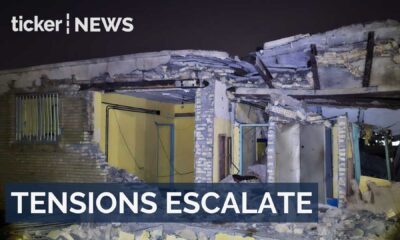
Iran is grappling with its most severe economic crisis in years. Mass protests erupted across Tehran following the dramatic collapse of the national currency. The rial plunged to 1.42 million against the U.S. dollar over the weekend, briefly recovering to 1.38 million. This marks a loss of more than two-thirds of its value since 2022.
Annual inflation soared to 42.2 percent in December, with food prices up 72 percent year-on-year. Many Iranians are struggling to make ends meet, fueling public anger and unrest.
In response, Iranian President Masoud Pezeshkian ordered his government to engage directly with protest representatives. Calling the demonstrations “legitimate,” he emphasized the need for reforms in the monetary and banking sectors. Officials announced a dialogue framework to hear the voices of demonstrators.
The unrest coincided with the resignation of Central Bank Governor Mohammad Reza Farzin. Former Economy Minister Abdolnaser Hemmati is set to replace him, signaling possible shifts in economic policy.
Tehran’s commercial districts were paralyzed as shopkeepers in the Grand Bazaar and major streets closed businesses in solidarity. Videos on social media showed crowds chanting slogans as security forces used tear gas to disperse them.
International pressure is also rising. U.S. officials warned they would support action against Iran if the country resumes nuclear or missile development, following recent airstrikes on Iranian facilities.
The World Bank forecasts Iran’s GDP will contract 1.7 percent in 2025 and 2.8 percent in 2026, deepening economic concerns. How the government responds to these protests and reforms its economy may shape the country’s stability in the months ahead.