Connect with us
https://tickernews.co/wp-content/uploads/2023/10/AmEx-Thought-Leaders.jpg

Ticker Views

STREAMING WARS: How many services are you willing to sign up for? TICKER VIEWS

Published

on

How many times have we heard “it’s just a small monthly fee of” and signed up to another streaming service to add to the TV home screen (and the direct debit list).

Well, there is a new kid on the block.

Paramount+ is here to shake the market up. Television-focused businesses are turning their attention to streaming services instead, as cable TV’s importance slowly fades away.

Is there a limit to how many services people are willing to fork their money out for? or is the market expansion of streaming subscription services a win for all?

Gone are the days of Netflix dominating as the streaming powerhouse. Major networks are continuing to turn their attention to the way their audience consumes their content and Netflix competitors have sprung to life, all wanting a slice of the streaming pie.

Latest streaming service to go down under

The latest major network to take on Netflix will soon expand to Australasia.

ViacomCBS Australia and New Zealand announced its digital streaming network Paramount+ will launch in Australia this year.

Its global video subscription service will  feature locally produced content as well as major shows and movies from Paramount pictures.

Two years ago the ViacomCBS merger joined the power of Paramount Pictures and the TV talents of CBS, creating a single media powerhouse.

Paramount Plus is already available in the US, Canada, Latin America and Nordic countries.

Beverley McGarvey, Chief Content Officer & Executive Vice President, ViacomCBS Australia & New Zealand, said the company is “poised to become as powerful a player in streaming as we are in television.”

“By leveraging the iconic Paramount brand, leading edge infrastructure, along with an incredible super-sized pipeline of must-see content, Paramount+ will deliver an exceptional consumer entertainment experience,” she said.
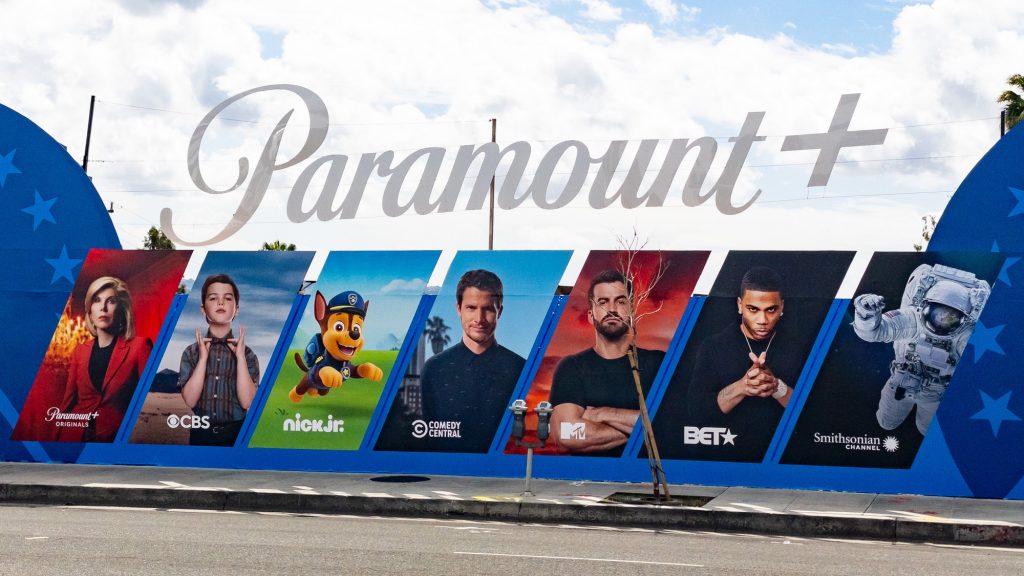
WEST HOLLYWOOD, CA – MARCH 10: General views of the Paramount+ billboard campaign along the Sunset Strip promoting the launch of the new streaming service on March 10, 2021 in West Hollywood, California. (Photo by AaronP/Bauer-Griffin/GC Images)

When Paramount+ comes to Australia in august this year, it will be replacing Network 10’s existing subscription offering with ViacomCBS confirming that 10 All Access will rebrand in August upon Paramount+ launch.

It’s a bid to take on global giants Netflix and Stan, that dominate the Australian market.

It will transform to bring high-profile films and television shows from channels Showtime and Nickelodeon and studio Paramount Pictures. Showtime, Nickelodeon and Paramount are all divisions of ViacomCBS, which bought Ten in 2017.
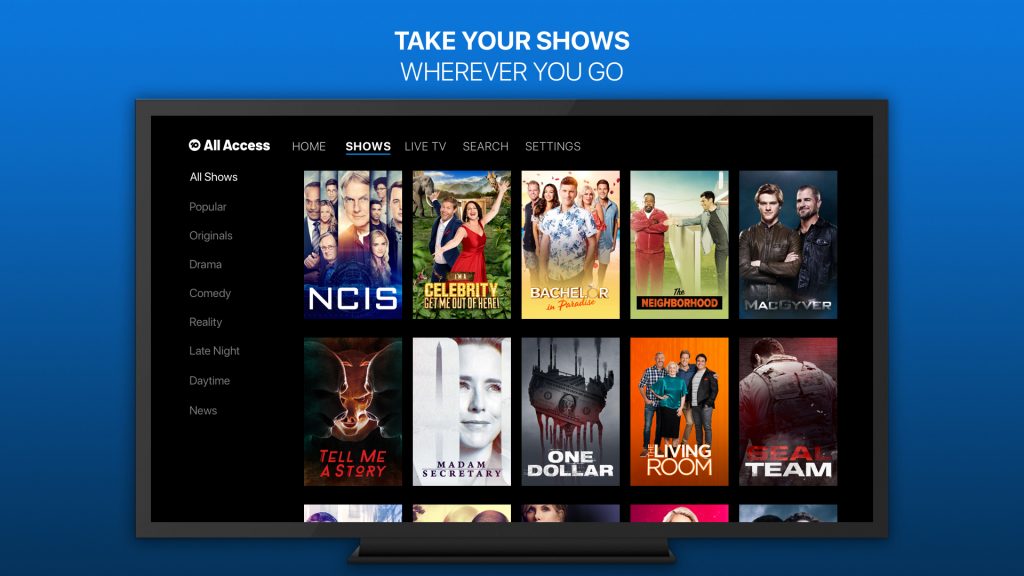
10 All Access will rebrand in August 2021. Paramount+ and lean on the catalogues of US networks Showtime and Nickelodeon and the Paramount Pictures film studio

10 All Access currently screens CBS shows such as NCIS and The Good Fight, alongside programs locally produced by Network Ten in Australia.

The service will be priced at $8.99 per month and subscribers will have access to more than 20,000 episodes and blockbuster movies throughout the year. This is cheaper than basic subscriptions in Australia for Netflix ($10.99), Stan ($10), Disney+ ($11.99) and Foxtel Now ($25).

Paramount+ expects to debut new original film every week starting in 2022

New original films like Paranormal Activity and The Inbetween will debut on the service by the end of 2021. 

ViacomCBS is following the suit of other major studios that are trying to promote their streaming services by sending new movies straight to streaming,

ViacomCBS is ramping up its streaming activity, CEO Bob Bakish said during its first quarter earnings call on Thursday (May 6).

“Turning to movies where we are poised to dramatically enhance the scale of our offering,” Bakish said

He added that Paramount+ expects to debut a new original film every week starting in 2022.

ViacomCBS global streaming revenue increased 65 per cent year-on-year to $816m, driven by a demand in streaming advertising revenue. This is led primarily by free service Pluto TV, and a 69 per cent rise in streaming subscription revenue, led by Paramount+.

Subscription TV viewers soared to 17.3 million Australians

global data and insights company, Pureprofile, surveyed those in Australia, New Zealand, the UK and the US to benchmark what their media consumption currently looks like.

 Australians consumed subscription TV services at an astonishing rate during 2020 as Australians endured a nation-wide lockdown from late March last year, according to data from Roy Morgan.

Netflix is the top subscription service in Australia.

Netflix is by far Australia’s most watched subscription television service, with 14,168,000 viewers in an average four weeks, an increase of 2,265,000 viewers from a year ago.

Over 80 per cent of Australians watch a subscription TV service

roy morgan data
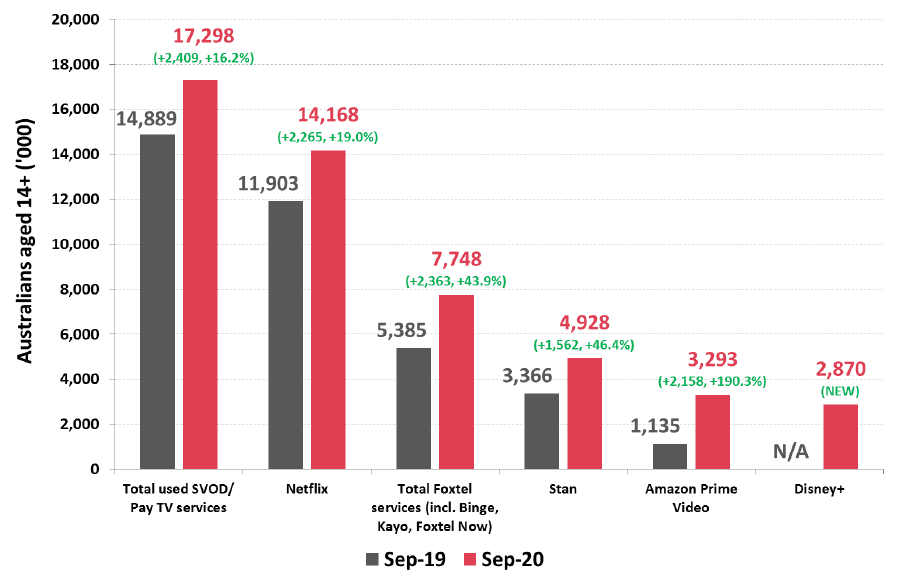
Number of Australians watching subscription television

“The strong growth for the leading services in the market shows Australians are increasingly viewing multiple services to find new and interesting content. For example over 5.6 million Australians watch both Netflix and Foxtel services in an average four weeks and nearly 4.7 million watch both Netflix and Stan,” Roy Morgan CEO Michele Levine says.

Will Paramount+ be chasing Stan Sport?

In the U.S, Paramount+ subscribers have access to sports as well as all entertainment offerings.

Will it compete with Stan, who according to Nine CEO Mike Sneesby, is Australia’s largest sports streaming platform.

Stan, a fully owned subsidiary of the Nine Entertainment Company, has recently expanded its content offering with the launch of ‘Stan Sport’. Stan Sport is offered as a bundle to the Stan streaming service that currently has more than two million subscribers.

Speaking at the recent Macquarie Australia conference, Sneesby said Stan’s sport streaming platform has grown to almost 150,000 subscribers.
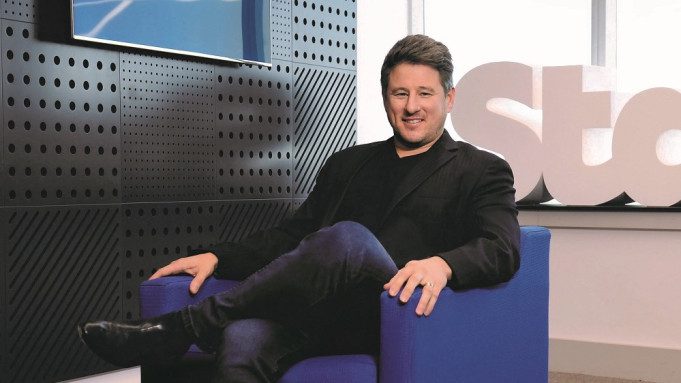
Stan CEO Mike Sneesby. Photo Nick Moir.

“This is a powerful proposition for Australian audiences,” Sneesby said.

He says the service is providing sporting codes who partner with Nine and Stan the opportunity to reach mass free-to-air audiences and high yields subscription audiences in a model that maximises revenue opportunity.

According to The Sydney Morning Herald and The Age, shares rose on the Australian Stock Exchange following Sneesby’s comments.

Stan announced its intention to start live streaming sports events after securing a three-year deal with Rugby Australia worth AUS$100 million (US$77.2 million) in November 2020.

So, do consumers want more than Netflix?

Some say the market is saturated, some say the market is just beginning.

Although, it’s clear in the numbers – both revenue and subscribers – that consumers are choosing streaming platforms as their dominant form of entertainment consumption.

Netflix still outperforms all the others, with more than 208 million subscribers around the globe. That is a massive reach… and selling point.

“Our strategy is simple: if we can continue to improve Netflix every day to better delight our members, we can be their first choice for streaming entertainment,” Netflix wrote in its January shareholder letter. 

“This past year is a testament to this approach. Disney+ had a massive first year (87 million paid subscribers!) and we recorded the biggest year of paid membership growth in our history.”
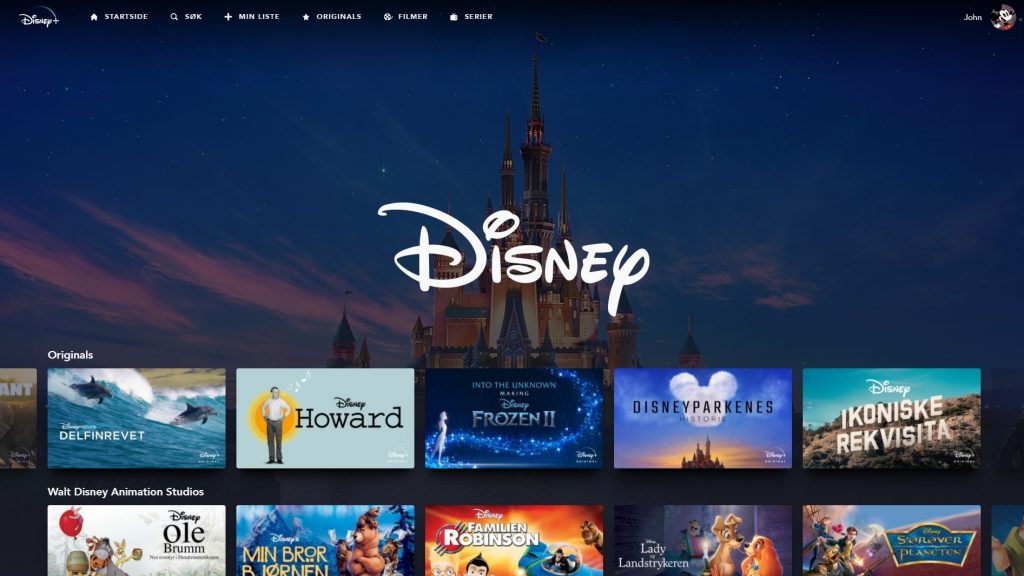
Disney Plus hit 100 million subscribers last month.

But with more players entering the so called ‘streaming wars’, Netflix’s astronomical growth appears to be slowing too.

“The production delays from covid-19 in 2020 will lead to a 2021 slate that is more heavily second half weighted with a large number of returning franchises,” it said in an investor letter recently.

Netflix may always be a part of a typical household’s content diet… but the streaming selection plate is certainly getting a lot more full.

Click to comment

Leave a Reply

Your email address will not be published. Required fields are marked *

Ticker Views

Israeli President Herzog visits Australia amid rising antisemitism

Israeli President Herzog’s Australia visit strengthens solidarity and shared values amid recent attacks on the Jewish community.

Published

on

Israeli President Herzog’s Australia visit strengthens solidarity and shared values amid recent attacks on the Jewish community.


Israeli President Isaac Herzog’s visit to Australia marks a significant moment of solidarity between the two nations, especially following recent tragic attacks affecting the Jewish community. The visit underscores shared democratic values and a commitment to combating antisemitism.

Professor Tim Harcourt from UTS discusses the deeper significance of the visit, including the Australian government’s message and the broader implications for Jewish Australians. The timing, following the Bondi attack, highlights the sensitive context in which this diplomatic engagement occurs.

Subscribe to never miss an episode of Ticker – https://www.youtube.com/@weareticker


Download the Ticker app

Continue Reading

Ticker Views

Rebuilding Gaza: Lessons from the Phoenix Plan

Published

on

What will a rebuilt Gaza look like? The competing visions for the Strip’s future

A girl walks along a street in Gaza to get food during the war between Hamas and Israel.
Jaber Jehad Badwan / Wikimedia Commons, FAL

Timothy J. Dixon, University of Reading; University of Oxford

Following a visit to Gaza in January, the UN undersecretary general, Jorge Moreira da Silva, called the level of destruction there “overwhelming”. He estimated that, on average, every person in the densely populated territory is now “surrounded by 30 tonnes of rubble”.

This staggering level of destruction raises urgent questions about how, and by whom, Gaza should be rebuilt. Since 2023, a variety of reconstruction plans and other initiatives have tried to imagine what Gaza could look like when the conflict ends for good. But which of these visions will shape Gaza’s future?

The Israeli government’s Gaza 2035 plan, which was unveiled in 2024, lays out a three-stage programme to integrate the Gaza Strip into a free-trade zone with Egypt’s El-Arish Port and the Israeli city of Sderot.

AI renderings show futuristic skyscrapers, solar farms and water desalination plants in the Sinai peninsula. The plan also shows offshore oil rigs and a new high-speed rail corridor along Salah al-Din Road, Gaza’s main highway that connects Gaza City and Rafah.

The US government has proposed a similar futuristic vision for Gaza. Its August 2025 Gaza Reconstitution, Economic Acceleration and Transformation Trust plan shows a phased series of modern, AI-powered smart cities developed over a ten-year time frame. The plan, which would place Gaza under a US-run trusteeship, suggested that poor urban design lies at the heart of “Gaza’s ongoing insurgency”.

Jared Kushner presenting the ‘Gaza Riviera’ Project at World Economic Forum in Davos, January 2026.

The latest iteration of this vision was unveiled by Donald Trump’s son-in-law, Jared Kushner, at the recent World Economic Forum in Davos.

He presented slides showing Gaza reconstructed as a “Riviera” of the Middle East, with luxury beachfront resorts, gleaming tower blocks, residential zones and modern transport hubs. Kushner suggested it was “doable” to complete the construction of a “new” Rafah city in “two to three years”.

It has been reported that the US and Israeli visions are heavily influenced by US-based economics professor Joseph Pelzman’s economic plan for Gaza. This plan, Pelzman said on a podcast in 2024, would involve destroying Gaza and restarting from scratch.

In contrast to the US and Israeli visions, the February 2025 Gaza “Phoenix” plan includes input from the people of Gaza. It has a much stronger focus on maintaining and reconstructing the existing buildings, culture and social fabric of the enclave.

The plan was developed by a consortium of international experts together with professionals and academics from Gaza, the West Bank and the Palestinian diaspora, and suggests a reconstruction and development phase of at least five years.

Other plans from the Arab world take a more technocratic view of reconstruction, but still have a short timescale for reconstruction. These include a five-year plan by the United Arab Emirates-based Al Habtoor Group, which promises to grant 70% of ownership in the holding company that will manage Gaza’s reconstruction to the Palestinians.

Feasibility of rebuilding Gaza

So, how feasible are these different visions and how inclusive are they for the people of Gaza? Rebuilding cities after war takes time and money, and also requires local resources. Even in China, a country with plentiful resources and abundant skilled labour, major new cities are rarely completed in less than 20 years.

And in Gaza rebuilding will be complicated by the fact that there are now 61 million tonnes of rubble there, as well as other hazardous debris such as unexploded munitions and human remains. This will need to be removed before any reconstruction can commence, with the UN estimating that clearing the rubble alone could take as long as 20 years.

For comparison, the Polish capital of Warsaw experienced a similar level of destruction during the second world war and it took four decades to rebuild and reconstruct the city’s historic centre. The time frames for reconstruction outlined in all of the plans for Gaza are far shorter than this and, even with modern construction methods, are unlikely to be feasible.

The US and Israeli visions also fail to include Palestinians in the planning of Gaza’s future, overlooking any need to consult with Gazan residents and community groups. This has led critics to argue that the plans amount to “urbicide”, the obliteration of existing cultures through war and reconstruction.

Reports that suggest Gazan residents will be offered cash payments of US$5,000 (£3,650) to leave Gaza “voluntarily” under the US plan, as well as subsidies covering four years of rent outside Gaza, will not have alleviated these concerns.

At the same time, the US plan does not propose a conventional land compensation programme for Gazan residents who lost their homes and businesses during the war. These people will instead be offered digital tokens in exchange for the rights to redevelop their land.

The tokens could eventually be redeemed for an apartment in one of Gaza’s new cities. But the plan also envisages the sale of tokens to investors being used to fund reconstruction. The Council on American-Islamic Relations, the largest Muslim civil rights and advocacy organisation in the US, says the “mass theft” of Palestinian land through the token scheme would amount to a war crime.

With their emphasis on community engagement and the repair and renewal of existing structures, the Phoenix plan and the other Arab-led visions are at least a step forward. But without a fully democratic consensus on how to rebuild Gaza, it is difficult to see how the voices of the Gazan people can be heard.

Whichever vision wins out, history shows that post-war reconstruction succeeds when it involves those whose lives have been destroyed. This is evidenced somewhat ironically by the US Marshall Plan, which funded the reconstruction of many European economies and cities after the second world war, and involved close engagement with civil society and local communities to achieve success.The Conversation

Timothy J. Dixon, Emeritus Professor in the School of the Built Environment, University of Reading; University of Oxford

This article is republished from The Conversation under a Creative Commons license. Read the original article.

Continue Reading

Ticker Views

Winter Olympic security tightens as US-European tensions grow

Published

on

Winter Olympic security tightens as US-European tensions grow

Keith Rathbone, Macquarie University

Since the murder of 11 Israeli hostages at the 1972 Munich Summer Olympics, security has been fundamental for games stakeholders.

The 2024 Paris games set new benchmarks for security at a mega-event, and now the presence of American security officials in Milan Cortina threatens to darken this year’s Winter Olympics before they even start.

Security at the games

The scale of security at the games has magnified considerably since the 1970s.

For the 2024 Olympics, the French government mobilised an unprecedented 45,000 police officers from around the nation.

For the opening ceremony, these forces cordoned off six kilometres of the Seine River.

Advocates point to Paris as an example of security done correctly.

Milipol Paris – one of the world’s largest annual conferences on policing and security – pointed to lower crime across the country during the games and a complete absence of any of the feared large security events. It stated:

The operation demonstrated the effectiveness of advanced planning, inter-agency cooperation and strong logistical coordination. Authorities and observers are now reflecting on which elements of the Paris 2024 model might be applied to future large-scale events.

However, critics complained the security measures infringed on civil liberties.

Controversy as ICE heads to Italy

Ahead of the Milan Cortina games, which run from February 4-23, Italian officials promised they were “ready to meet the challenge of security”.

A newly established cybersecurity headquarters will include officials from around the globe, who will sift through intelligence reports and react to issues in real time.

As well as this, security will feature:

  • 6,000 officers to protect the two major locations – Milan and Cortina d’Ampezzo
  • a no-fly zone around key sites
  • a constant restricted access cordon around some sites (as seen in Paris).

Some of the security officers working in the cybersecurity headquarters will come from the United States.

Traditionally the US diplomatic security service provides protection for US athletes and officials attending mega-events overseas. It has been involved in the games since 1976.

Late last month, however, news broke that some of the officers will be from “a unit of US Immigration and Customs Enforcement (ICE)”.

US and Italian officials were quick to differentiate between Homeland Security Investigations (HSI), which handles cross-border crime, and Enforcement and Removal Operations, the department responsible for the brutal crackdown on immigrant communities across the US.

The HSI has helped protect athletes at previous events and will be stationed at the US Consulate in Milan to provide support to the broader US security team at the games.

But the organisation’s reputation precedes them, and Italians are wary.

In Milan, demonstrators expressed outrage. Left-wing Mayor Giuseppe Sala called ICE a “a militia that kills” while protests broke out in the host cities.

US-European relations are stretched

The presence of ICE has also illuminated fractures within Italian Prime Minister Giorgia Meloni’s governing coalition.

Foreign Minister Antonio Tajani defended the inclusion of the US officers, saying “it’s not like the SS are coming”, referring to the Nazis paramilitary force in Germany.

However, local officials, including those from Meloni’s centre-right coalition, expressed concerns.

The tension inside Meloni’s government reflects broader concerns on the continent about US-European relations.

US Vice President JD Vance and Secretary of State Marco Rubio will attend the opening ceremony in Milan, despite some Europeans viewing Vance as the mouthpiece for US President Donald Trump’s imperial agenda.

Trump’s desire to take over Greenland has undermined American and European support for trans-Atlantic amity and the NATO alliance.

Just ahead of the Olympics, Danish veterans marched outside the US Embassy after Trump disparaged NATO’s contribution to US-led operations in Iraq and Afghanistan. These protests added to Danes’ fears about Trump’s Greenland ambition.

Tensions in Denmark remain high as the Americans and the Danes gear up to play ice hockey in the opening round robin of the men’s competition.

Elsewhere, politicians in the US on both sides have raised concerns that Trump’s bombastic rhetoric will make it harder for American athletes to compete and win.

A double standard?

Critics argue there is an American exception when it comes to global politics interfering in international sport.

Under Trump, the US has attacked Iran and Venezuela, called on Canada to become its 51st state, threatened to occupy Greenland and engaged in cross-border operations in Mexico.

Despite this, US competitors can still wear their nation’s colours at the Olympics.

Compare this to Belarussian and Russian athletes, who are only eligible to compete as Individual Neutral Athletes after the Russian invasion of Ukraine, and only under the condition they have not been publicly supportive of the invasion. An International Olympic Committee (IOC) body assesses each competitor’s eligibility.

Israeli athletes have also been under the spotlight amid geopolitical tensions in the region.

Following the Israeli invasion of Gaza in October 2023, a panel of independent experts at the United Nations urged soccer’s governing body FIFA to ban Israeli athletes, stating:

sporting bodies must not turn a blind eye to grave human rights violations.

But FIFA, and the IOC, have recently defended Israeli athletes’ right to participate in international sport in the face of boycotts and protests.

Competitors from Israel can represent their country at the Winter Olympics.

The political developments which have caused ructions worldwide ironically come after the IOC’s 2021 decision to update the Olympic motto to supposedly recognise the “unifying power of sport and the importance of solidarity”.

The change was a simple one, adding the word “together” after the original three-word motto: “faster, higher, stronger”.

It remains to be seen whether the Milan Cortina games live up to every aspect of the “faster, higher, stronger – together” motto, not just the first three words.The Conversation

Keith Rathbone, Senior Lecturer, Modern European History and Sports History, Macquarie University

This article is republished from The Conversation under a Creative Commons license. Read the original article.

Continue Reading

Trending Now