

Connect with us
https://tickernews.co/wp-content/uploads/2023/10/AmEx-Thought-Leaders.jpg

Money

Is Joe Biden hiding the recession?

Published

on

The US President and his administration are being accused of hiding what many are calling a recession

According to government reports Inflation in the US is at a 40 year high standing at an incredible 9.1%

And on top of that, the US economy shrank at 0.9% in April.

For some, the government doesn’t want to admit a recession- coming up to the midterm elections.

According to recent polls, Inflation is one of the major concerns for many American voters.

And most economists argue that the high inflation is being driven by Covid 19.

In early 2020, nationwide lockdowns meant millions lost their jobs.
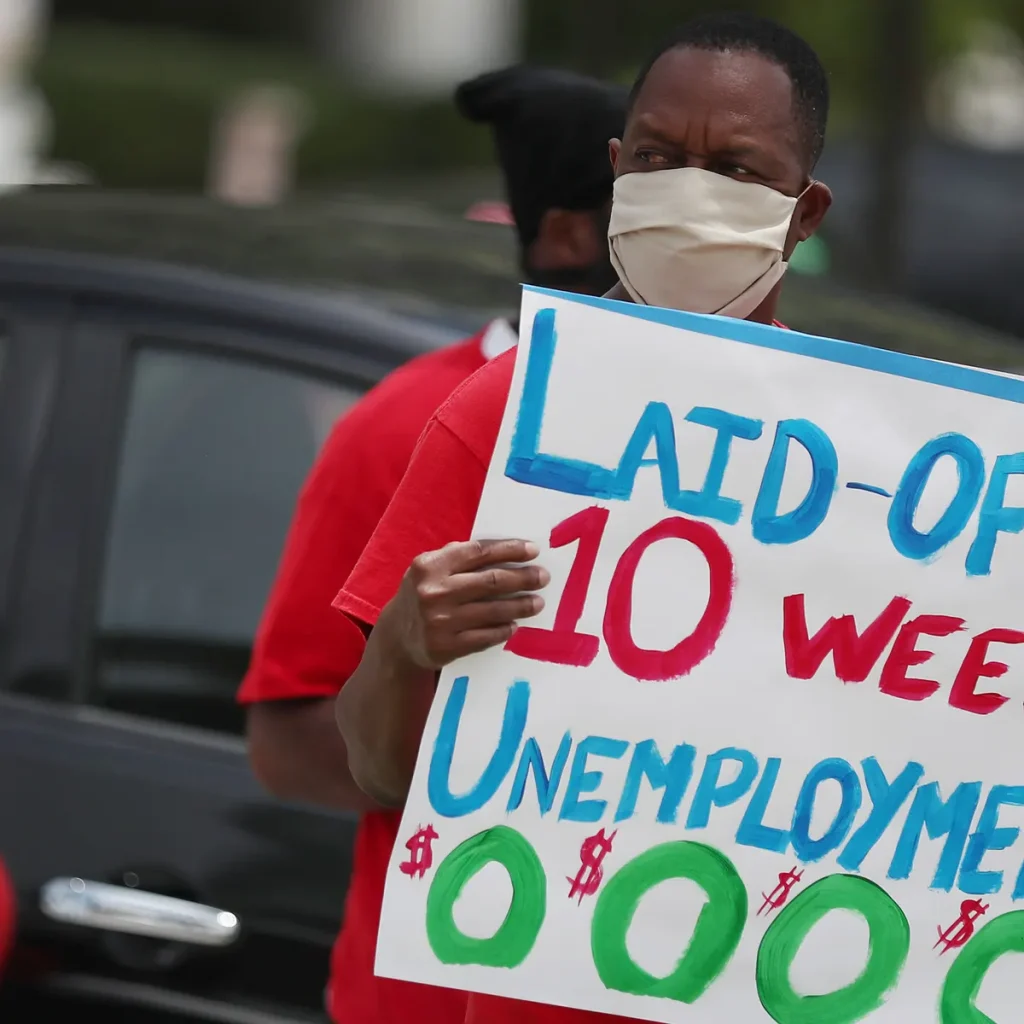
The former US President Donald Trump inserted 2 trillion dollars into the economy to keep businesses afloat.

It was the first of three stimulus packages, which have now totalled five trillion dollars being pumped directly into the economy.

The main sectors driving up high prices are Gas, Food and Housing.

And grocery prices have risen more than 12% over the last year.

That’s the highest its ever been since 1979.

It’s anyones guess when inflation will go down.

But the Federal Reserve, led by Jerome Powell has responded to the high inflation by raising interest rates twice this year.

The Fed’s control of interest rates is perhaps the best tool to help curb inflation.

As for whether we can call it a recession.

I’ll leave that call to you.

Money

U.S. jobs report, Fed decisions, and Japan’s economic risks explained

January US jobs report sparks uncertainty; analysts debate impact on Federal Reserve policy and market confidence.

Published

on

January US jobs report sparks uncertainty; analysts debate impact on Federal Reserve policy and market confidence.


The January US jobs report shows a mixed picture for the economy, with payroll revisions and steady unemployment leaving analysts questioning the impact on Federal Reserve policy. We break down what the numbers mean for interest rates and market confidence.

US stock markets could face turbulence as investors digest the latest jobs data. David Scutt from StoneX explains how these figures may influence equities and what the outlook is for global markets.

Meanwhile, developments in Japan and a strengthening yen could spark new macroeconomic risks. From carry trades to unexpected shocks, we explore how these factors ripple across the global economy.

Subscribe to never miss an episode of Ticker – https://www.youtube.com/@weareticker

#USJobsReport #FederalReserve #StockMarket #MacroRisks #JapanEconomy #GlobalMarkets #CurrencyTrading #EconomicUpdate


Download the Ticker app

Continue Reading

Money

Alphabet launches $20B bond to fund AI expansion

Alphabet’s $20B bond offering highlights investor confidence in AI growth, enabling funding without shareholder dilution.

Published

on

Alphabet’s $20B bond offering highlights investor confidence in AI growth, enabling funding without shareholder dilution.


Alphabet has launched a record $20 billion bond offering to finance its massive AI infrastructure build-out, signalling strong investor confidence in the company’s growth strategy. The oversubscribed sale shows that investors are betting on Alphabet’s AI potential and long-term returns.

By using debt instead of equity, Alphabet can raise funds without diluting shareholders. The money will support AI research, advanced computing, and other strategic projects, cementing the company’s leadership in the sector.

Brad Gastwirth from Circular Technologies explains how corporate debt is reshaping tech financing and how investors perceive AI-linked bonds. This record issuance could set a trend for other tech companies looking to fund innovation.

Subscribe to never miss an episode of Ticker – https://www.youtube.com/@weareticker


Download the Ticker app

Continue Reading

Money

AI tax tool sparks market turmoil for financial firms

Major financial firms’ stocks fell sharply after an AI tax tool launch, raising investor fears of disruption in advisory services.

Published

on

Major financial firms’ stocks fell sharply after an AI tax tool launch, raising investor fears of disruption in advisory services.

Shares of major financial services firms tumbled after the launch of a new AI-powered tax planning tool. LPL Financial dropped nearly 11%, while Charles Schwab and Raymond James Financial fell more than 9%, signalling investor concern over AI disrupting traditional advisory services.

Morgan Stanley also saw a 4% decline as fears grow that AI could replace some of the most profitable offerings of established firms. Earlier this year, the introduction of other AI models already caused turbulence in software stocks, suggesting this could be a broader trend affecting multiple sectors.

The iShares U.S. Broker-Dealers and Securities ETF was down 4% on Tuesday, reflecting the market-wide uncertainty surrounding AI adoption in finance. Investors are closely watching whether AI will complement or cannibalise the industry’s core services.

#AIImpact #WallStreet #FinancialMarkets #InvestingNews #MorganStanley #CharlesSchwab #RaymondJames #FinTech


Download the Ticker app

Continue Reading

Trending Now