News
Iran refuses U.S. meeting, peace talks uncertain
Iran refuses to meet U.S. envoys, complicating peace talks and ceasefire negotiations after recent hostilities

Iran refuses to meet U.S. envoys, complicating peace talks and ceasefire negotiations after recent hostilities

– Iran will not meet U.S. envoys, highlighting gaps in peace negotiations and nuclear program discussions.
– Oil trade through the Strait of Hormuz continues, with Iran asserting regulatory control alongside Oman.
This suggests significant gaps between the two nations over crucial aspects of their previous agreement, which proposes Iran lift restrictions on the Strait of Hormuz in exchange for financial rewards.
U.S. President Donald Trump’s son-in-law Jared Kushner and envoy Steve Witkoff are in Doha for what the White House claims are high-level discussions, but Iran and Qatar confirmed only mediators would be involved.
“No meeting at any level with the American side has been scheduled for the coming days,” stated Iranian Foreign Ministry spokesperson Esmaeil Baghaei.
The two countries were expected to begin technical discussions at a lower level.


Iran retains control
Shipping through the Strait of Hormuz has resumed, a key passage for global oil and liquefied natural gas trade.
Iranian authorities asserted their right to regulate traffic alongside U.S. ally Oman, planning to impose tolls when the current negotiation period ends.
“The sovereignty of the Strait of Hormuz lies with Iran and Oman, with traffic subject to Iranian regulations,” declared Mohammad Baqer Qalibaf, Iran’s chief negotiator.
Despite ongoing uncertainty, oil prices decreased after recent U.S. military actions following drone attacks attributed to Iran.

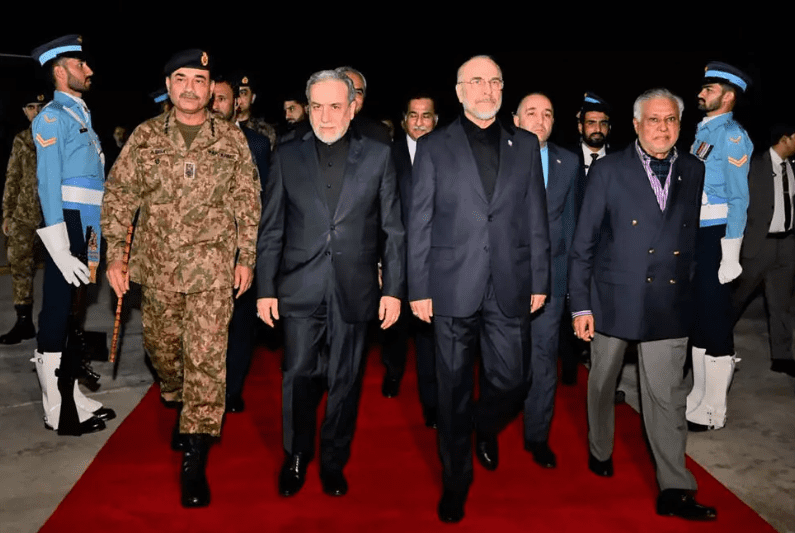
Iranian delegation in Islamabad © HANDOUT / Pakistan’s Ministry of Foreign Affairs -AFP
Vulnerable economies may still face risks from rising food and fuel prices, as warned by the U.N. Trade and Development agency on Tuesday.
The ongoing conflict has contributed to global inflation, placing political pressure on Trump before the significant midterm elections in November.
The interim U.S.-Iran agreement also aims to resolve conflicts between Israel and the Iran-supported group Hezbollah in Lebanon.
However, Nabih Berri, Lebanon’s parliament speaker and Hezbollah ally, expressed skepticism regarding a U.S.-brokered framework for peace between Lebanon and Israel.
Analysts warned the deal could lead to a stalemate by linking Israel’s withdrawal from southern Lebanon to Hezbollah’s disarming.
