




Connect with us
https://tickernews.co/wp-content/uploads/2023/10/AmEx-Thought-Leaders.jpg

Ticker Views

“I woke to gunshots in the night”: Fleeing Afghanistan | ticker VIEWS

Published

on

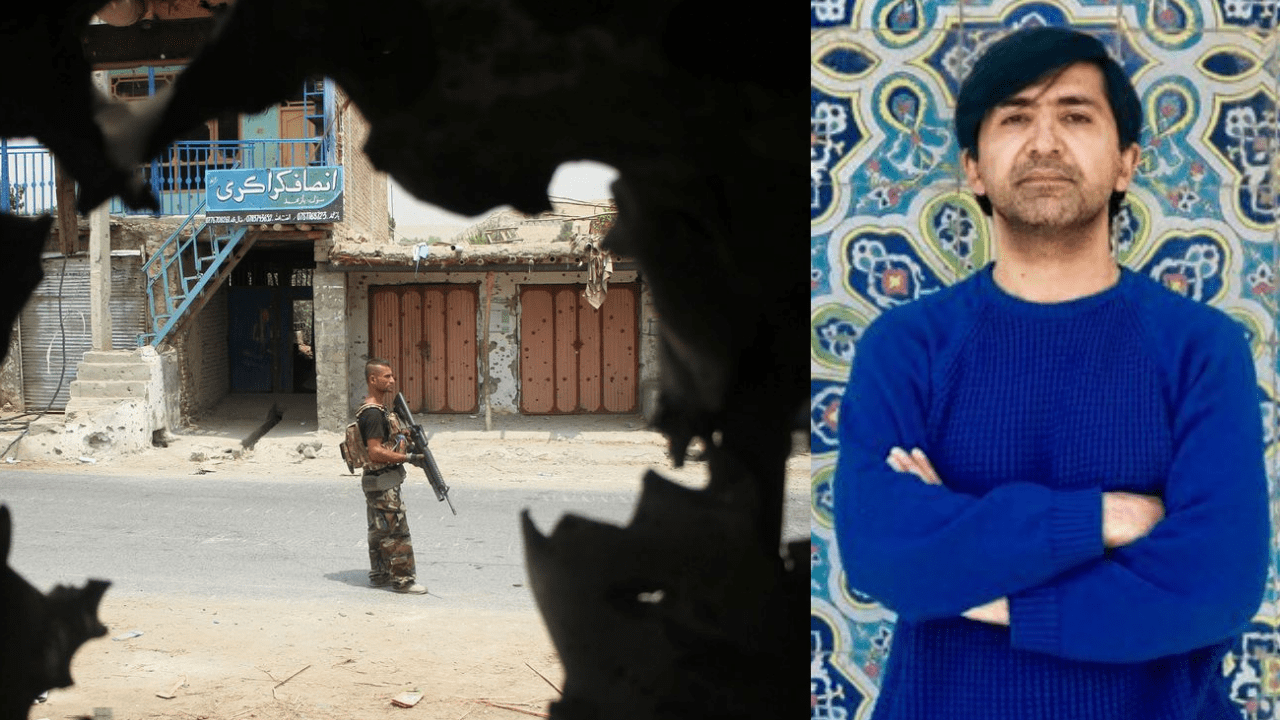
The Taliban is showcasing its dominance in Afghanistan again. Photojournalist Massoud Hossaini reveals what it was like to leave his entire life behind

Massoud Hossaini has lived his entire life in Afghanistan. Now, he has left everything behind including belongings, family, and friends at a moment’s notice. This act of desperation came from pure fear and recollection of the Taliban.

Kabul falls to Taliban

Massoud is a photojournalist and knew that the Taliban was resuming power in parts of Afghanistan. Like the rest of the world, he didn’t realise how quickly they would take over.

He was at work when he realised that the Government was partially wiped out and beginning to fracture. With ten days remaining on his Visa he urgently booked a plane ticket. Massoud was hoping to flee within the week, thinking he had a few days to organise his departure. He was wrong.

Kabul fell to the Taliban, within a matter of hours.

“For the first time in 20 years, I heard a lot of gunshots near my area, and that made me so scared. ” 

“I packed really fast, I couldn’t take everything I wanted.” 

Massoud Hossaini, Photojournalist

Massoud explains the Government or security was nowhere to be seen. Scared foreigners and locals filled Kabul airport in hopes of escaping. Massoud describes the situation as pure chaos.

Massoud classifies himself as one of the lucky ones as he bordered the plan and left the country safely. However, it doesn’t shake the immense and overwhelming sadness and devastation of knowing this would be the last time he would lay eyes on Afghanistan for the inevitable future.

Massoud safely fled Afghanistan and has resettled abroad in Holland.

“I was really emotional because I knew that I would leave Afghanistan forever…

While Taliban is in power, I would never go back to Afghanistan.”

Massoud Hossaini, Photojournalist


Taliban to ban local media

While the Taliban insists they have changed and will not return to old ways. Their actions are speaking a different language. Massoud insists the Taliban have not changed and should not be trusted.

There are fears the Taliban will slowly resume their controlling, violent, undemocratic ways. He insists they’re manipulating the international community. He fears the first step will be a ban on all local media.

“They [Taliban] will destroy all local media… they’re fooling the international community”

Massoud Hossaini, Photojournalist

Click to comment

Leave a Reply

Your email address will not be published. Required fields are marked *

Ticker Views

Backlash over AI “Indigenous Host” sparks ethical debate

AI-generated “Indigenous host” sparks controversy, raising ethical concerns about representation and authenticity in social media.

Published

on

AI-generated “Indigenous host” sparks controversy, raising ethical concerns about representation and authenticity in social media.


A viral social media account featuring an AI-generated “Indigenous host” is drawing criticism from advocates and creators alike, raising questions about authenticity, representation, and ethics in the age of artificial intelligence. Critics argue that AI characters can displace real Indigenous voices and mislead audiences.

Dr Karen Sutherland from Uni SC discusses how AI is reshaping identity on social media and why the backlash over this account has ignited a wider conversation about “digital blackface” and the ethics of AI-generated personalities. She explores the fine line between education, entertainment, and exploitation.

The discussion also dives into monetisation, platform responsibility, and the broader risks AI poses to media and cultural representation. As AI becomes increasingly sophisticated, audiences and creators alike must consider what authenticity truly means online.

Subscribe to never miss an episode of Ticker – https://www.youtube.com/@weareticker

#AIControversy #IndigenousVoices #DigitalBlackface #SocialMediaEthics #AIIdentity #OnlineBacklash #MediaEthics #RepresentationMatters


Download the Ticker app

Continue Reading

Ticker Views

Business class battles and ultra long-haul flights with Simon Dean

Aviation expert Simon Dean shares insights on premium travel trends, business class, and the future of ultra-long-haul flights.

Published

on

Aviation expert Simon Dean shares insights on premium travel trends, business class, and the future of ultra-long-haul flights.

From the latest trends in premium travel to the rise of ultra-long-haul flights, aviation reviewer Simon Dean from Flight Formula shares his firsthand insights on the airlines leading the charge.

We dive into what makes a great business class experience, and whether first class is still worth it in 2026. Simon breaks down common passenger misconceptions about premium cabins and explores how airlines are redesigning business class for comfort on the world’s longest flights.

He also gives a sneak peek into what excites—and worries him—about Qantas Project Sunrise, set to redefine ultra long haul travel.

Finally, we discuss the future of premium aviation: will ultra-long-haul flights become the new normal or remain a niche experience?

Subscribe to never miss an episode of Ticker – https://www.youtube.com/@weareticker

#BusinessClass #UltraLongHaul #ProjectSunrise #AviationReview #FirstClass #AirlineTrends #TravelInsights #FlightFormula


Download the Ticker app

Continue Reading

Ticker Views

Trump’s expanding executive power raises alarms over Congress’ role

Published

on

Congress’ power has been diminishing for years, leaving Trump to act with impunity

Samuel Garrett, University of Sydney

A year into US President Donald Trump’s second term, his record use of executive orders, impoundment of government spending, and military interventions in Venezuela and Iran have sparked criticisms from Democrats and even some Republicans. They say he is unconstitutionally sidelining Congress.

As Trump increasingly wields his power unilaterally, some have wondered what the point of Congress is now. Isn’t it supposed to act as a check on the president?

But the power of the modern presidency had already been growing for decades. Successive presidents from both parties have taken advantage of constitutional vagaries to increase the power of the executive branch. It’s a long-running institutional battle that has underwritten US political history.

The years-long erosion of Congress’ influence leaves the president with largely unchecked power. We’re now seeing the consequences.

A fraught relationship

Congress is made up of the House of Representatives and the Senate. Under the US Constitution, it’s the branch of the government tasked with making laws. It’s supposed to act as a check on the president and the courts.

It can pass legislation, raise taxes, control government spending, review and approve presidential nominees, advise and consent on treaties, conduct investigations, declare war, impeach officials, and even choose the president in a disputed election.

But the Constitution leaves open many questions about where the powers of Congress end and the powers of the president begin.

In a 2019 ruling on Trump’s tax returns, the judge commented:

disputes between Congress and the President are a recurring plot in our national story. And that is precisely what the Framers intended.

Relative power between the different branches of the US government has changed since independence as constitutional interpretations shifted. This includes whether the president or Congress takes the lead on making laws.

Although Congress holds legislative power, intense negotiations between Congress and the executive branch (led by the president) are now a common feature of US lawmaking. Modern political parties work closely with the president to design and pass new laws.

Redefining the presidency

By contrast, presidents in the 19th and early 20th centuries generally left Congress to lead policymaking. Party “czars” in Congress dominated the national legislative agenda.

Future president Woodrow Wilson noted in 1885 that Congress:

has entered more and more into the details of administration, until it has virtually taken into its own hands all the substantial powers of government.

Wilson and Franklin Roosevelt after him would later help to redefine the president not only as the head of the executive branch, but as head of their party and of the government.

In the 1970s, in the wake of the Watergate scandal and secret bombing of Cambodia, Congress sought to expand its oversight over what commentators suggested was becoming an “imperial presidency”.

This included the passage of the 1973 War Powers Resolution, designed to wrest back Congressional control of unauthorised military deployments.

Nevertheless, the Clinton, George W. Bush and Obama administrations all argued that Congressional authorisation was not required for operations in Kosovo, Iraq and Libya (though Bush still sought authorisation to secure public support).

In turn, the Trump administration argued its actions in Venezuela were a law-enforcement operation, to which the resolution does not apply.

Why presidents bypass Congress

Historically, presidents have sought to bypass Congress for reasons of personality or politics. Controversial decisions that would struggle to pass through Congress are often made using executive orders.

Obama’s 2011 “We Can’t Wait” initiative used executive orders to enact policy priorities without needing to go through a gridlocked Congress. One such policy was the 2012 creation of the DACA program for undocumented immigrants.

Franklin Roosevelt’s use of executive orders dwarfed that of his predecessors. He issued eight times as many orders in his 12-year tenure than were signed in the first 100 years of the United States’ existence.

The question of what constitutes a genuine threat to the preservation of the nation is especially pertinent now. More than 50 “national emergencies” are currently in effect in the United States.

This was the controversial basis of Trump’s tariff policy under the International Emergency Economic Powers Act. It bypassed Congressional approval and is now being considered by the Supreme Court.

Recent presidents have also increasingly claimed executive privilege to block Congress’ subpoena power.

Institutional wrestling

Institutional wrestling is a feature of Congressional relations with the president, even when the same party controls the White House and both chambers of the legislature, as the Republican party does now.

While Roosevelt dominated Congress, his “court-packing plan” to take control of the US Supreme Court in 1937 proved a bridge too far, even for his own sweeping Democratic majorities. The Democrats controlled three quarters of both the House and Senate and yet refused to back his plan.

More recently, former Democrat Speaker Nancy Pelosi delivered many of Barack Obama’s early legislative achievements, but still clashed with the president in 2010 over congressional oversight.

As House minority leader, she rallied many Democrats against Obama’s US$1.1 trillion (A$1.6 trillion) budget proposal in 2014. Obama was forced to rely on Republican votes in 2015 to secure approval for the Trans-Pacific Partnership, despite his heavy lobbying of congressional Democrats.

Even today’s Congress, which has taken Trump’s direction at almost every turn, demonstrated its influence perhaps most notably by forcing the president into a backflip on the release of the Epstein files after a revolt within Trump’s supporters in the Republican party.

Given the extremely slim Republican majority in Congress, the general unity of the Republican party behind Trump has been a key source of his political strength. That may be lost if public opinion continues to turn against him.

Is Trump breaking the rules?

Trump and his administration have taken an expansive view of presidential power by regularly bypassing Congress.

But he’s not the first president to have pushed the already blurry limits of executive power to redefine what is or is not within the president’s remit. The extent to which presidents are even bound by law at all is a matter of long running academic debate.

Deliberate vagaries in US law and the Constitution mean the Supreme Court is ultimately the arbiter of what is legal.

The court is currently the most conservative in modern history and has taken a sweeping view of presidential power. The 2024 Supreme Court ruling that presidents enjoy extensive immunity suggests the president is, in fact, legally able to do almost anything.

Regardless, public opinion and perceptions of illegality continue to be one of the most important constraints on presidential action. Constituents can take a dim view of presidential behaviour, even if it’s not technically illegal.

Even if Trump can legally act with complete authority, it’s public opinion — not the letter of the law — that may continue to shape when, and if, he does so.The Conversation

Samuel Garrett, Research Associate, United States Studies Centre, University of Sydney

This article is republished from The Conversation under a Creative Commons license. Read the original article.


Continue Reading

Trending Now