
Connect with us
https://tickernews.co/wp-content/uploads/2023/10/AmEx-Thought-Leaders.jpg

Money

Hike GST, reduce income tax to boost productivity

AMP’s Shane Oliver urges GST hike, income tax cuts to enhance productivity, following Jim Chalmers’ economic reform address.

Published

on

AMP’s Shane Oliver urges GST hike, income tax cuts to enhance productivity, following Jim Chalmers’ economic reform address.

In Short:
Treasurer Jim Chalmers is advised to raise the GST to 20% and lower income tax to boost Australia’s economy as Labour focuses on tax reform. Concerns remain among business leaders that proposed tax changes could hinder productivity and investment, particularly for younger Australians.

Treasurer Jim Chalmers has been advised to increase the Goods and Services Tax (GST) and reduce income tax to enhance productivity in Australia’s economy, as Labor prepares for a second term.

During his address at the National Press Club, Chalmers reiterated the government’s commitment to productivity improvements and meaningful tax reform. Although he did not discuss GST in-depth, he acknowledged the relevance of the topic ahead of the upcoming productivity roundtable.

AMP’s chief economist Shane Oliver suggested that a higher GST, applied uniformly, could reduce income tax rates. He argued for a potential increase of the GST to 20% to fund lower income tax thresholds and rates.

Tax reform

Chris Freeland from CPA Australia supported tax reform, stressing that the current system relies too heavily on personal and corporate income taxes and called for a transparent discussion on necessary reforms.

Chalmers also addressed Labor’s proposed superannuation tax increase and the taxation of unrealised gains, which have drawn criticism from various business leaders. They claim that such measures could discourage productivity and investment, especially among younger Australians.

Tax reform is considered essential to improve Australia’s economic competitiveness and mitigate the reliance on income-based taxes.

Ahron Young is an award winning journalist who has covered major news events around the world. Ahron is the Managing Editor and Founder of TICKER NEWS.

Money

Middle East tensions rattle markets as traders await U.S. jobs data

Geopolitical tensions impact global markets; Wall Street anticipates strong jobs report, affecting dollar strength and Fed rate outlook.

Published

on

Geopolitical tensions impact global markets; Wall Street anticipates strong jobs report, affecting dollar strength and Fed rate outlook.


Rising geopolitical tensions in the Middle East are sending ripples through global markets, as investors weigh the potential impact on currencies, commodities and inflation expectations. Risk sentiment has been shaken, while energy prices and safe haven assets remain firmly in focus.

At the same time, Wall Street is preparing for the latest U.S. non-farm payrolls report, with analysts forecasting around 55,000 jobs added. However, market chatter suggests the figure could come in stronger, raising questions about the resilience of the US economy and the path for interest rates.

Steve Gopalan from SkandaFX, explains why the U.S. dollar has strengthened during the turmoil and what a surprise jobs result could mean for the Federal Reserve’s rate outlook.

Subscribe to never miss an episode of Ticker – https://www.youtube.com/@weareticker


Download the Ticker app

Continue Reading

Money

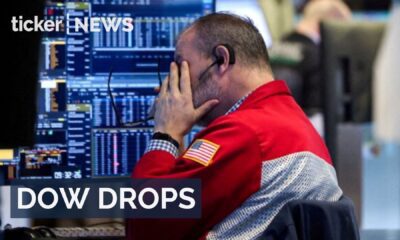
Dow tumbles over 1,000 points as oil surges past 80 amid Iran tensions

Stocks plummet over 1,000 points amid oil price surge and Iran tensions; market implications discussed by Kyle Rodda.

Published

on

Stocks plummet over 1,000 points amid oil price surge and Iran tensions


Stocks were rattled this week as the Dow dropped more than 1,000 points, driven by surging oil prices that surpassed 80 dollars a barrel. The spike comes amid escalating tensions in the Iran conflict, sparking concerns for investors worldwide.

Kyle Rodda from Capital.com breaks down the key factors behind the market plunge, which sectors were hit hardest, and how the previous day’s slight stabilisation of oil influenced trading.

The implications of rising oil and geopolitical uncertainty could have lasting effects on the global economy. Watch as Kyle explains what to watch next in the market and how investors are responding to these turbulent times.

Subscribe to never miss an episode of Ticker – https://www.youtube.com/@weareticker

#StockMarket #OilPrices #DowJones #FinancialNews #Investing #MarketUpdate #IranCrisis #Economy


Download the Ticker app

Continue Reading

Money

How Iran conflict is driving oil prices and global market volatility

Published

on

Energy prices soar amid Iran conflict, with investors reassessing risks and market dynamics.


The ongoing conflict in Iran has sent energy prices soaring and markets reeling. Investors are reassessing inflation expectations, central bank rate paths, and global growth prospects as risk aversion rises.

David Scutt from Stonex gives his insights on how surging oil prices and rising energy risk premia are influencing investor sentiment and market dynamics.

Markets may need weeks to fully digest the economic impact of the conflict, with volatility likely to persist as investors weigh geopolitical and financial risks.

Subscribe to never miss an episode of Ticker – https://www.youtube.com/@weareticker


Download the Ticker app

Continue Reading

Trending Now