
News
He’s Out – Novak Djokovic to be deported

World tennis ace Novak Djokovic will be deported after the Australian government cancelled his visa, just days out from the Australian Open.
Australian Immigration Minister Alex Hawke has cancelled Novak Djokovic’s visa, declaring that he exercised his power under section 133C (3) of the Migration Act.
However, the 34-year-old Serbian can still launch another legal challenge to remain in Australia.
The men’s tennis number one was scheduled to play in the Australian Open, which begins on Monday.
Mr Hawke says he intervened on “health and good order grounds, on the basis that it was in the public interest to do so.”
“This decision followed orders by the Federal Circuit and Family Court on 10 January 2022, quashing a prior cancellation decision on procedural fairness grounds.
“In making this decision, I carefully considered information provided to me by the Department of Home Affairs, the Australian Border Force and Mr Djokovic.
“The Morrison Government is firmly committed to protecting Australia’s borders, particularly in relation to the COVID-19 pandemic.”
Immediate injunction
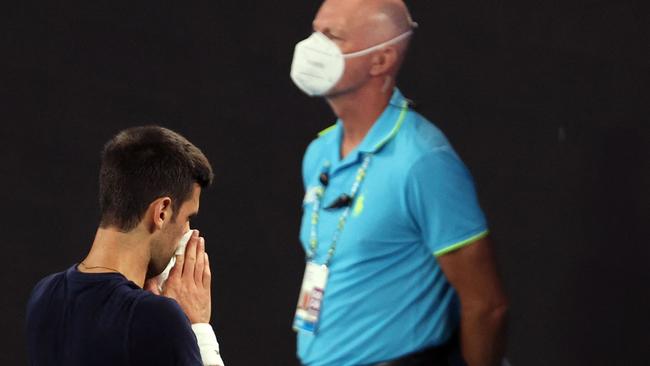
Djokovic’s lawyers are expected to file an injunction against his deportation, while the tennis ace is also expected to be interview by the Department of Immigration.
Australian Prime Minister Scott Morrison defended the decision, saying Australians had paid a tough price during lockdown over the last two years.
“This pandemic has been incredibly difficult for every Australian but we have stuck together and saved lives and livelihoods,” the Prime Minister said. “Together we have achieved one of the lowest death rates, strongest economies and highest vaccination rates, in the world.
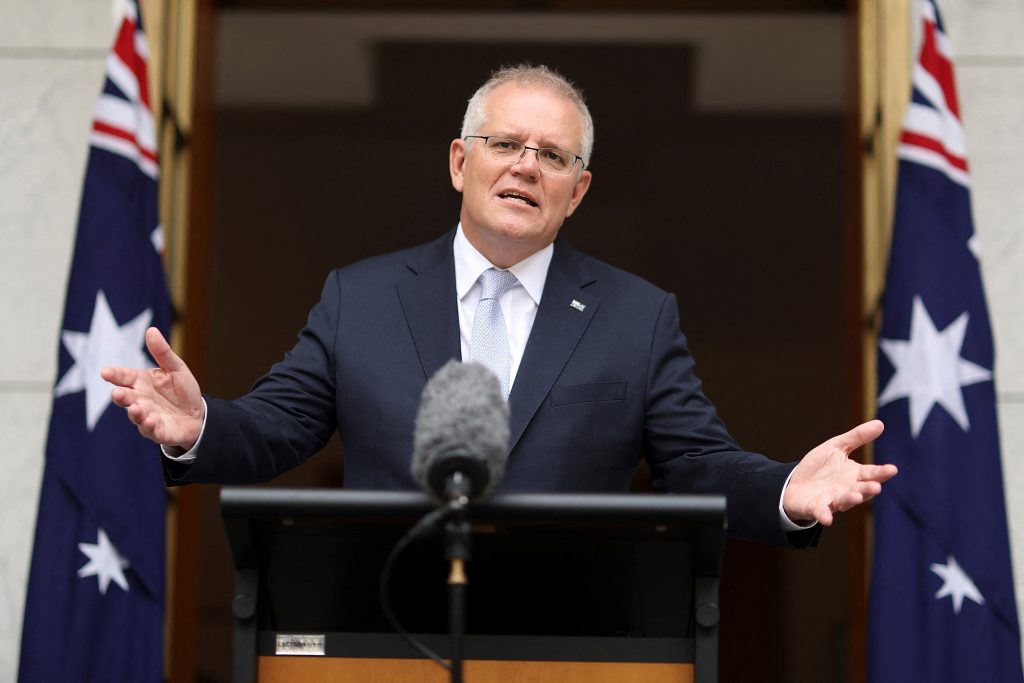
“Australians have made many sacrifices during this pandemic, and they rightly expect the result of those sacrifices to be protected.
“This is what the Minister is doing in taking this action today.”
scott morrison, australian pm
Opposition leader Anthony Albanese accused the government of being caught flat-footed.
“There are so many areas whereby the Morrison government’s character shows out, that it always responds too little and too late, that it never actually envisages a problem that’s coming down the track, doesn’t act until a problem becomes a crisis.”
“Novak Djokovic and his participation in the Australian Open has been the number one sports story in the world for months … It is now almost 60 days since his visa was granted. They have never answered the question of how is it that that visa was granted in the first place if he wasn’t eligible because he wasn’t fully vaccinated.”
How we got to this point
Novak Djokovic arrived in Melbourne on January 5 and promptly had his visa canceled for entering Australia without a valid reason.
He spent several nights in a detention hotel in Melbourne.
His lawyers challenged the decision and won the legal battle on Monday, but since then questions have emerged over Djokovic’s behavior after testing positive for Covid-19 on December 16.
Djokovic acknowledged he did not immediately isolate after receiving a positive diagnosis — but denied knowing he had the virus when attending several public events.
He also apologised for false information on his Australia visa declaration.
-
 News5 days ago
Iraq’s oil exports halted, output down 70%
-
Tech3 days ago
Anthropic bans third-party tools from Claude subscriptions
-
News5 days ago
Trump imposes 100% tariff on imported drugs
-
Tech2 days ago
Artemis II crew tests suits ahead of flyby
-
Tech2 days ago
Altman advises CEOs to secure AI capacity now
-
News2 days ago
Western carriers gain routes as Gulf airlines struggle
-
Tech3 days ago
Artemis II crew halfway on lunar flyby mission
-
News3 days ago
French and Japanese ships transit Hormuz blockade