For the first time since a massive undersea volcano erupted and caused widespread damage, the government of Tonga released its first statement
The Government call it an ‘unprecedented disaster’ declaring three people dead.
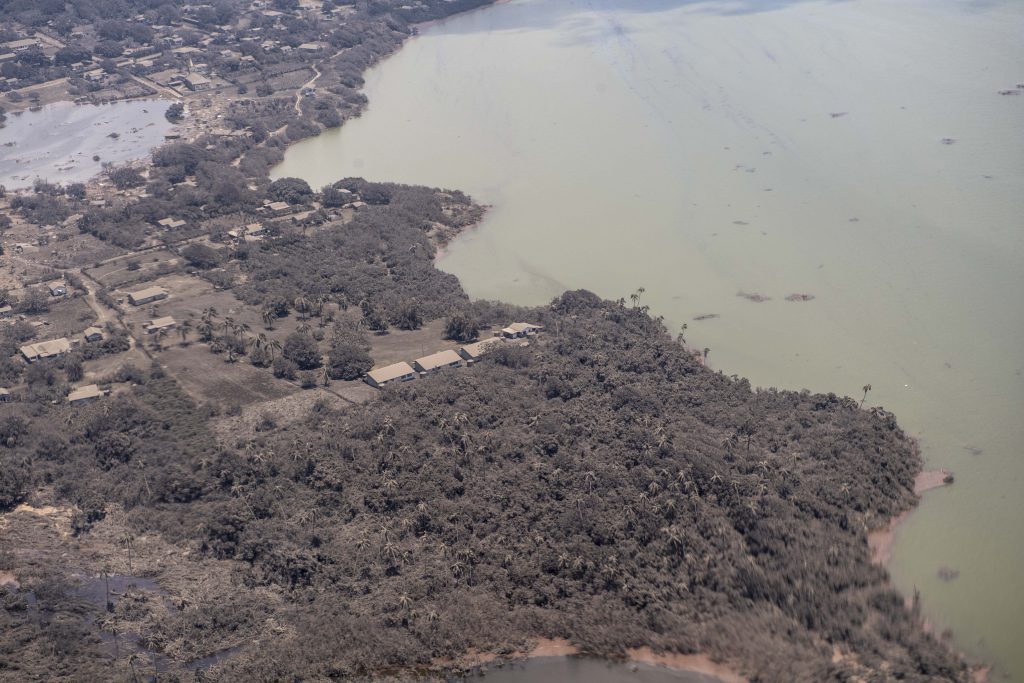
View of Nomuka, Tonga (NZDF)
Communications including internet are out and remain limited, images are starting to emerge days from the initial eruption showing the aftermath.
The Pacific island remains coated in volcanic ash and the government has released its first update since the volcanic eruption triggered a tsunami.
Sadly, three deaths have been confirmed – A 65-year-old woman, a 49-year-old man and British woman Angela Glover.
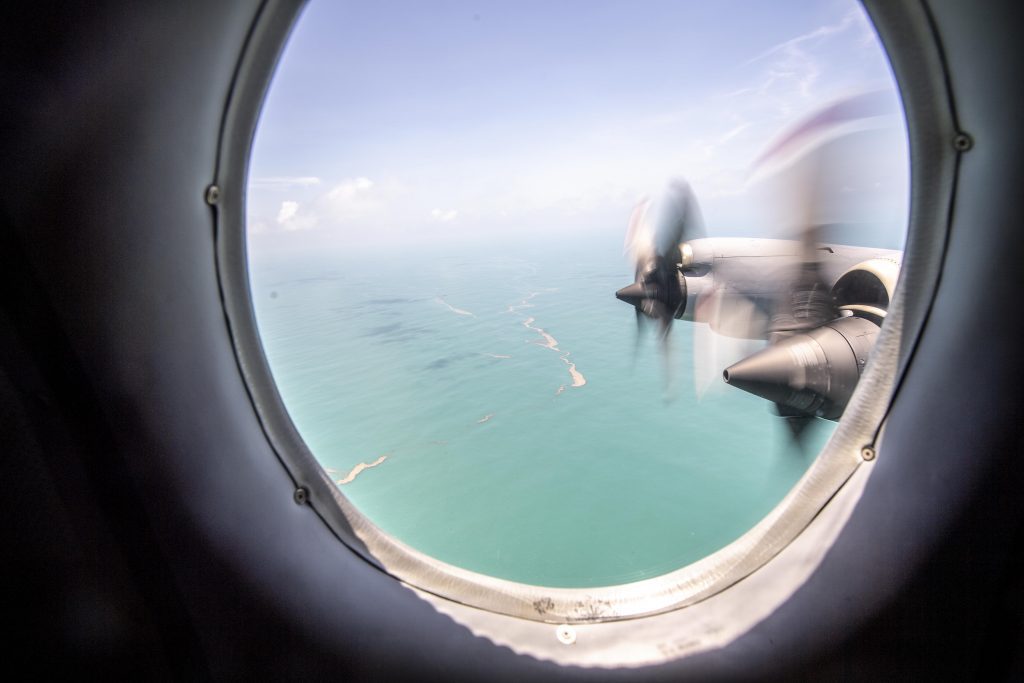
View from the Royal New Zealand Air Force P-3K2 Orion (NZDF)
A number of injuries have also been reported, houses damaged, with evacuations and rescue efforts underway.
Communication lines with the affected islands are down and getting aid to where it is most needed is the main concern.
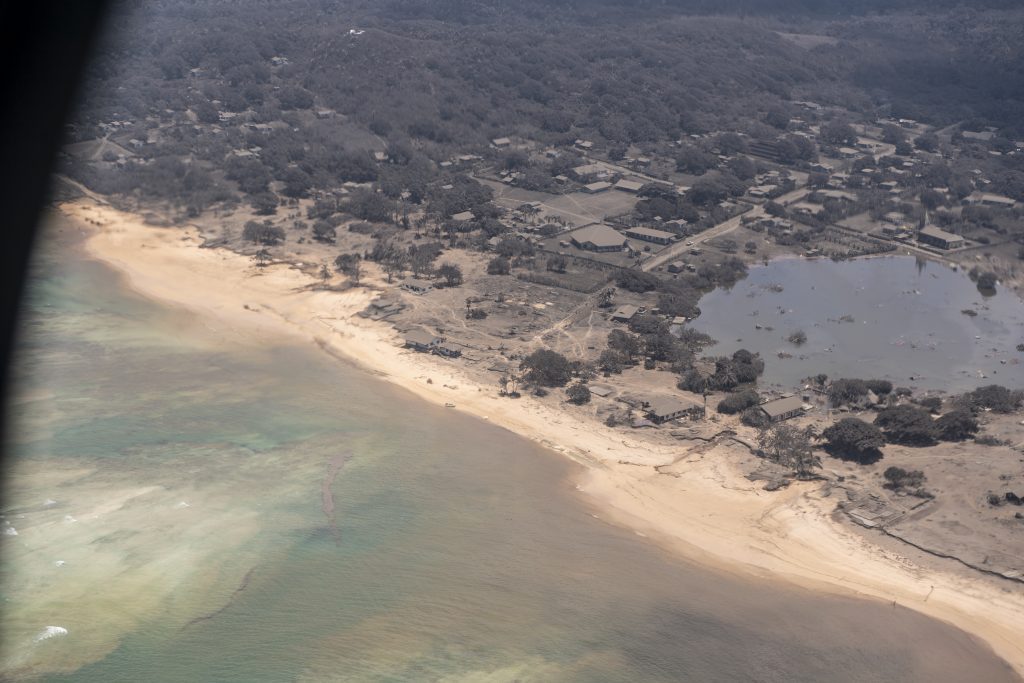
A P-3K2 Orion aircraft flies over an area of Tonga that shows the heavy ash fall from the recent volcanic eruption within the Tongan Islands. 5 Squadron crew work on board whilst flying overhead to provide vital information to send back to MFAT and various other government agencies.
Water supplies have been “seriously affected” by the volcanic ash so other countries are trying to fly in clean drinking water and other supplies, but so far have been unable to land.
Flights have been halted and sea transport routes are disrupted too.
Tonga expects the rescue and clean-up efforts to ramp up now the threat of volcanic activity has ‘significantly decreased’
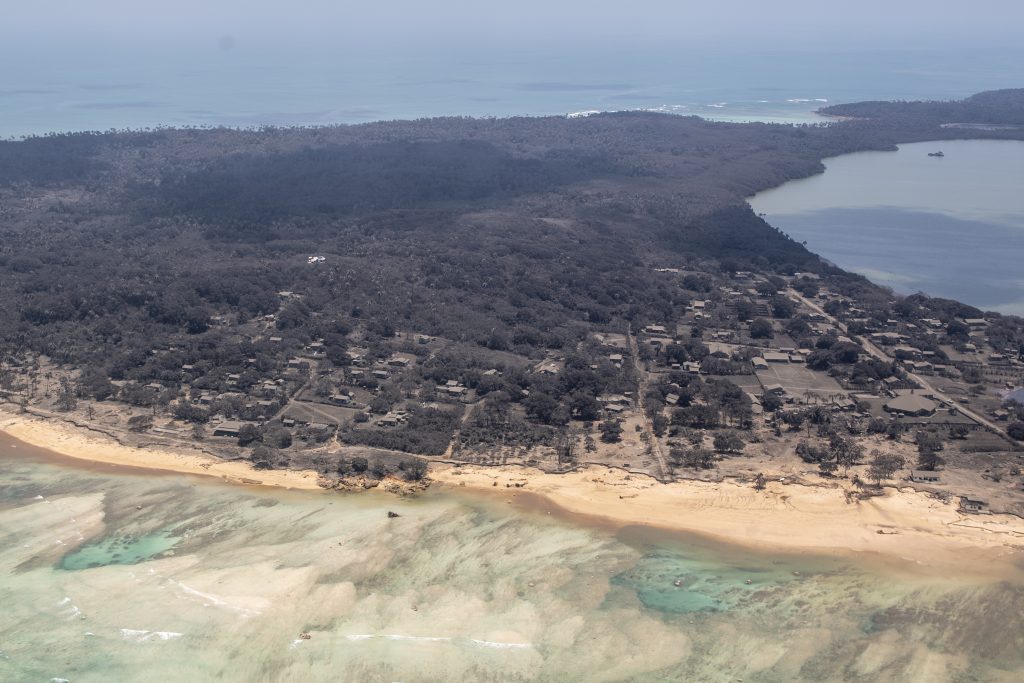
A P-3K2 Orion aircraft flies over an area of Tonga that shows the heavy ash fall from the recent volcanic eruption within the Tongan Islands. 5 Squadron crew work on board whilst flying overhead to provide vital information to send back to MFAT and various other government agencies.
The blast triggered tsunami warnings from Fiji to Hawaii… what about health warnings?
People are being advised to remain indoors because of the ash.
There are health concerns as people are breathing it, especially with a huge clean-up mission that is happening
Volcanic ash exposure can irritate the lungs, eyes and skin.
Locals have also been advised to drink bottled water too..
The clean-up operation will include ships from Australia and New Zealand to help with pumping out water.
Tonga is made up of about 170 islands, most people are farmers or involved in agriculture, meaning the longer-term devastation to lives and livelihoods will be huge.
U.S. and Israel launch major military operation against Iran; tensions rise as conflict escalates, impacting global markets.
The United States and Israel have launched a sweeping military operation against Iran, striking leadership targets and more than 500 military sites in what President Trump has dubbed Operation Epic Fury.
Explosions have rocked Tehran, with civilians fleeing the capital as U.S. sea and air assets carry out sustained attacks. Washington says the mission is designed to prevent a nuclear armed Iran and has even called on Iranians to rise up against the regime.
Iran has retaliated with a barrage of missiles and drones targeting Israel and U.S. bases across the region, including in Qatar, Kuwait, the United Arab Emirates and Bahrain. While many projectiles were intercepted, a U.S. base in Bahrain sustained damage.
Gulf states long seen as stable hubs for global business are now directly in the firing line, raising fears of a wider regional war.
Oil prices are climbing and tankers are diverting from the Strait of Hormuz as markets react to the escalating conflict. U.S. aircraft carriers, advanced fighter jets and missile destroyers remain in position, signalling more strikes could follow.
With global leaders scrambling diplomatically, the world is watching to see whether this spirals further or shifts back to negotiations.
In Short:
– Iran’s Guard Corps advises ships to avoid the Strait of Hormuz due to rising tensions.
– Tankers have diverted to Qatar and UAE amidst concerns over safety and potential Iranian threats.
Iran’s Islamic Revolutionary Guard Corps has instructed ships to avoid the Strait of Hormuz, a crucial shipping lane linking to the Persian Gulf. About a hundred merchant vessels transit the strait daily, according to the U.S.Tensions have escalated recently as the U.S. increased military presence in the region and Iran issued threats. Western nations are concerned about Iran potentially laying sea mines to disrupt commercial traffic. Currently, no evidence suggests Iran has mined the strait.
Ships have been repeatedly warned against entering the strait, as stated by crews in the area and the European Union’s naval command, Aspides. On Saturday, dozens of tankers diverted, with some seeking refuge in Qatar and the United Arab Emirates while others opted to steer clear of the region, as reported by oil brokers and shipowners.
Shipping Concerns
Tensions continue to impact shipping operations as carriers remain cautious in the Gulf region.
Tanker crews reported hearing explosions near Iran’s Kharg Island, which is vital for the country’s oil exports, as it handles 90% of its crude oil shipments.