Money
Calls for extreme policies to kick NZ out of recession

New Zealand has found itself grappling with the harsh realities of an economic recession.
With GDP figures indicating a decline in the latter half of the previous year, coupled with challenges such as reduced tax revenues and political uncertainties, the road ahead appears daunting.
As the government prepares to unveil its budget amidst this backdrop, the need for forward-thinking policies to stimulate growth and address public concerns has never been more pressing.
Economic Landscape
According to Stats NZ, the downturn in GDP over the September and December quarters reflects a broader economic slowdown, with implications for businesses and households alike.
Despite record levels of immigration, the per capita GDP has seen a notable decline, pointing to underlying structural issues that warrant attention.
In the realm of politics, the new government faces a unique set of challenges.
While retrospective statistics may allow for blame-shifting, the onus ultimately falls on the current administration to chart a path forward.
However, internal contradictions within the coalition government, coupled with pressure to honor campaign promises and coalition agreements, complicate the policymaking process.
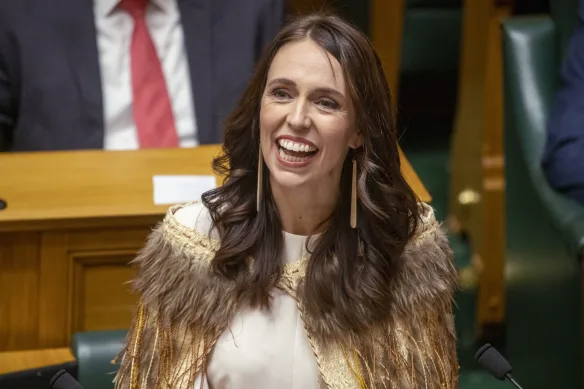
Former NZ PM Jacinda Ardern.
Navigating Fiscal Waters
Finance Minister Nicola Willis finds herself at a crossroads as she prepares to deliver the upcoming budget. With reduced tax revenues and competing demands for government spending, tough decisions lie ahead.
The prospect of tax cuts, while appealing to some, raises concerns about inflation and fiscal sustainability.
Striking a balance between stimulating economic activity and maintaining fiscal prudence will be paramount.
Amidst the economic downturn, there is a glaring need for policies that foster innovation and skills development.
As the specter of AI-driven change looms large, investments in tertiary education, research, and development are crucial for future-proofing the economy.
However, the current government’s approach to these challenges appears wanting, with a lack of comprehensive strategies to address the changing nature of work and technology.
Path Forward
As New Zealand navigates its way through these uncertain times, the forthcoming budget assumes heightened significance.
Beyond short-term fixes, there is a pressing need for long-term vision and proactive policymaking.
Whether it’s stimulating economic growth, enhancing productivity, or fostering innovation, the government must rise to the occasion and deliver tangible solutions that benefit all New Zealanders.
In the face of economic recession, New Zealand stands at a critical juncture.
While challenges abound, there is also an opportunity for bold leadership and innovative policymaking.
As the government prepares to unveil its budget, the onus is on policymakers to craft a roadmap for recovery that prioritises the needs of the people and lays the foundation for a more resilient and prosperous future.
-
 News2 days ago
Anthropic disrupts malicious AI campaigns from Russia, China
-
Tech2 days ago
Schneider Electric’s sustainability push as AI reshapes energy demand
-
Tech3 days ago
Apple thinks you’ll pay $3,500 for an iPhone
-
Tech3 days ago
Apple event 2026: Ternus reveals the foldable iPhone Duo
-
Money2 days ago
‘A huge shock’: ASX faces bloodbath amid global risks
-
News2 days ago
Houthis seize key Yemen port threatening Saudi oil routes
-
News3 days ago
Albanese’s internet crackdown could fuel the populist backlash
-
News2 days ago
Property tax changes will reduce housing construction