
Some areas have received eight months of rain in just four days.
The Bureau of Meteorology (BOM) says some parts of New South Wales have seen 800mm alone. For perspective, Greater London receives this type of rainfall over the course of a year.
There are more than 100 evacuation orders across Greater Sydney for the current emergency.
It’s the typical narrative for disasters like these, where a cesspit of data floods headlines.
It comes as the BOM confirms this season’s La Niña has ended, so what is causing these floods?
Divulging the data
The Indian Ocean Dipole is a technical term for the differences in sea surface temperatures between the eastern and western parts of the Indian Ocean.
This phenomenon is likely to shift ‘negative’ over the coming months.
This means “warmer waters concentrate near Australia, leading to above average winter–spring rainfall as more moisture is available to weather systems crossing the continent,” according to the BOM.
“We have seen some of these impacted communities being hit by floods for a third and fourth time in 18 months, which is extremely distressing to the residents of these communities.”
Minister for Emergency Management Murray Watt
Meanwhile, the SAM refers to the Southern Annular Mode. This is a term used for the non-seasonal, north-south movement of the strong westerly winds.
When the SAM is in the ‘positive’ phase, it directs more moisture-filled air into eastern Australia.
The BOM says this is “driving above average rainfall and more east coast lows”.
This has forced a cargo ship to remain at anchor by the ferocious conditions off the coast of Sydney.
In fact, this happened 15 years ago when storms grounded the Pasha Bulker—a 40,000 tonne bulk carrier ship.
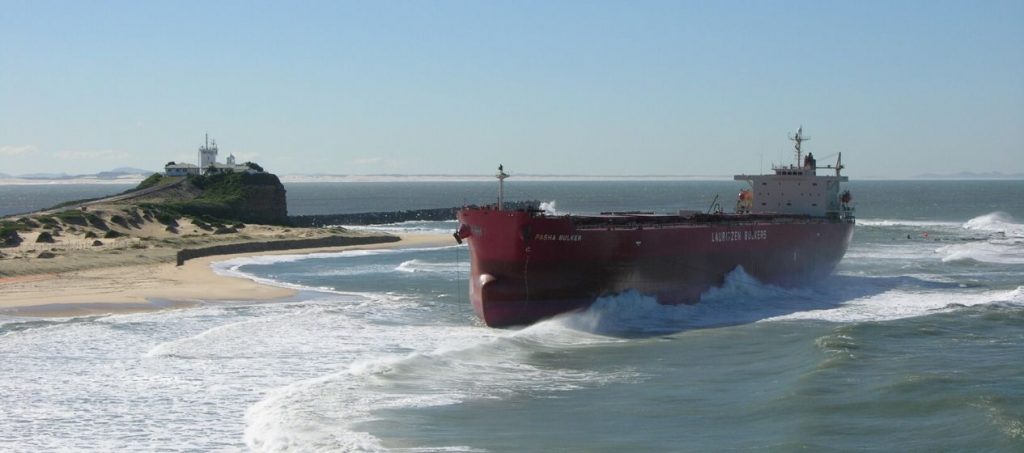
The Pasha Bulker stranded off the coast of Newcastle.
Is this climate change in action?
It is difficult to link any single flood to climate change. But many climate models suggest Australia will repeatedly fall victim to climate change.
Critically, these areas have been battered by heavy rains in recent months. The La Niña has also saturated the ground and filled dams. These are some of the crucial factors that lead to flash flooding.
“Similarly, we’re now working hard together to make sure that impacted communities get the financial and other assistance they need as soon as possible,” Senator Murray Watt says.
Sydney’s bustling population has pushed development into low-lying areas, which also places residents at an increased risk.
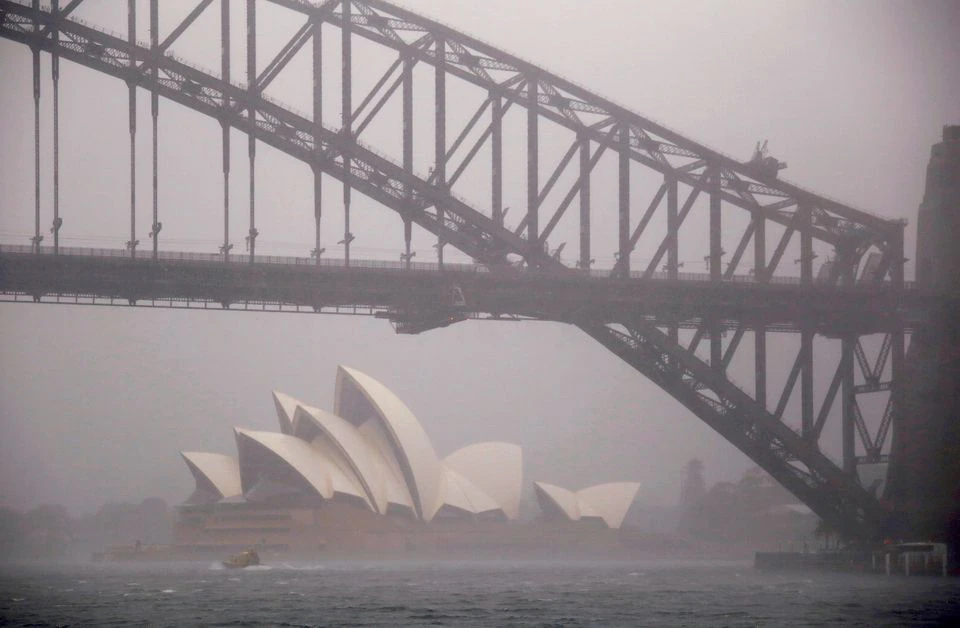
A boat passes under the iconic Sydney Harbour Bridge as heavy rain batters the city.
Greg Mullins is the leader of the Emergency Leaders for Climate Action group, who recently met with Australia’s new government.
“There is absolutely no doubt extreme weather events are being intensified because of climate change.”
“The science is very clear that we’re seeing wild fluctuations between periods of flood and fire, because of warming. On the East Coast of Australia in the last 18 months we’ve now had four major floods,” he says.
Senator Watt says he is committed to learning from past natural hazards, which turn into disasters when they intersect with vulnerable communities, devastate infrastructure, and lead to economic consequences.
“It’s time for the world to wake up and take real action on climate change. Communities having to deal with flood event after flood event is absolutely affecting our response and recovery,” Mullins says.
Costa is a news producer at ticker NEWS. He has previously worked as a regional journalist at the Southern Highlands Express newspaper. He also has several years' experience in the fire and emergency services sector, where he has worked with researchers, policymakers and local communities. He has also worked at the Seven Network during their Olympic Games coverage and in the ABC Melbourne newsroom.
He also holds a Bachelor of Arts (Professional), with expertise in journalism, politics and international relations. His other interests include colonial legacies in the Pacific, counter-terrorism, aviation and travel.
In Short:
– The U.S. Justice Department released documents showing Ghislaine Maxwell’s emails linking Prince Andrew to Jeffrey Epstein.
– Andrew denies involvement with Epstein, settling a lawsuit without admitting guilt amidst rising scrutiny.
Nearly 30,000 pages of Jeffrey Epstein-related documents were released by the U.S. Justice Department, including emails from 2001 between Ghislaine Maxwell and an individual signing as “A” from Balmoral. One email, signed “The Invisible Man,” asked Maxwell for “new inappropriate friends,” sparking renewed scrutiny of Prince Andrew’s connections.
Subsequent evidence suggests the sender may have been Andrew Mountbatten-Windsor, referencing personal details consistent with his life, including the death of his longtime valet and leaving the Royal Navy. A 2002 email further described “Andrew” as a “very English-sounding gentleman” coordinating a trip to Peru with requests for specific companions.
The documents reveal that U.S. prosecutors sought to interview Mountbatten-Windsor over two criminal investigations, citing evidence he engaged in sexual conduct involving one of Epstein’s victims. Despite mounting pressure and losing his royal titles, he has denied wrongdoing, settling a civil lawsuit without admitting guilt.
Pope Leo XIV addresses Gaza crisis during Christmas Mass
Pope Leo XIV highlights Gaza humanitarian crisis during first Christmas Mass, urging dialogue and addressing severe conditions for displaced Palestinians
Pope Leo XIV highlights Gaza humanitarian crisis during the first Christmas Mass, urging dialogue and addressing severe conditions for displaced Palestinians
In Short:
– Pope Leo XIV urged awareness of the Gaza crisis and the hardships faced by Palestinians during his Christmas Mass.
– He expressed concern for global homelessness and called for dialogue as essential for achieving peace.
Pope Leo XIV used his first Christmas Mass at St. Peter’s Basilica to deliver a powerful and deeply human message, placing the humanitarian crisis in Gaza at the centre of his inaugural Christmas address. Drawing on the story of Jesus’ birth, the pontiff made a stark comparison to the lives of displaced Palestinians, asking how the world could ignore families living in tents, exposed to weeks of rain, wind and cold. His remarks set an early tone for his papacy — one grounded in compassion, moral urgency and advocacy for those caught in conflict.
Massive shortfall
The Pope’s comments come as conditions in Gaza continue to deteriorate sharply. An estimated 1.3 million Palestinians are in urgent need of shelter this winter, with recent storms destroying approximately 110,000 tents. Humanitarian organisations report deaths due to exposure among vulnerable groups, including children and the elderly. The Norwegian Refugee Council says just 15,600 tents have been delivered so far, leaving a massive shortfall, while restrictions on the entry of shelter materials have compounded the crisis and intensified suffering across the region.
Beyond Gaza, Leo widened his message to condemn the broader toll of war, speaking of the “fragile flesh of defenceless populations” harmed by global conflicts. He criticised those who send young soldiers into battle and stressed that peace can only be achieved through dialogue, not entrenched monologues. “There will be peace when our monologues are interrupted,” he said, urging leaders to recognise the humanity of the other. His upcoming Urbi et Orbi blessing is expected to address multiple global crises, reinforcing his diplomatic approach and his call for peace, solidarity and human dignity.
Newly released court documents have revealed chilling details about the Bondi terror attack, marking one of Australia’s deadliest attacks in decades. Father-and-son duo Sajid and Naveed Akram allegedly spent months meticulously planning the assault, targeting the “Chanukah by the Sea” festival on Sydney’s Bondi Beach. Police say the pair rehearsed tactics, filmed extremist propaganda, and prepared multiple improvised explosive devices long before the attack that killed 15 people and injured dozens more.
Investigators allege the attack began with the men throwing four improvised bombs into a crowded festival of over 1,000 attendees. The devices, including pipe bombs and a “tennis ball bomb” packed with shrapnel, failed to detonate, but authorities have described them as “viable” IEDs. Moments later, the Akrams opened fire from a footbridge overlooking the festival, creating a scene of chaos and tragedy. Among the victims were a 10-year-old girl, a Holocaust survivor, and worshippers who attempted to confront the gunmen.
Court documents also reveal months of preparation, including firearms training in rural New South Wales. The pair was captured on video handling long-barrelled shotguns, moving tactically, and simulating an assault scenario. Additional footage shows the men seated in front of an Islamic State flag, guns and ammunition visible, as Naveed recites passages from the Quran and then outlines the ideological motivations behind the planned Bondi attack. Authorities say these materials demonstrate a pattern of premeditation and adherence to extremist ideology.
Overseas Islamist networks
Investigators also point to digital evidence recovered from Naveed’s phone, which includes a manifesto and detailed plans for the attack. Police allege the pair’s earlier month-long trip to the southern Philippines may have included contacts with overseas Islamist networks. Intelligence agencies previously reviewed Naveed for potential radicalisation in 2019, but concluded he did not pose a threat. Sajid Akram, meanwhile, legally owned six rifles and shotguns that were later used in the attack.
The human toll of the attack has had lasting impacts on the community. Survivors and witnesses recall the terror of that day as families gathered in celebration. Lawmakers have responded with urgency, including NSW Premier Chris Minns fast-tracked reforms to tighten firearm laws, ban public displays of terrorist symbols, and expand police powers. At a national level, Prime Minister Anthony Albanese has secured agreement from state and territory leaders to review and strengthen post-Port Arthur gun laws and introduce measures targeting extremist propaganda and hate speech.
The Bondi terror attack stands as a stark reminder of the devastating consequences of extremist planning and the importance of vigilant intelligence and community safety measures. While court proceedings continue, the public response underscores the shared grief and determination to prevent such tragedies in the future.