Connect with us
https://tickernews.co/wp-content/uploads/2023/10/AmEx-Thought-Leaders.jpg

Ticker Views

TV networks remain more vulnerable to political pressure than ever before

Published

on

Even as Jimmy Kimmel returns to the airwaves, TV networks remain more vulnerable to political pressure than ever before

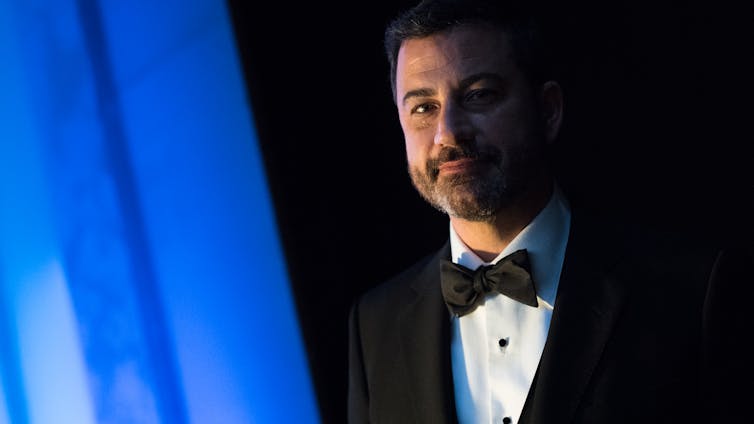
ABC briefly suspended ‘Jimmy Kimmel Live!’ after the host made controversial remarks about the shooting of conservative activist Charlie Kirk.
Emma McIntyre/Getty Images for Turner

Sage Meredith Goodwin, Purdue University and Oscar Winberg, University of Turku

“Is there any way we can screw him?” asked President Richard M. Nixon.

“We’ve been trying to,” an aide replied, alluding to the White House’s efforts to remove from the airwaves an ABC talk show host whose critiques of the administration had placed that “son of a b—h” on the chief executive’s enemies list.

Over 50 years ago, Nixon and his team sought to use the full weight of the federal government – with calls to network executives, Federal Communications Commission complaints, IRS audits and FBI investigations – to silence “The Dick Cavett Show.”

Cavett, who seemed to personify the liberalism that Nixon despised, had drawn the president’s ire by platforming anti-war activists like John Kerry and Jane Fonda, along with left-wing radicals such as Stokely Carmichael.

Nixon ultimately failed in his attempt to silence Cavett. ABC executives were committed to independent media, while the broadcasting industry as a whole had garnered the attention and trust of an enormous audience, which insulated them from political pressure.

It’s a sharp contrast to President Donald Trump’s second term, during which he has loudly announced his desire to rid the nation’s televisions of his critics, and is making headway in doing so. In July 2025, CBS announced the cancellation of Stephen Colbert’s late night show. While the network maintained this was “purely a financial decision” based on ratings, it came in the wake of Colbert mocking both the president and the network.

I hear Kimmel is next,” Trump crowed in the days after. Lo and behold, ABC briefly suspended Jimmy Kimmel on Sept. 17 over comments the comedian made about the response to the murder of right-wing activist Charlie Kirk. The suspension was lifted five days later, after it generated widespread backlash and became a flash point for free speech debates in the U.S.

But why has Trump been able to shake up late-night TV in ways Nixon never could?

It’s tempting to think of the network era – those decades in the 20th century when CBS, NBC and ABC dominated television – as a golden age of independent broadcasting and free expression.

However, as political historians of media, we know from our research that TV has always been a battleground of politics, business interests and broadcasting ideals.

The apparent appeasement of Trump by network executives shows just how much has changed in both the media and regulatory landscape since Nixon’s time.

Television’s decline

Direct pressure from the White House was the immediate catalyst for ABC’s decision to briefly pull the plug on Kimmel.

Brendan Carr, the chair of the FCC, threatened ABC and its affiliates while speaking on the podcast of right-wing commentator Benny Johnson.

“These companies can find ways to change conduct to take action on Kimmel,” he said, “or, you know, there’s going to be additional work for the FCC ahead.” Soon, Nexstar and Sinclair, which own dozens of ABC affiliates, announced that they would pull the show, forcing ABC to act.

That said, network television’s fading place in the American media ecosystem probably made the call a whole lot easier.

When Nixon was trying to nix “The Dick Cavett Show,” the program averaged 5 million viewers a night. The rival “Tonight Show Starring Johnny Carson” regularly pulled in 11 million viewers.

Yet even Cavett’s relatively smaller audience is more than double what Kimmel and his colleagues in late night television can count on today.

The rise of cable loosened the networks’ chokehold on TV news and entertainment in the late 20th century. The internet – followed by the advent of podcasts, streaming and social media – merely accelerated this trend.

By the 2010s, more viewers were watching clips of late night talk shows on their phones and computers than on television. Today, over 40% of people under 30 say they don’t watch broadcast or cable TV.

Kimmel does have over 20 million subscribers on YouTube and millions more on social media, but ABC has struggled to monetize this following.

In short, late night is no longer the TV crown jewel it once was. As a result, it’s far easier for executives to decide to cut the cord on a Kimmel or a Colbert.

Deregulation and consolidation

Broadcasting has always been a business where those at the top are swayed by the bottom line.

But back in Cavett’s day, top decision-makers at the networks were still dyed-in-the-wool broadcasting executives. Leonard Goldenson, the president of ABC whom Nixon’s aides hounded, had created the network from scratch and was invested in the ideals of independent media. Over at CBS, founder William S. Paley had spent decades building the network’s brand and reputation and held similar beliefs. They wanted to shield the respectability of their networks, which made them more resolute when confronted with political attacks.

Now, however, the ultimate decisions about what happens at ABC and CBS are made by executives at the megacorporations that own them.

Decades of deregulation – in particular, the Telecommunications Act of 1996, which spurred a wave of media mergers and consolidation – have allowed broadcasting today to be dominated by a handful of massive conglomerates. They own not only the networks, but also studios, cable channels and internet services.

These media giants need government approval to further expand their empires. This includes the US$8 billion merger that made Paramount Skydance the owner of CBS in summer 2025 – a deal that was approved just a week after CBS announced the cancellation of “The Late Show with Stephen Colbert.” Disney, which owns ABC, also has major deals pending that require the government’s go-ahead.

If the ultimate goal is ever-increasing profits for shareholders, getting rid of a late night show may seem like a small price to pay – especially if a particular program threatens the government’s sign-off on a massive deal.

Charging ‘liberal bias’

The decline of ratings and media consolidation has left television more vulnerable to attempts at political intimidation than ever before.

Trump is far from the first conservative to use the television networks as a political punching bag. His strategy of tarring national broadcasters with the brush of “liberal media bias” can be traced back to right-wing media activists who, as early as the 1940s, argued that the mainstream media shut out conservative ideas and voices.

Elderly female holds sign reading 'Disney/ABC bows to Trump extortion.'
People protest in New York City against ABC’s decision to suspend Jimmy Kimmel from his late night show.
Stephanie Keith/Getty Images

Nixon, convinced that the nation’s television industry was against him, brought those tactics to the White House. In public, he relied on his vice president, Spiro Agnew, to slam the networks as part of an irresponsibly hostile liberal “unelected elite” with “vast power.” In private, Nixon abused the office of the presidency to harass and intimidate broadcasting reporters, directors and executives.

These tactics largely failed. But in Nixon’s wake, partisan media activists like former Fox News executive Roger Ailes and radio host Rush Limbaugh continued to popularize the idea of “liberal media bias” within the conservative movement.

Today, Trump’s charges of “liberal bias” or “fake news” galvanize his supporters – and make media executives sweat – because they’re a key part of modern right-wing identity.

But the president’s no-holds-barred approach is unprecedented. By threatening broadcasting licenses, instigating investigations and filing lawsuits – all while declaring the mainstream media “the enemy of the people” – Trump has turned the dial up to 11.

His administration’s success in temporarily getting Kimmel off the air is obviously one more chapter in an ongoing crisis for free speech. Unfortunately, given the trends in the relationship between American media and politics over the past half-century, it likely won’t be the last.The Conversation

Sage Meredith Goodwin, Postdoctoral Fellow at the Center for American Political History and Technology, Purdue University and Oscar Winberg, Postdoctoral Fellow, Turku Institute for Advanced Studies & John Morton Center for North American Studies, University of Turku

This article is republished from The Conversation under a Creative Commons license. Read the original article.


Ticker Views

Lunar Gateway faces delays and funding debate amid Artemis ambitions

Published

on

What’s the point of a space station around the Moon?

Berna Akcali Gur, Queen Mary University of London

The Lunar Gateway is planned space station that will orbit the Moon. It is part of the Nasa‑led Artemis programme. Artemis aims to return humans to the Moon, establishing a sustainable presence there for scientific and commercial purposes, and eventually reach Mars.

However, the modular space station now faces delays, cost concerns and potential US funding cuts. This raises a fundamental question: is an orbiting space station necessary to achieve lunar objectives, including scientific ones?

The president’s proposed 2026 budget for Nasa sought to cancel Gateway. Ultimately, push back from within the Senate led to continued funding for the lunar outpost. But debate continues among policymakers as to its value and necessity within the Artemis programme.

Cancelling Gateway would also raise deeper questions about the future of US commitment to international cooperation within Artemis. It would therefore risk eroding US influence over global partnerships that will define the future of deep space exploration.

Gateway was designed to support these ambitions by acting as a staging point for crewed and robotic missions (such as lunar rovers), as a platform for scientific research and as a testbed for technologies crucial to landing humans on Mars.

It is a multinational endeavour. Nasa is joined by four international partners, the Canadian Space Agency, the European Space Agency (Esa), the Japan Aerospace Exploration Agency and the United Arab Emirates’ Mohammed Bin Rashid Space Centre.

Schematic of the Lunar Gateway.
The Lunar Gateway.
Nasa

Most components contributed by these partners have already been produced and delivered to the US for integration and testing. But the project has been beset by rising costs and persistent debates over its value.

If cancelled, the US abandonment of the most multinational component of the Artemis programme, at a time when trust in such alliances is under unprecedented strain, could be far reaching.

It will be assembled module by module, with each partner contributing components and with the possibility of additional partners joining over time.

Strategic aims

Gateway reflects a broader strategic aim of Artemis, to pursue lunar exploration through partnerships with industry and other nations, helping spread the financial cost – rather than as a sole US venture. This is particularly important amid intensifying competition – primarily with China.

China and Russia are pursuing their own multinational lunar project, a surface base called the International Lunar Research Station. Gateway could act as an important counterweight, helping reinforce US leadership at the Moon.

In its quarter-century of operation, the ISS has hosted more than 290 people from 26 countries, alongside its five international partners, including Russia. More than 4,000 experiments have been conducted in this unique laboratory.

In 2030, the ISS is due to be succeeded by separate private and national space stations in low Earth orbit. As such, Lunar Gateway could repeat the strategic, stabilising role among different nations that the ISS has played for decades.

However, it is essential to examine carefully whether Gateway’s strategic value is truly matched by its operational and financial feasibility.

It could be argued that the rest of the Artemis programme is not dependant on the lunar space station, making its rationales increasingly difficult to defend.

Some critics focus on technical issues, others say the Gateway’s original purpose has faded, while others argue that lunar missions can proceed without an orbital outpost.

Sustainable exploration

Supporters counter that the Lunar Gateway offers a critical platform for testing technology in deep space, enabling sustainable lunar exploration, fostering international cooperation and laying the groundwork for a long term human presence and economy at the Moon. The debate now centres on whether there are more effective ways to achieve these goals.

Despite uncertainties, commercial and national partners remain dedicated to delivering their commitments. Esa is supplying the International Habitation Module (IHAB) alongside refuelling and communications systems. Canada is building Gateway’s robotic arm, Canadarm3, the UAE is producing an airlock module and Japan is contributing life support systems and habitation components.

Gateway’s Halo module at a facility in Arizona operated by aerospace company Northrop Grumman.
Nasa / Josh Valcarcel

US company Northrop Grumman is responsible for developing the Habitat and Logistics Outpost (Halo), and American firm Maxar is to build the power and propulsion element (PPE). A substantial portion of this hardware has already been delivered and is undergoing integration and testing.

If the Gateway project ends, the most responsible path forward to avoid discouraging future contributors to Artemis projects would be to establish a clear plan to repurpose the hardware for other missions.

Cancellation without such a strategy risks creating a vacuum that rival coalitions, could exploit. But it could also open the door to new alternatives, potentially including one led by Esa.

Esa has reaffirmed its commitment to Gateway even if the US ultimately reconsiders its own role. For emerging space nations, access to such an outpost would help develop their capabilities in exploration. That access translates directly into geopolitical influence.

Space endeavours are expensive, risky and often difficult to justify to the public. Yet sustainable exploration beyond Earth’s orbit will require a long-term, collaborative approach rather than a series of isolated missions.

If the Gateway no longer makes technical or operational sense for the US, its benefits could still be achieved through another project.

This could be located on the lunar surface, integrated into a Mars mission or could take an entirely new form. But if the US dismisses Gateway’s value as a long term outpost without ensuring that its broader benefits are preserved, it risks missing an opportunity that will shape its long term influence in international trust, leadership and the future shape of space cooperation.The Conversation

Berna Akcali Gur, Lecturer in Outer Space Law, Queen Mary University of London

This article is republished from The Conversation under a Creative Commons license. Read the original article.

Continue Reading

Ticker Views

South Korea introduces AI job protection legislation

South Korea is proposing laws to protect jobs from AI, balancing innovation with workers’ rights amid rising automation.

Published

on

South Korea is proposing laws to protect jobs from AI, balancing innovation with workers’ rights amid rising automation.


South Korean lawmakers are taking bold steps to protect workers from the growing impact of AI on employment. The proposed legislation aims to safeguard jobs and support workers transitioning into new roles as machines increasingly enter the workforce.

Professor Karen Sutherland of Uni SC joins Ticker to break down what these changes mean for employees and industries alike. She explains how the laws are designed to balance technological innovation with workers’ rights, and why proactive measures are crucial as AI adoption accelerates.

With major companies like Hyundai Motor introducing advanced robots, labour unions have raised concerns about fair treatment and the future of human labour. Experts say South Korea’s approach is faster and more comprehensive than similar initiatives in the United States and European Union, aiming to secure livelihoods while improving the quality of life for displaced workers.

Subscribe to never miss an episode of Ticker – https://www.youtube.com/@weareticker

#AIJobs #SouthKorea #FutureOfWork #Automation #TechPolicy #LaborRights #WorkforceInnovation #Ticker


Download the Ticker app

Continue Reading

Ticker Views

U.S. ambassador responds to NATO criticism at Munich Security Conference

At Munich Security Conference, U.S. NATO ambassador discussed defense autonomy, hybrid warfare, and transatlantic cooperation amid rising tensions.

Published

on

At Munich Security Conference, U.S. NATO ambassador discussed defense autonomy, hybrid warfare, and transatlantic cooperation amid rising tensions.


At the Munich Security Conference, the U.S. ambassador to NATO faced tough questions on global order as European allies explored greater defense autonomy amid rising geopolitical tensions. The discussion highlighted the challenges NATO faces in maintaining unity while responding to evolving threats.

The ambassador addressed criticisms directly, emphasizing the importance of transatlantic cooperation and NATO’s role in ensuring international security. European nations voiced concerns about independent defense capabilities and the impact of hybrid warfare from Russia on regional stability.

Oz Sultan from Sultan Interactive Group provides analysis.

Subscribe to never miss an episode of Ticker – https://www.youtube.com/@weareticker

#MunichSecurityConference #NATO #GlobalSecurity #DefenseAutonomy #Geopolitics #TransatlanticAlliance #HybridWarfare #USForeignPolicy


Download the Ticker app

Continue Reading

Trending Now