

AP Photo/Alastair Grant
D. Brian Blank, Mississippi State University and Brandy Hadley, Appalachian State University
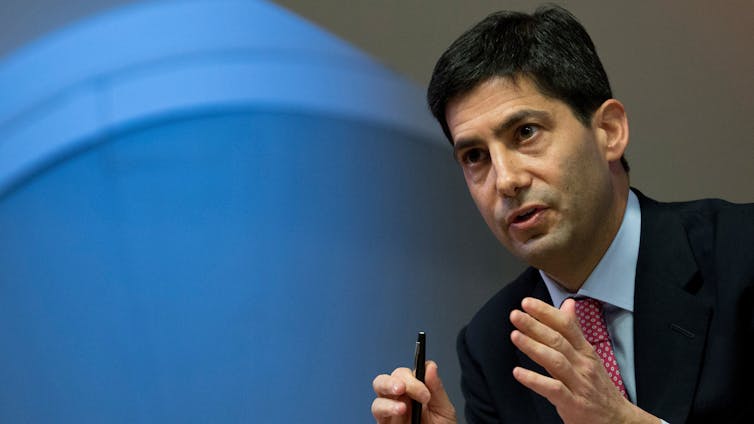
After months of speculation, President Donald Trump nominated Kevin Warsh on Jan. 30, 2026, to be the next chair of the Federal Reserve.
If confirmed by Congress, Warsh will inherit leadership of the U.S. central bank at a delicate time. For months, current Fed Chair Jerome Powell has come under attack from the Trump administration for failing to heed the president’s call for lower interest rates. The fight has put into question the central bank’s independence and its role in stewarding the economy.
Powell’s term as chair will end in mid-May, leaving his successor to navigate an economy that has improved on some fronts but remains uneven and uncertain.
But what should America expect from the next Fed chair? Here are three things to note about Trump’s nominee.
1. He is a familiar face …
Warsh brings deep experience with monetary policymaking to the role.
A graduate of Stanford University and Harvard Law School, he served as special assistant to the president for economic policy and executive secretary of the White House National Economic Council under President George W. Bush before becoming one of the youngest members of the Federal Reserve Board of Governors.
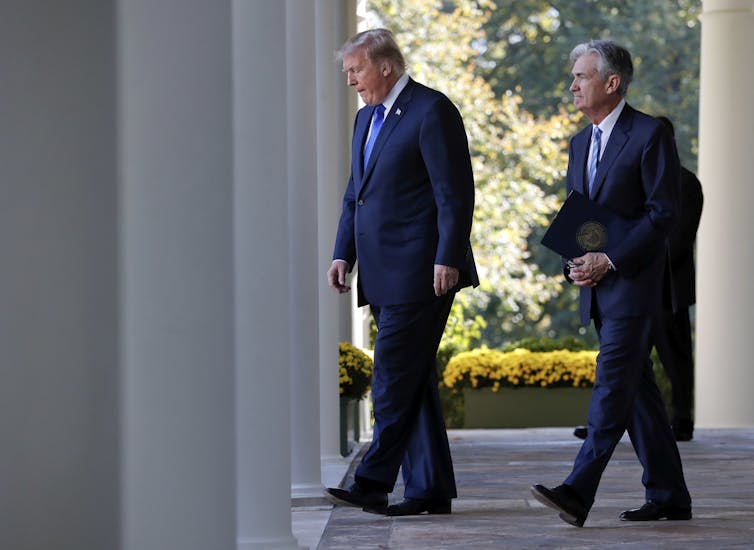
Warsh is no newcomer to discussions about Federal Reserve leadership. He was a finalist for the job in 2017, when Trump instead appointed Powell. Trump has since stated that he made a mistake by not selecting Warsh then – though clashes between Trump and Powell may have influenced that view.

AP Photo/Pablo Martinez Monsivais
Warsh’s credentials are unquestionable. As a governor of the Federal Reserve Board from 2006 to 2011, he worked closely with other policymakers and with Wall Street during the global financial crisis of 2008. Since departing the Fed, he has returned to Stanford as a visiting fellow at the Hoover Institution and a lecturer at the Graduate School of Business, as well as a member of the Panel of Economic Advisers of the Congressional Budget Office.
He also has ties to the finance industry. He began his career in mergers and acquisitions at Morgan Stanley and, since leaving the Fed, has worked as a partner at Duquesne Family Office, an investment firm that manages the personal wealth of hedge fund manager Stanley Druckenmiller and other investors.
In 2016, Trump included Warsh in an economic advisory group assembled during his transition. Critics of Warsh’s nomination point toward his father-in-law, Ronald Lauder, a college friend and donor of the president, as evidence of politicization.
2. … with evolving monetary views
The big question people have is what a Warsh Fed would mean for monetary policy – that is, is it likely to play tight or loose with rates.
When the economy is growing quickly, like in 2021, the Federal Reserve tightens policy by raising interest rates to avoid the kind of economic growth that may not be sustainable long term and can lead to bubbles. However, during downturns, like in 2008 or 2020, the economic policy that can provide a backstop for the economy is looser. The Fed tends to lower rates in these situations, which supports growth.
Warsh’s views on monetary policy have long been considered hawkish, meaning he is inclined toward tighter policy and generally higher interest rates to keep inflation in check, even at the expense of slower economic growth. During his previous tenure at the Fed, he signaled concern about expansive monetary tools such as quantitative easing, in which the central bank buys Treasurys and other securities to stimulate the economy. This resulted in what Warsh called a “bloated” Fed balance sheet that held almost US$9 trillion of debt at its peak in 2022.
In recent public remarks leading up to his nomination, however, he has increasingly aligned in part with Trump’s push for lower interest rates and discussed establishing a new Treasury-Fed Accord, like in 1951, when Fed independence from fiscal authorities such as the Treasury Department was established.
3. His nod highlights fight over Fed independence
A central question surrounding this nomination is whether it promotes the politicization of the Federal Reserve.
The Fed’s independence from day-to-day political pressure has long been viewed as a cornerstone of U.S. economic policymaking. Decisions about interest rates, inflation control and financial stability are insulated from electoral politics for that reason. A truly independent Fed can resist making decisions that provide a short-term economic bump – something incumbent governments tend to like – but may lead to longer-term economic pain down the road.
The Fed tends to use its monetary policy tools carefully. Yet politicians tend to want looser monetary policy so the economy grows fast and they get credit for it.
And Warsh’s nomination can be seen in the context of a broader push from the executive branch to exert greater influence over monetary policy. Given Trump’s public criticism of Powell and vocal calls for his early departure, the president almost certainly intended to nominate someone who would lower interest rates according to preferences stated by the administration.
Critics of the nomination have argued that Warsh has a tendency to be more opportunistic with his policy views than Powell and other economists, who try to ignore political preferences.
As such, Warsh’s nomination encapsulates more than just a leadership transition. It highlights the ongoing tensions between political priorities and the traditional economic playbook, between short-term growth pressures and long-term stability, and between institutional independence and democratic accountability.
Time will tell whether he turns out to be hawkish or politically motivated as chair, if he is confirmed.

D. Brian Blank, Associate Professor of Finance, Mississippi State University and Brandy Hadley, Associate Professor of Finance and Distinguished Scholar of Applied Investments, Appalachian State University
This article is republished from The Conversation under a Creative Commons license. Read the original article.